



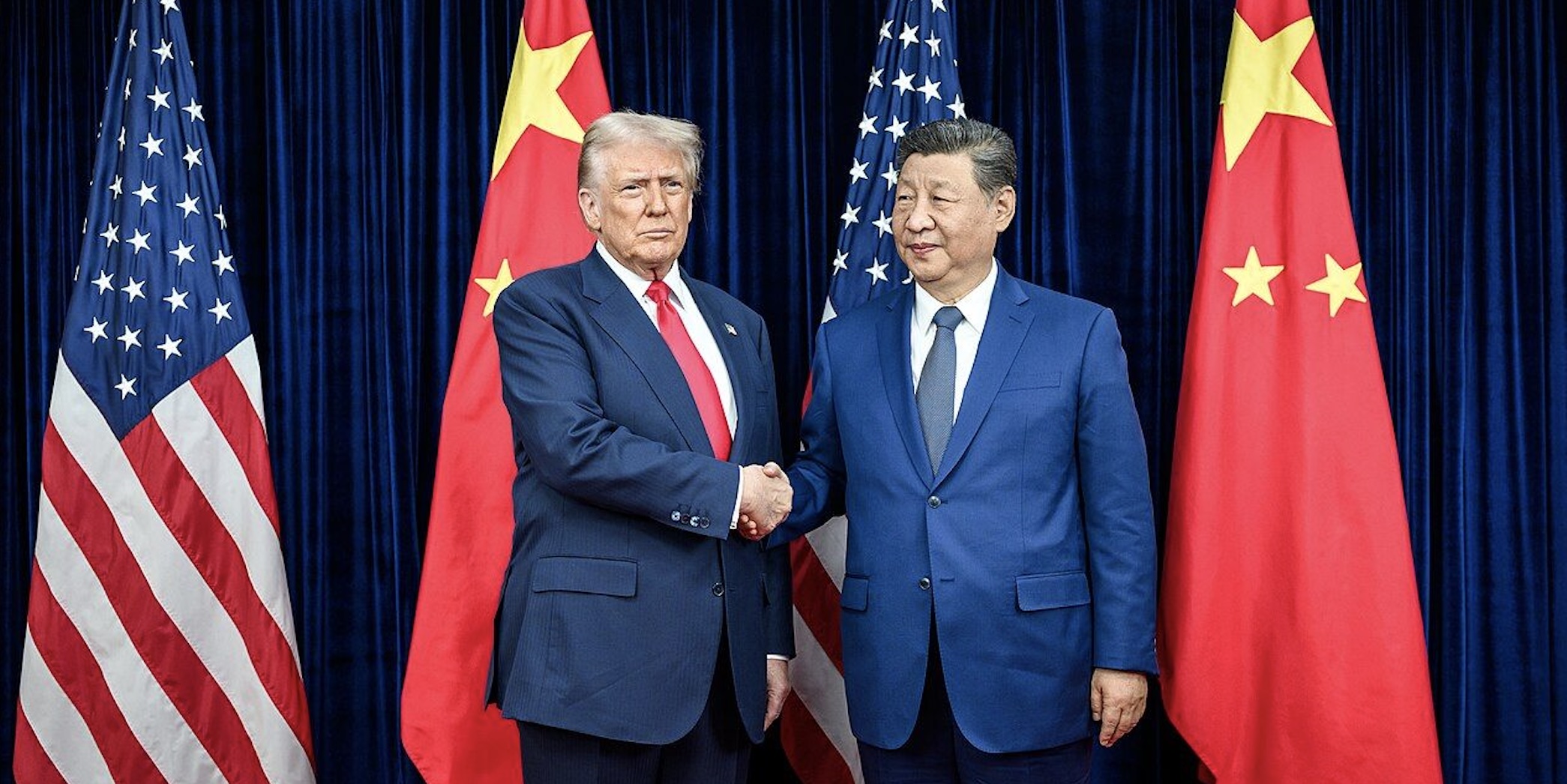
SINGAPORE: As the Presidents of China and the United States are set to meet this week, Southeast Asia may well find itself caught in the middle of the two superpowers amid a backdrop of global uncertainty intensified in the past few months by the war in the Middle East.
According to the State of Southeast Asia: 2026 Survey Report released in April by the ISEAS-Yusof Ishak Institute in Singapore, the biggest concern in the region involves a growing distrust in an increasingly unpredictable US. Last year, it was China’s aggressive moves in the South China Sea.
The change is likely due to the double whammy of President Trump’s tariffs in April 2025 and the war in the Middle East, which began when the US and Israel began bombing Iran on February 28, 2026.
Moreover, more than half of the respondents from the region said they would side with China over the US if they needed to choose between the two, whereas last year, 52% of the participants had chosen to side with the US.
A statement issued by the leaders of the Association of Southeast Asian Nations (ASEAN) after the summit held in the Philippines last week said the conflict in the Middle East is “a grave threat to… regional and global peace and stability.”
Southeast Asian countries have been particularly hard-hit by the fuel crisis that resulted from the conflict, due to the closure of the Strait of Hormuz, a chokepoint for around 20% of the world’s energy supply, much of which is bound for Asia. As a result, nations in the region have been grappling with higher oil prices and scrambling to ensure an adequate supply for domestic use.
Amid present difficulties, Southeast Asian countries have not completely turned to China but appear to be keeping both superpowers at arm’s length, according to an opinion piece from The Lowy Institute. Instead, different nations have been turning to new partnerships, such as those Singapore has forged with Australia and New Zealand, and Vietnam’s moves toward Japan and South Korea. Even Russia has not been left out, with the Philippines and Vietnam looking to it as an alternate energy provider.
What Southeast Asia may be hoping for, at best, is for there to be no significant changes at all and for the maintenance of relative stability; in other words, for the superpowers not to make agreements that would be to the region’s detriment.
In a piece in Think China titled Why Southeast Asia wants a boring Trump-Xi summit, Stephen Olson, Visiting Senior Fellow, ISEAS–Yusof Ishak Institute, wrote, “For countries in Southeast Asia, the best realistic outcome would be an unremarkable Trump-Xi summit that simply buttresses stability and tamps down prospects for a further deterioration in the bilateral relationship.” /TISG
Read also: When superpowers meet: What’s at stake at the upcoming summit between the US and China