



The Cuban Biodiversity portal published a study that analyzes which areas of the country are most exposed to the impacts of climate change based on a calculation of the loss or increase of species in each region by the year 2050; those located where the change would be greatest were considered to be “most vulnerable.”
The results pointed primarily to low and flat areas — especially large plains such as Zapata, Colón, Júcaro, the Cauto Valley, southern Camagüey and the Jardines de la Reina archipelago — that could suffer significant losses of biodiversity; even more severe if greenhouse gas emissions are not reduced.
Regarding the protection and restoration of mangroves, the Guanahacabibes Peninsula has benefited from UNESCO’s MangRes project – restoration of mangroves as a nature-based solution in Biosphere Reserves of Latin America and the Caribbean – which promotes the restoration of different species such as the red mangrove, as well as “the documentation of local knowledge about their use and management, and the building of capacities for environmental governance, education for sustainable development and knowledge exchange.”
Likewise, over the past decade, the Manglar Vive project has reached the coasts of Mayabeque, specifically benefiting the protected area of the Gulf of Batabanó. Six years after its implementation, the good health of the mangroves along this 84-kilometer stretch between Punta Sucia and Punta Mora was bolstered by comprehensive reforestation and other actions aimed at better understanding the impact of climate change on those ecosystems.
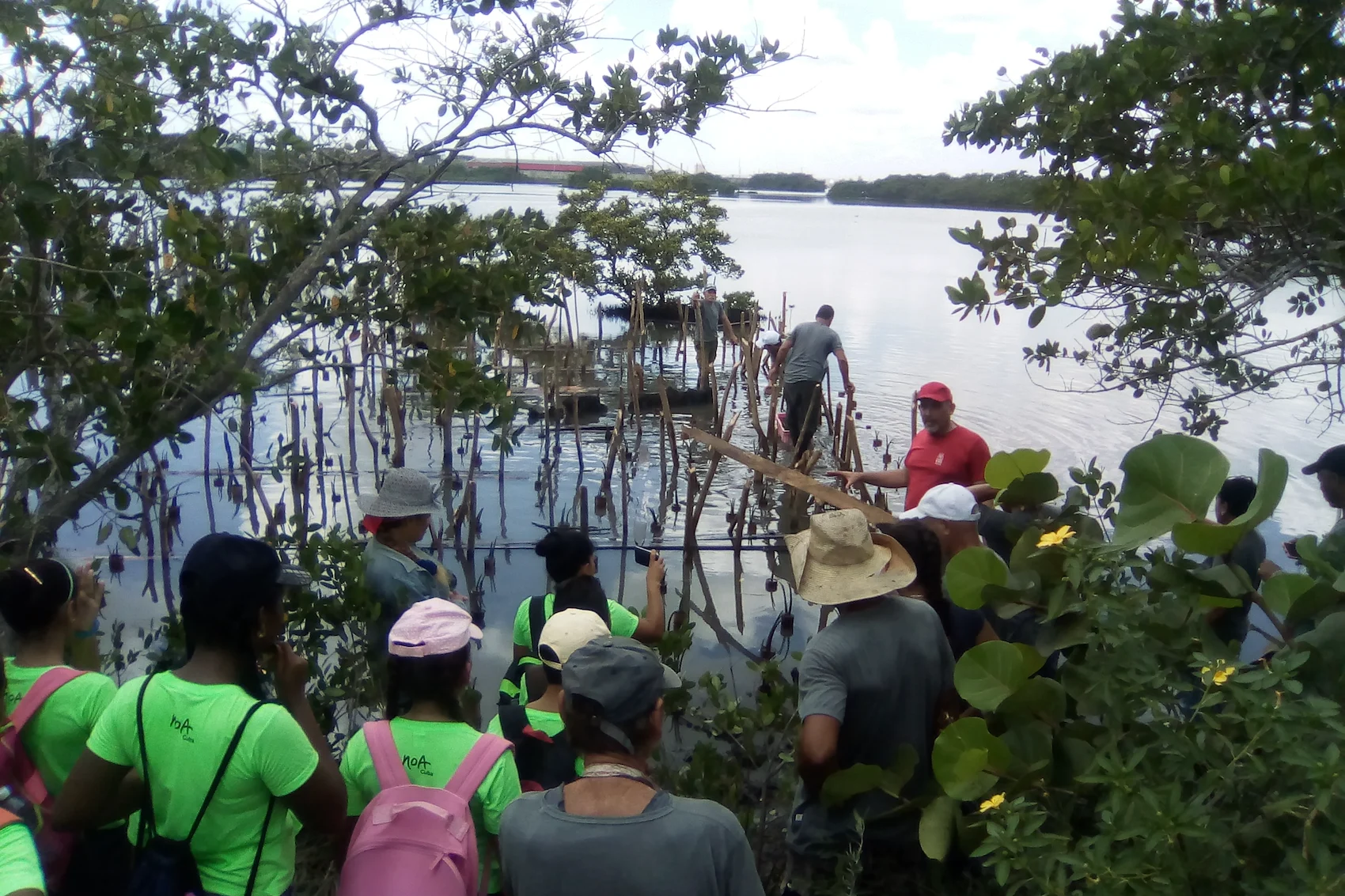
Training of students on mangrove restoration using small ponds in Havana Bay. Photo by Manglar Vivo. Used with permission.
In 2025, the Journal of Marine Research published the article “Conservation of the manatí antillano Trichechus manatus north of Villa Clara, Cuba,” which examined the danger of extinction this species faces on the island. Human activity affecting these mammals and their ecosystems – even “in areas designated for their protection,” the research warns – is the main cause of their possible disappearance.
For the authors, conservation depends on a comprehensive approach that combines habitat protection, the reduction of human threats, continuous monitoring (conducting censuses and periodic observations), as well as the promotion of environmental education for communities that coexist with the manatees.
Other species such as polymitas have been a priority for projects and international alliances in pursuit of their conservation — especially the Polymita sulphurosa, one of the most threatened and whose distribution is considered very restricted. “Any natural or human disaster could cause its complete extinction,” reads an advisory on the website of The Rufford Foundation, which promoted a project for the conservation and management of the Polymita versicolor and the Polymita sulphurosa in the provinces of Guantánamo and Holguín ten years ago.
The project’s objectives included updating information on geographic distribution, as well as the number of individuals outside protected areas. With that data, in addition to promoting environmental education in nearby communities, the foundation would propose to the National Center for Protected Areas the creation of new spaces based on where polymitas already lived.
Cuban civil society has also made important contributions not only to the conservation of biodiversity, but also to popular education about its importance. One organization that has not stopped working since its creation in 2021 is Nativa. Red de Microviveros, a collective for the protection of the island’s native flora. In a 2023 interview with Periodismo de Barrio, one of its founders, Juan Carlos Sáenz de Calahorra, said: “When one names plants, one makes them exist individually.”
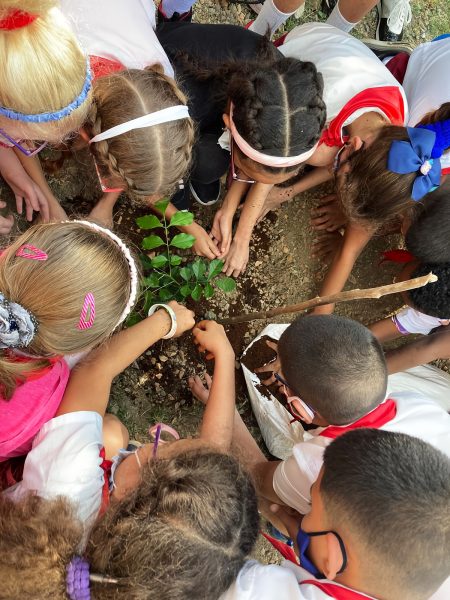
Nativa educates children and teenagers on their emotional relationship with plants. Photo by Nativa. Used with permission.