



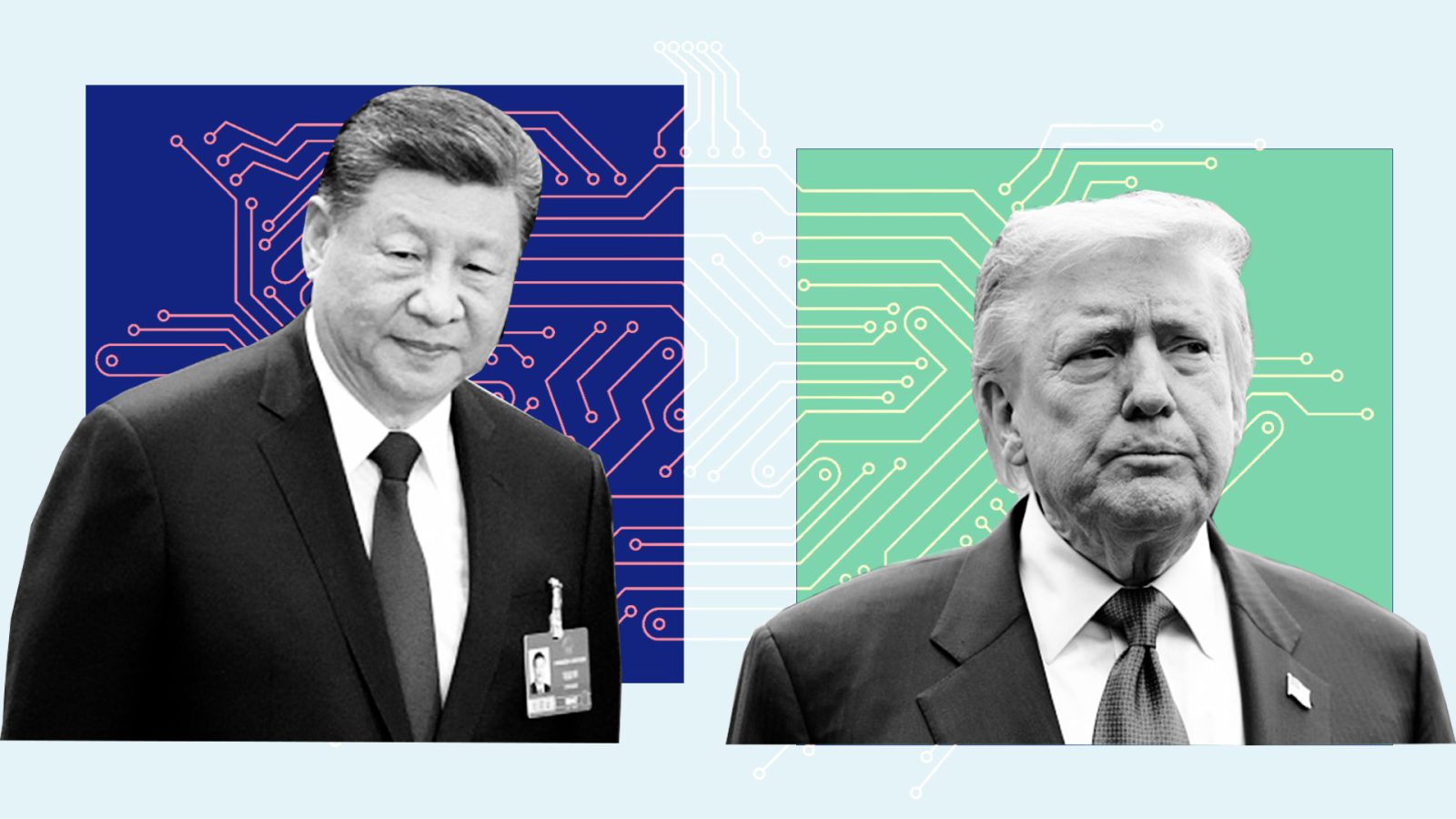
U.S. President Donald Trump and Chinese President Xi Jinping are scheduled to meet in Beijing this week amid the urgent geopolitical tensions surrounding the war in Iran and the status of Taiwan. The world’s two biggest economies are also likely to address a wide range of technology issues, from competition over artificial intelligence and access to advanced AI chips to the role of Chinese supply chains in American products.
Here are five tech issues that could be on the agenda as the two leaders meet.
1. Chip sales
The fate of Nvidia’s business in China is likely going to be on top of the agenda.
The U.S. export controls on advanced AI chips have made it difficult for Nvidia to maintain its dominance in China. In January, Trump allowed Nvidia to sell its advanced H200 chips to China, provided that the U.S. government gets a 25% cut. But the trade has stalled due to objections from the Chinese government, Secretary of Commerce Howard Lutnick said in April.
China has condemned U.S. chip restrictions as an “abuse” of export controls. It’s also actively urging its tech firms to cut reliance on Nvidia. AI labs such as DeepSeek have developed their models to run on domestic chips, while Huawei’s AI processors are gaining market share.
Nvidia chief executive Jensen Huang has repeatedly called on the U.S. government to allow the company to export more chips and preserve its position in the Chinese market.
2. Managing the AI rivalry
The two countries, while competing to advance AI technologies, may begin to cooperate on keeping AI safe.
Beijing and Washington are considering setting up a recurring set of dialogues on the risks posed by AI, such as model misbehaviors, autonomous weapons, and AI-powered attacks by non-state actors, according to a report by The Wall Street Journal.
At the same time, the technological rivalry continues to intensify. OpenAI and Anthropic, as well as officials in the Trump administration, have recently accused Chinese AI labs of using the so-called distillation technique to replicate capabilities from American AI models.
Distillation refers to training AI models with the output of more advanced models. The technique is widely used across the AI industry, and the Chinese government has denied allegations of illicit distillation.
3. Supply chain security
The U.S. wants companies to reduce their reliance on Chinese supply chains, but China is signaling it will fight against this trend.
Under a regulation announced in April, Chinese government agencies can impose penalties if foreign companies adopt discriminatory measures to stop trading with Chinese businesses. Another new regulation allows authorities to freeze assets or impose exit bans on foreign individuals who help enforce “improper extraterritorial jurisdiction” against Chinese companies.
It’s unclear how these rules will be enforced, but companies operating across both the U.S. and China may find it increasingly difficult to comply with supply chain requirements in both markets. Ahead of the Trump-Xi meeting, U.S. Treasury Secretary Scott Bessent raised concerns about the regulations to China’s Vice Premier He Lifeng.
4. Electric vehicle trade
The U.S. has essentially banned Chinese electric vehicle imports with high tariffs and regulations — a policy that has contributed to slower EV adoption in the country. In January, Trump said he was open to Chinese carmakers entering the U.S. as long as they build factories in the country and hire American workers.
Lawmakers from both parties have called on Trump to maintain the ban on Chinese cars to protect the American auto industry.
While resisting Chinese competition in the country, American carmakers are exploring ways to license Chinese software and battery technologies to support their own EV manufacturing. Meanwhile, Chinese EV makers are increasingly searching for new overseas markets and laying the groundwork for future production in the U.S.
5. Rare earth trade
China has a near-monopoly on processing rare earth elements, which are vital to producing everything from electronics to airplanes and electric vehicles.
Beijing has used its rare earth dominance as trade leverage. In April 2025, China restricted rare earth exports to retaliate against U.S. tariffs. Shipments began to recover after agreements were reached between China and the U.S. and Europe later in the year.
The U.S. and its allies are now trying to build alternative supplies of rare earths. In February, the Trump administration rolled out a $12 billion initiative to stockpile critical materials, including rare earths, for American manufacturers. The government is also providing funding to expand domestic rare earth mining and processing capacity.