



Estelle, who’s long held permanent resident status in the U.S., is a veteran at navigating the reentry process when she returns from visiting relatives in her native France.
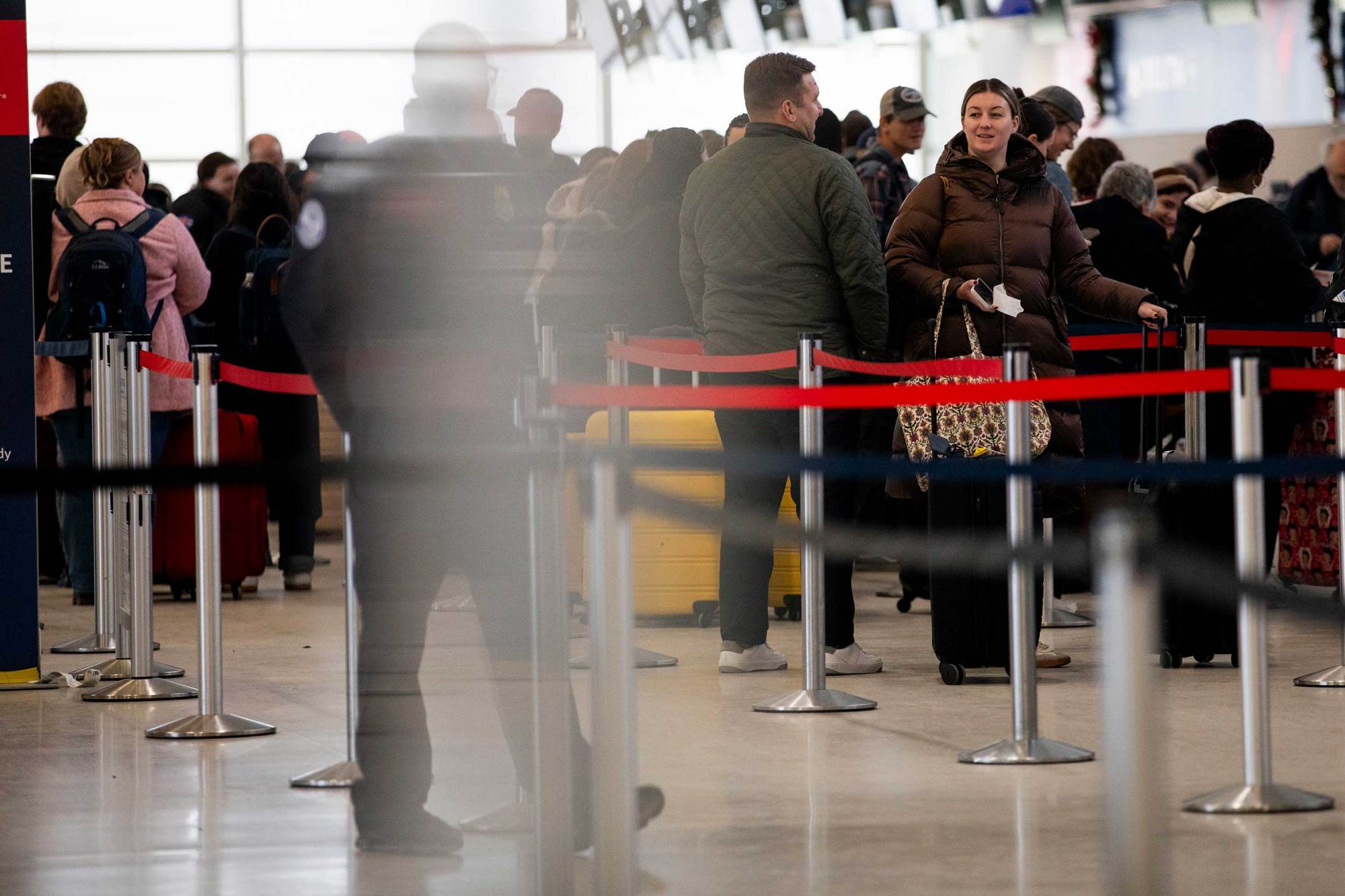
But on her most recent trip through customs in mid-March, officers detained the 57-year-old Lawrence, Kansas, resident for 30 hours, forced her to spend the night in a holding cell on a concrete slab and threatened her with deportation.
Why? Because she acknowledged under questioning by customs officers that she’d once voted in a local election, despite not being a U.S. citizen. A small number of cities in the U.S. allow noncitizens to vote in local elections, but Lawrence is not one of them. Kansas and federal law both require U.S. citizenship to register to vote.
Immigration and election experts say her case, which hasn’t previously been reported, marks a new escalation in the Trump administration’s efforts to find and prosecute instances of noncitizen voting, despite voluminous evidence showing it is rare. (Estelle asked that her last name not be used because of safety concerns.)
Historically, U.S. Customs and Border Protection has played no part in election-fraud investigations. But the transcript of Estelle’s interview, which was provided to ProPublica by her attorney, makes clear that the agency had flagged her for special scrutiny and that officers knew her voting history. Estelle told the officer during questioning that she thought she could vote in local elections because a state motor vehicles department employee had told her when she renewed her driver’s license that she was eligible.
Kerry Doyle, a deputy general counsel for the Department of Homeland Security in the Biden administration, said she’d never heard of someone being detained at a port of entry on suspicion of voting illegally.
“It took them a whole lot of energy and effort to sift through all these things to find this needle in the haystack,” said Doyle, a longtime immigration attorney. “And it is a needle in the haystack.”
A CBP spokesperson confirmed that officers detained a woman matching Estelle’s description at the Detroit airport, placing her in removal proceedings. The official didn’t answer questions about whether the agency is now routinely questioning noncitizen travelers about voting at ports of entry but emphasized that voting illegally is a deportable offense.
“The Trump Administration will continue to enforce our nation’s laws,” the spokesperson said in an email. “Those who violate these laws will be processed, detained, and removed as required.”
Estelle’s attorney, Matthew Hoppock, said she had no prior criminal history and hadn’t otherwise violated the terms of her green card. He said she registered to vote as part of renewing her driver’s license in 2023. Estelle voted in a November 2023 election that included races for city council and school boards, according to Douglas County records. She did not vote in any subsequent election, including the 2024 presidential election.
An immigration judge granted a request from Estelle to cancel her removal proceedings, after Hoppock spoke with DHS officials about her case. It’s unclear whether she will face any future criminal charges. (CBP declined to comment about whether there are any pending.) Still, Hoppock said, CBP had overstepped in its aggressive handling of the matter, which he called “really something.”
“It’s clear as day she wasn’t trying to break the law,” he said.
Though Trump has repeatedly claimed that millions of noncitizens vote, data shows there are few such cases and that, of these, most involve people like Estelle, who register in error, said Wendy Weiser, vice president for democracy at the Brennan Center for Justice, a nonprofit voting rights organization.
“My concern is about the publicizing of these kinds of incidents as a tool to frighten people,” Weiser said.
When these rare cases do happen, they are typically identified by local and state election officials who refer them to law enforcement. They often do not move forward, according to several election lawyers, because the voter often was registered by mistake by an elections clerk or voted without knowing it was illegal. Depending on the charges, prosecutors may have to prove that it was intentional.
Trump has made it clear he wants the federal government to do more to prevent and punish election fraud, despite the paucity of evidence that it’s a widespread issue.
He pushed unsuccessfully for Congress to pass the SAVE America Act, which would have required Americans to provide documentary proof of citizenship when they registered to vote. In March 2025, he issued an executive order that, in part, directed federal agencies to use their resources to help find and prosecute noncitizen voters. His Justice Department began demanding that states hand over their voter-roll information, and DHS revamped a tool to allow states to check registered voters’ citizenship status en masse.
As ProPublica has reported, the tool proved highly error-prone. But despite its flaws, it appears DHS is still using the tool to pursue noncitizen voting prosecutions. DHS said in a recent statement that a branch of the agency, Homeland Security Investigations, will look into more than 24,000 voters flagged by SAVE as potential noncitizens.
A former CBP official, who spoke anonymously because their current job doesn’t permit them to comment publicly, said it is likely that potential noncitizen voters have been flagged in the system that customs officers use to check the records of international travelers, such as passports. If that’s the case, officers would see in the person’s file that they should be questioned further on their voting histories.
Hoppock said Estelle was detained on a layover, as she traveled home from visiting her ailing father in France. According to the transcript of her interview with a customs officer, the official asked Estelle if she had ever registered to vote or voted, and she told him yes, she had voted once. The officer then asked if she had voted in the Nov. 7, 2023, local election, which she had.
After questioning Estelle, officers put her in the cell with a thin mattress on top of the concrete slab and a blanket donated by an airline, Hoppock said. She heard officers talking about Immigration and Customs Enforcement facilities, he said, and worried she might be moved there next. Instead, she was released after more than 30 hours in custody.
Jamie Shew — the clerk for Douglas County, Kansas, where Estelle was registered — said in an interview that he found out about Estelle’s case on March 23, when he received an administrative subpoena from CBP asking for her voter registration application and voting records.
Shew said he didn’t have the application, just data passed on by the secretary of state’s office showing she’d registered in September 2023 and wasn’t affiliated with a political party.
Shew said he’s only supposed to be given registrations to process if the would-be voter attests they are a U.S. citizen, as federal law requires. Estelle insists she told the employee at the motor vehicles department she was not a citizen.
Shew said Estelle reached out shortly after he received the CBP’s subpoena. She asked him to cancel her voter registration, he said, and he did on March 31.
Hoppock worries that by moving straight to deportation proceedings, the federal government has found a way to skip prosecuting and convicting.
“You’re going to get people like Estelle,” he said, “who haven’t meant to do anything wrong, getting detained in a jail cell in Michigan.”