



Last week, new data were released by the Australian Institute of Health and Welfare (AIHW) suggesting daily smoking prevalence has dropped to a record low of 5.6% in 2025 – down from 8.3% in 2022-23.
Taken at face value, this is the best news in the history of tobacco control in Australia.
But there are reasons for caution. The figures come from a self-report survey, and as the AIHW has previously acknowledged, respondents “tend to underestimate actual consumption levels”, with illicit use particularly undercounted.
When the previous survey ran in 2022–23, most tobacco was still bought legally. But in 2025, the Australian Bureau of Statistics estimates 80% of all nicotine products were illicit.
So, the steepest fall in reported smoking in the survey’s history was recorded over exactly the period in which smoking moved underground and became harder to accurately measure.
How bad is the problem?
Regardless of the true smoking rate, the violence and large scale impacts of the illicit tobacco market are now major problems in their own right.
Since 2023, nearly 300 arson attacks linked to the trade have been reported nationwide, alongside countless alleged episodes of extortion and intimidation and several murders.
Australians now spend up to $8.5 billion a year on illicit nicotine – more than on cannabis, cocaine, ecstasy and heroin combined.
That makes illicit nicotine one of the largest, and certainly the fastest growing, black markets in Australia’s history.
The illicit market has continued to grow, despite record levels of enforcement. Last financial year Australian law enforcement agencies seized more than 2.6 billion cigarettes, 509 tonnes of loose leaf tobacco, and 7.5 million vapes – yet the trade still expanded.
Large-scale black markets are extraordinarily resilient and adaptable to enforcement. Fines go unpaid, store closures can be ignored, and seized goods easily replaced.
Our own law enforcement agencies have acknowledged this difficulty, with Australian Border Force Commander Ken McKern recently noting: “unfortunately, we can’t seize this problem away”.
What do we need to do?
Our tobacco control policies were developed at a time when criminal suppliers played only a marginal role in the nicotine market. Now they dominate it and those policies need an urgent rethink.
That means doing three things.
1. Cut the tobacco tax
Tobacco taxes are meant to reduce consumption by making cigarettes more expensive. Right now the tax only makes legal tobacco more expensive, which drives an ever-growing proportion of consumers to cheap illicit alternatives.
Perversely, by stimulating the growth of the black market, excessive taxation has made smoking cheaper than it has been in decades. If smoking rates are indeed declining, this suggests price cannot be the principal driving factor.
A tax cut won’t close the price gap with the black market entirely. It doesn’t need to. Every dollar the gap narrows weakens the incentive to buy illicit products and the profitability of selling them.
Canada took this path in 1994, slashing its tobacco excise in response to rampant smuggling while stepping up enforcement. The approach worked. Within six years, seizures of contraband tobacco had fallen 94%. A government commissioned evaluation and academic studies credited the tax cut with most of the effect.
Critics will say a tax cut is exactly what Big Tobacco wants. But right now, based on market share, organised crime effectively is Big Tobacco in Australia. Reducing the black market needs to be a priority, and the best way to fight a black market is with a well functioning legal one.
That may be an unpalatable conclusion for those accustomed to seeing the tobacco industry as the ultimate corporate villain. But a legal industry is preferable to a criminal one selling the same products without health warnings or plain packaging, and using the proceeds to allegedly kill, intimidate and firebomb those who get in its way.
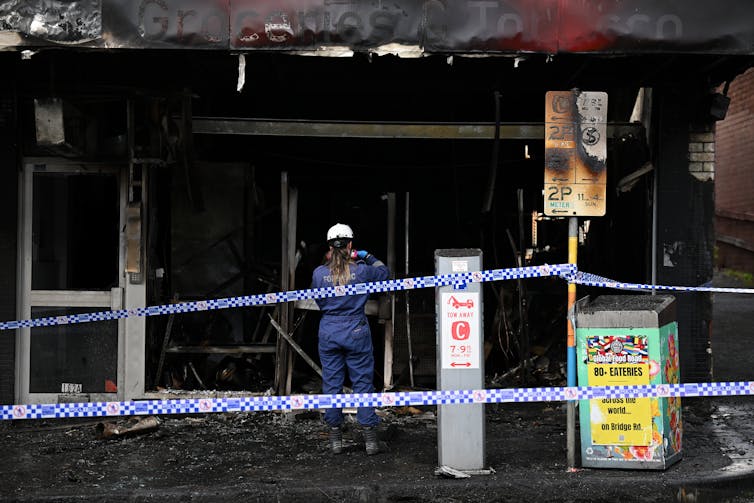
James Ross/AAP
2. Legalise safer alternatives
Smoking remains a leading cause of preventable death, so moving people who smoke back to legal cigarettes is only a partial win. The federal government should also repeal its ban on consumer vape sales and legalise other lower-risk products such as nicotine pouches, giving consumers options that are not just legal, but also less harmful.
This approach also has demonstrated success internationally. In May, Sweden became the first country to reach the “smoke-free” threshold of less than 5% daily smoking. This was achieved by creating a legal, regulated market for lower-risk alternatives such as snus (an oral toboacco product), vapes and nicotine pouches.
Swedes continue to use nicotine at rates comparable to the rest of Europe, but because most use less harmful products, they also have the lowest rates of smoking-related disease and death in the EU.
Closer to home, New Zealand legalised and regulated vapes in 2020. Since then, adult smoking has fallen more than 40% with the steepest declines among Māori and lower-income communities – the same kinds of groups whose smoking rates remain stubbornly high in Australia.
Of course, vaping is not risk-free. But international evidence shows regulated vapes are highly effective cessation aids and substantially less harmful than smoking.
3. Keep enforcing – against a shrinking market
Enforcement remains absolutely critical. We must continue to target illicit suppliers and the violence they finance. But giving our law enforcement agencies a fighting chance of success means diverting a critical mass of Australia’s millions of nicotine consumers away from criminal suppliers and back to the legal market.
With fewer customers and reduced profits, the same raids and seizures can actually make a difference.
Australia’s tobacco wars are ultimately the product of policy settings that inadvertently handed organised crime a multibillion-dollar market. Arrests alone won’t end them. Fixing the settings will.