



Yang is immensely proud of his 13-year-old son. The middle-school student from Hangzhou has won artificial intelligence model-building competitions across China, and has 136,000 followers on Chinese social media platform XiaohongshuiXiaohongshuXiaohongshu, which translates to “little red book” in Chinese, is a lifestyle e-commerce and social media platform.READ MORE, where his father documents his projects.
Despite his son’s talent, Yang was unsure of how to nurture it in the fast-moving world of AI — one he had never experienced growing up.
“We’re just an ordinary family,” Yang told Rest of World, requesting to be identified only by his last name due to concerns over online attention surrounding his minor son. “Our biggest challenge is resources. We don’t know what he should be learning or the best way for him to learn it. Right now, he’s mostly teaching himself.”
Yang might soon find a solution to his challenges. Chinese companies are steadily expanding their talent pipeline from university graduates to undergraduates — and, increasingly, to teenagers.
The shift reflects a severe shortage of elite engineers, growing competition among AI companies, and a belief that exceptional talent needs to be identified long before it enters the workforce.
“AI talent has become both scarce and unusually scalable,” Tianchen Xu, a Beijing-based senior economist at research firm Economist Intelligence Unit, told Rest of World. “A younger engineer who has grown up with open-source models, coding agents, and fast experimentation may have lower adjustment costs and a longer expected runway inside the firm. In a market where AI scientists and algorithm roles are already commanding very high salaries, firms are trying to identify high-upside talent before the market fully prices them in.”
Catching them young
In June, TencentiTencentBest known for its super-app WeChat, Tencent is a Chinese technology conglomerate and a major player in the video gaming industry.READ MORE launched a series of camps for students aged 13 to 18 years, offering mentorship and training in areas including AI product management, robotics, and quantum computing over three to eight weeks.
In October 2025, ByteDanceiByteDanceByteDance is a Chinese internet technology company that owns TikTok and Douyin, a Chinese version of TikTok with a successful e-commerce arm.READ MORE founder Zhang Yiming co-founded a nonprofit research center targeting students aged 16 to 18. The program selects 30 students each year as full-time research trainees in AI, mathematics, and computer science, while also hosting summer camps for a broader group of participants. Applicants are asked to submit school transcripts, describe their experience in math and computer science, and include a statement from their parents outlining how they have supported their child’s learning.
Some companies are moving beyond education programs and reshaping the path from school to employment.
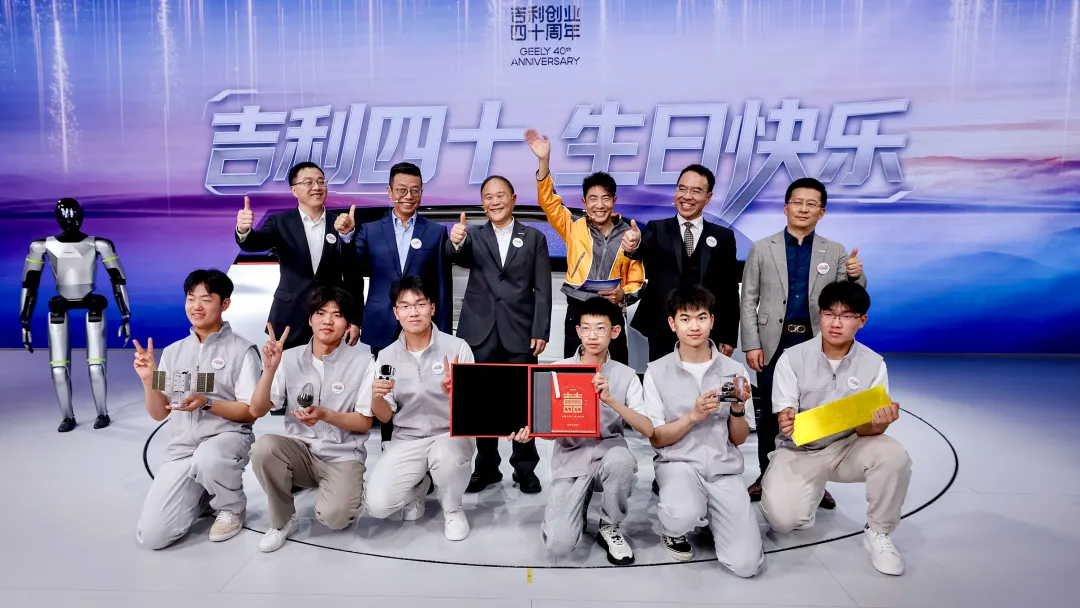
Chinese automotive group Geely launched a talent program in March this year, which recruits students immediately after high school and guarantees them training and a job at the company. Their pay matches that of university graduates.
Participants receive company-designed training in AI, new energy vehicles, low-altitude aviation, and satellite technologies alongside their studies. Although students pay an annual tuition of 5,800 yuan ($800), the company says it is refunded after the successful completion of each academic year.
Geely
This push comes as China’s AI talent shortage has deepened.
McKinsey estimates China could face a shortfall of 5 million AI workers by 2030, with universities and existing talent pipelines supplying only about a third of the demand.
The shortage is already visible. Between January and May, Chinese employers advertised 3.08 AI vacancies per qualified candidate, according to recruitment platform Zhaopin, even as AI engineering positions grew 28.4% year over year. The ratio is slightly below the global average of 3.2 vacancies per qualified worker, according to ManpowerGroup’s 2026 Talent Shortage Survey.
Youth versus experience
For leading Chinese AI startup MiniMax, the shift is less about hiring younger people than about rethinking what talent looks like in an industry evolving faster than traditional career paths, Yunan Zhang, vice president of MiniMax, told Rest of World.
The average employee age at the company is 29 years, with more than 73% working in research and development, according to MiniMax’s public listing document from last year. Despite its young workforce, the company says it has no plans to recruit directly from high schools or offer internships to teenagers and will focus on university students and above.
“AI is a very new industry,” Zhang said. “Many previous job experiences are no longer transferable or even an advantage. Academic degrees are also not absolute standards; they’re only a reference. We want to look for a person’s raw intelligence.”
Instead of targeting younger candidates, Zhang said the company evaluates candidates based on intellectual curiosity, passion for AI, and evidence of their abilities.
That also means younger candidates get opportunities they might not have had only a few years ago.
The investment in high school students is really about building a long-term talent pool.”Chris Pei, co-founder, AI recruitment firm UFound
“Perhaps in the past, if you were only in your first or second year of university, you wouldn’t even have had the chance to get past HR at one of China’s top internet companies,” Zhang said. “Today, companies are open to that. It is not that we think younger is better. It’s that age is no longer a barrier.”
China is not alone in rethinking when companies should begin identifying future engineers. In the U.S., technology companies like Google and Microsoft have long operated programs for high school students. Last year, Palantir launched a fellowship that aims to give high school graduates a chance to get a full-time role with the company.
The broader shift is also changing how companies evaluate candidates. Google co-founder Sergey Brin has said the company is increasingly willing to hire people without bachelor’s degrees. According to the Burning Glass Institute, a non-profit research center, the share of Google job postings requiring a college degree fell from 93% in 2017 to 77% in 2022.
Chris Pei, co-founder of AI recruitment firm UFound, told Rest of World he has seen companies devote significantly more resources to identifying promising students at younger ages. But, he said, actual hiring decisions are still largely made at the undergraduate or graduate level.
“The investment in high school students is really about building a long-term talent pool,” the Beijing-based headhunter said. “Companies want a way to follow these students’ development over several years and see who eventually grows into the kind of person they want to hire.”
Pei said launching these programs also helps build the image that the company is willing to invest in talent.
Yang recently considered pausing his son’s participation in public events and competitions, so he could have more time to rest, play, and focus on schoolwork.
“As parents, we feel conflicted,” he said. “We can see how passionate he is about building things with AI, but there are still so many things he needs to learn. After all, he’s still just a kid.”