



In recent years, there have been several reminders of how interconnected the global economy is, and how fragile supply chains are. The shutdowns during the Covid-19 pandemic led to big tech companies including Apple shifting some production out of China, while the Middle East conflict is pushing companies to consider how to safeguard their data.
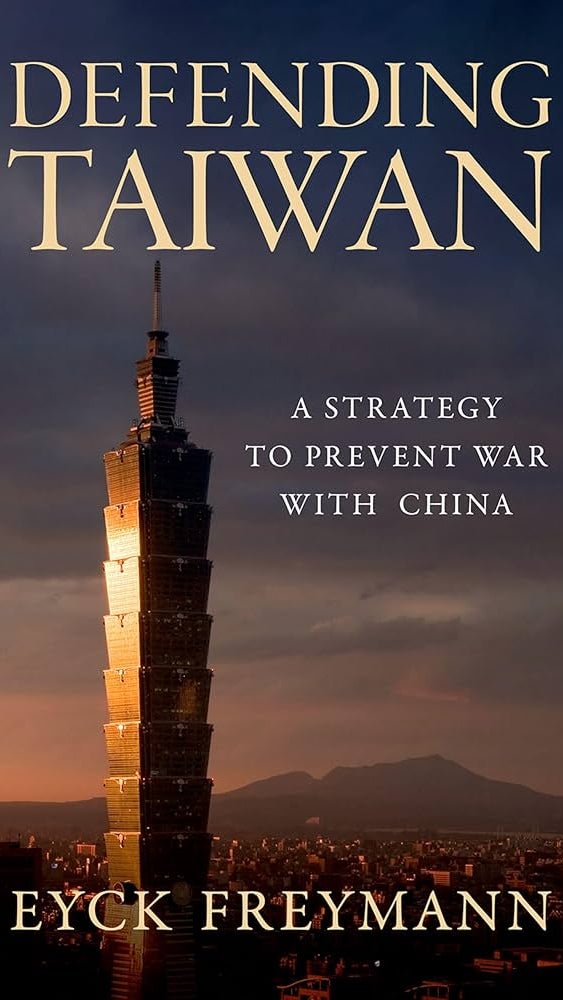
These hiccups are nothing compared to the effects of a serious disruption to the flow of chips from Taiwan, according to Eyck Freymann, a Hoover fellow at Stanford University, and author of a new book, Defending Taiwan: A Strategy to Prevent War With China. TSMC, the world’s top semiconductor manufacturer, makes the majority of the advanced chips that power smartphones, electric vehicles, and the artificial intelligence race between the U.S. and China.
“The economic shock from a serious Taiwan disruption would dwarf anything we’ve seen in the postwar period,” Freymann told Rest of World ahead of President Donald Trump’s planned visit to China.
The interview has been edited for clarity and brevity.
Why do you regard the China-Taiwan dispute as the most dangerous geopolitical flashpoint?
Taiwan matters for three overlapping reasons. The first is geographic. Taiwan sits at the center of the first island chain, between Japan and the Philippines. If Beijing controlled it, the Chinese Navy would have unimpeded access to the open Pacific.
The second is political. Xi Jinping has tied his legacy to “national rejuvenation,” and in his telling, that includes resolving the Taiwan question on Beijing’s terms. Whether Taiwan’s future is decided peacefully — without coercion, and in accordance with Taiwan’s democratic wishes — will define the future of regional order. If China can seize Taiwan by force, or control its economy by force, it can establish an exclusionary zone in the world’s most important economic region. This is ultimately the basis for global technological and political domination.
The third is economic. TSMC produces roughly 90% of the world’s most advanced semiconductors and 99% of the chips used to train frontier AI models. A serious disruption to Taiwan’s exports — not necessarily an invasion, just a sustained interruption — would cascade through every sector of the global economy that depends on advanced computing, which by now is most of them.
The reason Taiwan is the most dangerous flashpoint isn’t just that war would be terrible. It’s that the path to crisis doesn’t require anyone to fire a shot. Beijing has options well short of invasion that could devastate Taiwan and the world economy — or which would force Washington to take steps that would devastate the world economy.
How effective a deterrent is Taiwan’s “Silicon Shield” of semiconductor manufacturing?
The Silicon Shield is real, but it’s also overrated. Both Washington and Beijing have a strong interest in TSMC continuing to function. Neither side wants to be cut off from advanced chips. China has spent enormous sums trying to build a domestic alternative, with limited success at the leading edge. The U.S. passed the CHIPS Act and is subsidizing TSMC fabs in Arizona and elsewhere. But Taipei has banned TSMC from making its most advanced chips abroad, so the bleeding edge stays on the island for the foreseeable future. That mutual dependence does create a deterrent against the most catastrophic scenarios.
But the Silicon Shield is overrated for two reasons. First, China can “quarantine” Taiwan with its coast guard, conduct customs inspections of every ship leaving Kaohsiung, and choke the island’s economy without ever touching a fab. The chips would still be made — they just couldn’t get out unless China said so.
Second, the U.S. plan to weaponize the Silicon Shield in a crisis — using export controls or the Foreign Direct Product Rule to deny China access to TSMC chips — has serious enforcement problems. Chips are small, valuable, and routinely transshipped through third countries like Malaysia. The whole strategy also requires sustained buy-in from European and Japanese firms whose balance sheets depend on selling to China.
So the Silicon Shield is part of the deterrent equation, but it’s not a substitute for one.
What might China do, and what would the consequences be?
The honest answer is that nobody knows. If the [People’s Liberation Army] invaded and tried to take TSMC’s fabs intact, the most likely outcome is that the fabs are destroyed in the fighting or sabotaged before they can be captured. TSMC has said that the fabs would be inoperable. Even if the buildings survived, they depend on Dutch lithography machines, Japanese chemicals, American design tools, and a workforce of tens of thousands of highly specialized engineers, many of whom would not stay under Chinese rule.
The more realistic and more dangerous scenario is China gaining indirect control over Taiwan through coercion — a “quarantine,” a blockade, a political crisis that ends with Taipei accepting Beijing’s terms. In that world, TSMC keeps operating, but Beijing decides who gets the chips. Washington and its allies would face a choice between accepting a Chinese-controlled chokehold on the global economy or trying to enforce some kind of counter-embargo, which would itself fragment global trade.
The economic shock from a serious Taiwan disruption would dwarf anything we’ve seen in the postwar period. A full halt to Taiwan’s chip exports would knock multiple percentage points off global GDP and ripple through every advanced manufacturing sector for years. The 2020 pandemic chip shortages — empty car lots, delayed appliances — would look minor by comparison. The U.S. has no economic plan to manage the fallout of such a crisis and build up indigenous semiconductor production faster than China could.
Will chips be on the agenda at the Xi-Trump meetings? What can we expect?
Chips will be on the agenda, but probably not in the way most observers expect. There may be some adjustment to the export control regime, possibly involving Nvidia’s H20 chips or successor variants, in exchange for Chinese commitments on rare earths, fentanyl precursors, or agricultural purchases. Both sides have an incentive to come out of Beijing with a “deal.”
Loosening the export controls would be a strategic mistake — a giveaway to Big Tech at the expense of U.S. national security. China will not become “addicted” to U.S. chips if they buy more of them. Chipmakers in China are not normal companies. They enjoy infinite subsidies from the government.
While I can’t rule out Trump saying something surprising on Taiwan, the more likely outcome is that both sides spin different stories of what actually happened. The real signaling will happen in the weeks after the summit, in what each side does — military exercises, Coast Guard movements, export control adjustments, etc.
What does the global tech industry’s dependence on Taiwan say about the systems they’ve built?
We’ve concentrated the most strategically important manufacturing capacity in human history on a single island, 100 miles from a hostile great power, with no meaningful redundancy and no serious plan for what happens if it’s disrupted. That’s not a Taiwan problem; it’s a choice the rest of the world made, and it’s a choice that even in the best case-scenario would take years to undo.