



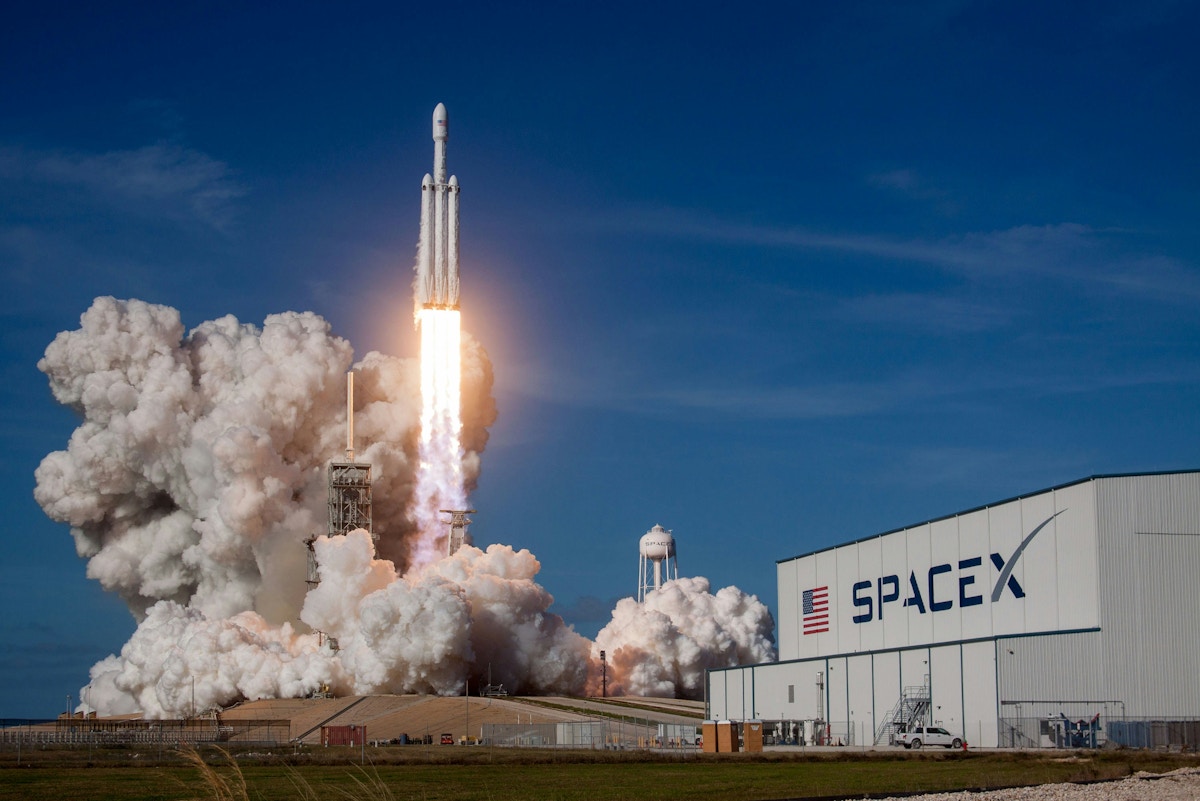
SpaceX’s lowest-possible environmental, social and governance (ESG) rating from global ratings firm MSCI has put the newly listed aerospace company at the centre of a wider debate over whether sustainability scores meaningfully capture material investment risks or offer an inconsistent measure of corporate behaviour.
MSCI assigned SpaceX a CCC rating on 11 June, one day before its US$75 billion initial public offering, placing the company in the lowest category of the index provider’s ESG scale. MSCI said the rating reflected high exposure to ESG risks and weak management of those risks.
The company also received a score of one out of 10 in MSCI’s controversies assessment and an “orange flag”, indicating involvement in one or more severe ongoing controversies. Its governance score was 3.2 out of 10.
The rating has drawn attention partly because MSCI uses the same CCC label for the lowest-rated companies in its corporate ESG framework and for the lowest-rated sovereigns in its government ESG framework. Russia was cut to the lowest sovereign ESG category after its 2022 invasion of Ukraine.
MSCI says its corporate ESG ratings are designed to assess a company’s resilience to financially relevant, industry-specific sustainability risks and opportunities, rather than to judge whether a company is beneficial to society. Companies are rated from AAA to CCC relative to global industry peers.
SpaceX founder and chief executive Elon Musk dismissed MSCI’s ESG rating in a post on X, writing: “Unfortunately, electric rockets are impossible.”
The comment echoed his criticism of ESG ratings in 2022, when Tesla was removed from the S&P 500 ESG Index over concerns including workplace practices and governance. Musk at the time called ESG a “scam”.
Supporters of Musk flocked to social media to argue that ESG frameworks can penalise companies working in technologically important but emissions-intensive sectors. MSCI’s methodology, however, focuses on how well companies manage financially material ESG risks, including governance, labour, safety, environmental and controversy-related issues.
Governance concerns have centred on SpaceX’s dual-class share structure, which gives Musk outsized voting power, as well as provisions that critics say limit shareholder oversight and make it harder for investors to challenge management decisions.
The rating could also complicate demand from sustainability-focused investors, particularly in Europe, where asset managers face tighter disclosure and fund-labelling rules. The European Union has also moved to regulate ESG rating providers, with new rules aimed at improving transparency, comparability and the management of conflicts of interest in the ratings market.
Academic research has long questioned the reliability of ESG ratings. A 2022 study published in the peer-reviewed journal Review of Finance found significant divergence among six major ESG rating agencies, including MSCI, with disagreement driven mainly by differences in measurement and scope rather than simple differences in weighting.
The study has become a common reference point for investors and regulators debating how much weight should be placed on any single ESG score. Its findings suggest that a low rating from one provider can be influential, but should not be read as a universally accepted verdict on a company’s sustainability profile.
However, MSCI has argued that its ratings are financially relevant. In a 2024 study, the index provider said it found a historical correlation between higher MSCI ESG ratings and lower costs of capital in both equity and debt markets.
The controversy is unlikely to derail SpaceX’s expected entry into major stock market benchmarks. MSCI has said it applies fast-entry rules to large IPOs, potentially allowing major listings to join key indices sooner than under traditional schedules. FTSE Russell and Nasdaq have adopted similar mechanisms for mega-cap listings.
Inclusion in those benchmarks could trigger billions of dollars of purchases from passive investment funds that track major indices.
However, SpaceX remains ineligible for inclusion in the S&P 500 because it does not yet meet requirements related to trading history, public float and sustained profitability.
Investors are now awaiting the company’s first earnings report as a public company, expected later this summer, while also weighing reports that SpaceX is considering a bond sale of up to US$20 billion to support expansion of its artificial intelligence and space businesses.