



As Toronto hosts the 2026 FIFA World Cup, the city is welcoming large crowds, international visitors and volunteers into stadiums, transit hubs, fan spaces and public areas.
For many people, the World Cup is about soccer, national pride and global celebration. But for host cities, it’s also a public health event.
Toronto is hosting six FIFA World Cup matches and the FIFA Fan Festival is running until July 19. The city and FIFA26 Canada sought to recruit 3,000 volunteers to support fan experience, accessibility, media operations, logistics and ambassador roles and received hundreds of thousands of applications.
This raises an important question: could major sporting events strengthen public health by engaging nursing students as supervised volunteers?
Our research suggests they could, but only if students aren’t treated as a convenient source of unpaid labour. For future sporting events like the FIFA World Cup, nursing students could be engaged as future health professionals whose roles are clear, supervised, connected to their skills and designed with equity in mind.
Pressure on public health systems
Large sporting events are often discussed in terms of tourism, economic impact and global visibility. Those are important, but that’s not the whole story.
The World Health Organization describes mass gatherings as events that can place pressure on public health resources and require planning across risk assessment, emergency preparedness, response and health services. The United States Centers for Disease Control and Prevention also notes that mass gatherings raise concerns related to infectious diseases, heat, crowd movement, injuries and co-ordination with local health systems.
This doesn’t mean major sporting events are unsafe; it means they require public health planning that goes beyond security and transportation. Preparedness also includes clear communication, accessibility support, early recognition of risk, culturally responsive interaction and knowing when to connect someone to qualified professionals.
Nursing students could contribute to this broader public health ecosystem, but only when they are properly prepared and supervised.
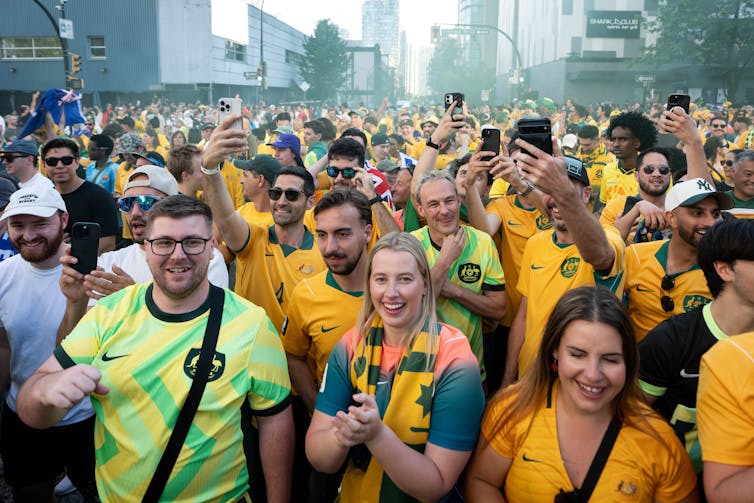
THE CANADIAN PRESS/Ethan Cairns
Motivated by career development
In a recent study published in the Canadian Journal of Nursing Research, myself, nursing scholars Kateryna Metersky from Toronto Metropolitan University and Yasin M. Yasin from the University of New Brunswick surveyed 241 nursing students in Toronto about volunteering at the 2026 FIFA World Cup.
The findings challenge a common assumption. Nursing students are not mainly motivated by love of sport or patriotism. Their strongest motivations were career development, expression of values and recognition. In other words, students were interested because volunteering offered a chance to grow professionally, contribute to the community and gain experience relevant to their future nursing careers.
This matters for organizers because recruitment that focuses only on excitement, soccer fandom or national pride may miss what nursing students actually value. For many students, global events offer the chance to learn, serve and apply health-related knowledge in a real-world setting.
In a second qualitative study currently under peer review, our research team interviewed 21 nursing students about their expectations, support needs and concerns related to FIFA 2026 volunteering in Toronto.
Students described volunteering as a possible pathway to workforce development. They saw the event as a chance to build communication skills, work with diverse communities, practise teamwork and gain confidence in busy public settings. But they were also clear that generic volunteer roles were not enough.
Students wanted roles connected to their nursing education, including first aid support, health communication, crowd-safety awareness, accessibility assistance, emergency response support and public health information. They also wanted to know what they would be expected to do, who would supervise them and when they should ask for help.
Nursing students have a role to play
This distinction is critical. Nursing students are learners, not licensed nurses. They should never be placed beyond their competence or used as substitutes for paid health professionals. But with proper boundaries, they could help visitors navigate services, support culturally responsive communication and connect people to trained professionals.
Willingness to volunteer also doesn’t mean students can easily participate. Many nursing students balance course work, clinical placements, paid employment, commuting and family responsibilities. Some students in our qualitative study were interested in volunteering but worried about time, transportation, cost and fatigue.
That raises an equity issue. If volunteering requires unpaid time, transportation costs or schedule flexibility, participation becomes easier for students with more financial security and fewer responsibilities. Students who work, commute long distances or support family members may be left out.
A fair volunteer program should not assume all students can give time in the same way. Flexible scheduling, transit support, meals, certificates, references, digital badges and academic recognition could make participation more accessible. These supports would also help organizers recruit and retain a more diverse volunteer workforce.
(Getty Images For Unsplash+)
Preparing students
To make nursing student roles meaningful and safe, nursing schools and event organizers could develop strategically designed learning modules before and during volunteering. These modules should not be designed to turn students into emergency responders or substitute for licensed professionals. Instead, they should equip students to contribute in clearly defined, supervised roles during public health responses at large-scale events.
Training could include crowd safety, first aid awareness, heat-related illness, infection prevention, accessibility support, culturally responsive communication, emergency escalation, trauma-informed interaction and ethical boundaries.
Simulation and online learning modules would be especially useful. Students could practise helping a distressed visitor, recognizing urgent care needs or supporting people with mobility needs.
These modules could be offered as micro-credentials or integrated experiential learning within nursing programs. Reflection after volunteering could help students connect the experience to nursing competencies, public health preparedness, team work and professional identity formation.
These experiences would support skills that matter in nursing practice: communication, teamwork, situational awareness, cultural humility, public health thinking and emergency preparedness. Clear role descriptions, liability coverage, occupational health guidance and supervision by qualified professionals are essential.
Supporting cities when the world arrives
Mega-events are often remembered through matches, ceremonies and tourism numbers. But they can also leave a public health legacy.
Large sporting events like FIFA 2026 could help build models to involve health-care students in safe, supervised public health preparedness. Such models could be useful beyond soccer.
Cities increasingly face climate-related emergencies and disease outbreaks, while festivals and cultural events also put pressure on health systems. Future nurses must be ready to work in hospitals and clinics, but also in community spaces and during public emergencies.
As Toronto hosts FIFA 2026, the city has an opportunity to think about volunteers not only as event helpers, but as part of a broader public health strategy.
The lasting legacy of the World Cup may include how host cities prepare future health professionals to care for the public when the world comes to town.