



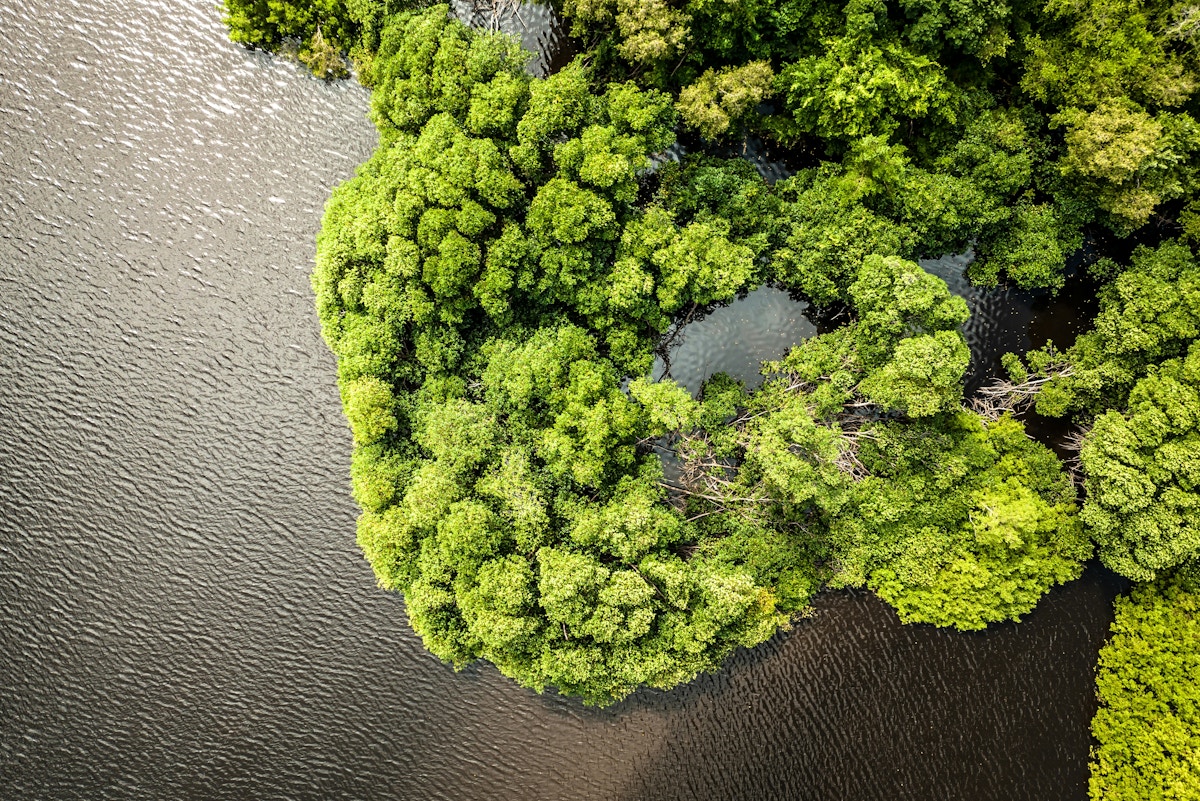
The world’s mangrove forests, critical coastal ecosystems feared to be on the brink of collapse, are making an unexpected recovery overall, according to research published in June 2026 by scientists at Tulane University in New Orleans in the US The study found that as deforestation and degradation have slowed down over the past decade around the globe, the woody plants have managed to bounce back in many areas.
The study analysed satellite data from the past four decades. It found that unexpected expansion and regrowth across the world began counterbalancing mangrove forest loss around 2010. The rate of gain has nearly outpaced losses, resulting in about a cumulative 1 per cent global decline since the 1980s. The recovery is predominantly driven by expansion of mangroves into new areas rather than recovery of existing forests.
Most previous studies on the issue have used radar, which struggles to distinguish mangroves from other ecosystems. This research created a 30-meter resolution annual data set from Landsat satellite images to more accurately identify mangroves around the world from 1984 to 2023.
The study also found that mangroves are becoming less degraded. Within mangroves, a greater proportion are closed-canopy forests, which means they are denser, retain more carbon and help secure shorelines. These closed-canopy sections increased from about 50 per cent of mangroves worldwide in the 1980s, to about 58 per cent by 2023.
“Our study shows some new ideas about [mangrove] recovery. We find that deforestation and degradation rates are slowing down,” said lead author of the study Zhen Zhang, a postdoctoral scholar at Tulane University School of Science and Engineering.
“
We hope that this more optimistic story will help conservation by focusing on the successes we’ve already had in reducing deforestation, and by showing how mangroves can grow back if we give them the chance.
Daniel Friess, professor, Tulane University
Mangroves have shrunken globally as a result of man-made disruptions, including golf courses, agriculture like rice fields and housing developments. Also damaging mangroves are natural disturbances like cyclones and coastal erosion.
The IUCN Red List of Ecosystems reported in 2024 that about half of the world’s existing mangroves are vulnerable, endangered or critically endangered. IUCN is the global wildlife conservation authority.
From the study’s start in the 1980s to around 2010, mangroves declined nearly 3,000 square kilometres (about 1,200 square miles), roughly equal to the US state of Rhode Island. The loss was overwhelmingly concentrated in Southeast Asia, peaking between 1990 and 2005, when intensive deforestation in Myanmar and Indonesia drove global mangrove losses.
However, over the past 16 years, global rates have reversed, resulting in a near net gain of mangrove habitat. While it is difficult to determine one specific reason for the rebound, the study suggests a combination of restoration efforts, legal protections and natural recovery. In river deltas, where newly-formed coastal mudflats create ideal sediment conditions, mangroves have been opportunistic colonisers. There have even been reports of mangroves extending into abandoned aquaculture pools.
“I think we systematically underestimated the ability of mangroves to expand by themselves,” Zhang said.
Not all mangrove forests have recovered equally. While Southeast Asia has experienced significant progress, West and Central Africa are trending in the other direction, driven largely by increased losses in Nigeria since 2002. The Niger Delta has become a hotspot for mangrove decline due to crude oil production in the region.
Mangrove forests need to be recovered, researchers say
Despite this, the researchers are excited about the possibility of renewed mangrove forest recovery. The study highlights that mangroves act as important carbon storage. Despite their small footprint, mangroves contain a higher density of carbon than many of their other woody counterparts, making their protection a strong potential nature-based mitigation strategy in the fight against climate change, according to Zhang.
“Mangroves are pretty small compared to some huge ecosystems like the Amazon rainforest, but they’re globally distributed,” Zhang said. “If you compare mangroves to tropical rainforests, mangroves may hold four or five times more carbon stock compared to rainforests. If we have limited money to restore forests, based on carbon, we think mangroves are more important because they have more carbon density.”
The researchers suggest that conservation plans should prioritise halting deforestation and focus on supporting regenerating mangrove forests rather than intensively planting new ones.
Co-author of the study Daniel Friess, a professor of earth and environmental sciences at Tulane University, said, “We hope that this more optimistic story will help conservation by focusing on the successes we’ve already had in reducing deforestation, and by showing how mangroves can grow back if we give them the chance.”
Still, the authors caution against complacency. According to Zhang, “our study doesn’t mean that mangroves are totally healthy globally. In many local regions we still see deforestation going on. That’s why we need to conserve them.”
Part of the expansion, and its unevenness, may also be due to global warming.
Louisiana saw a significant increase in mangroves that scientists attribute, at least in part, to increased temperatures. However, rising temperatures are not always a positive for mangroves. In Indonesia, rising temperatures may be altering mangroves’ ability to photosynthesise sunlight.
Extreme weather events, driven by climate change, have also been associated with mangrove destruction, like the dieback in the US state of Texas after a severe freeze in 2021 or damage from Hurricane Ian in the US state of Florida the next year. Shoreline erosion and human deforestation are also ongoing.
Nonetheless, the researchers said their work shows signs of hope.
“All of this is not guaranteed in the future. It all depends on how we continue to halt deforestation,” Zhang said, but “if we can halt deforestation to control their loss and degradation, then mangroves have a very strong ability to recover.”
This story was published with permission from Mongabay.com.