



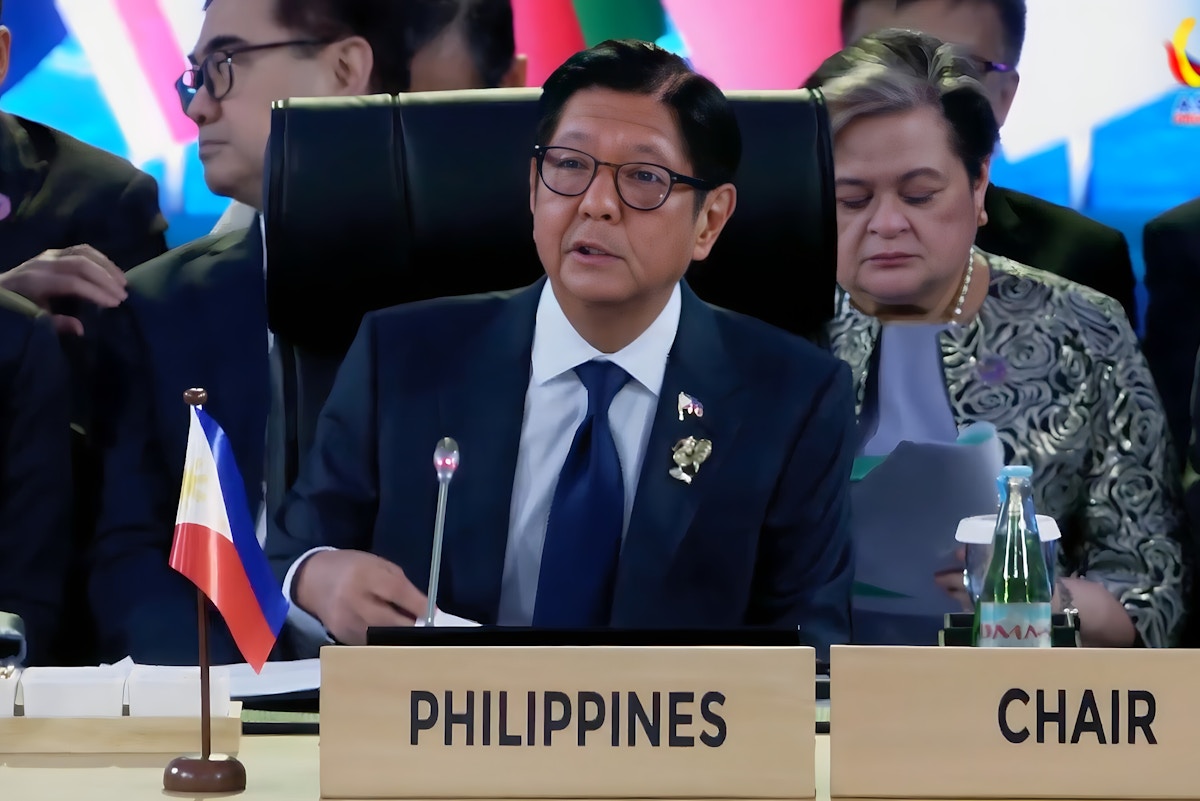
Philippines President Ferdinand Marcos Jr. urged Southeast Asian leaders to fast‑track renewable energy development and bolster food security, saying both are critical to shoring up the region’s resilience amid mounting economic pressures from the escalating conflict in the Middle East.
“The region must strengthen coordination and reinforce preparedness, [and] pursue practical collective measures to safeguard a stable energy supply and improve interconnectivity, all the while advancing alternative and renewable energy sources to protect our economies from further shocks and to respond to the urgent challenge of climate change,” Marcos, Jr said in his speech at the opening of the 48th Association of Southeast Asian Nations (Asean) Summit Plenary in Cebu, Philippines which runs from 6 to 8 May.
The Philippines, as this year’s Asean chair, will host year‑long meetings that will empower the region’s security, economy, and people. The goverment earlier highlighted how climate change will also be a key issue in discussions.
The Philippines has responded to the Middle East crisis by ramping up clean energy, showing the strongest push in Southeast Asia to upgrade grids and storage for new renewables, according to new research.
It has switched on 250 megawatts (MW) of solar and 450 megawatt-hours (MWh) of battery storage, creating the country’s largest operational storage system, and is fast-tracking around 1,471 MW of additional renewable and storage projects due online by April.
Indonesia has made the biggest single new capacity pledge, vowing to deploy 100 GW of solar in the next three years. Thailand has committed the most financing, offering about US$154 million in soft loans for households to install rooftop solar or buy electric vehicles (EVs), with support capped at US$61,000 per person. Laos has cut EV registration and service fees by 30 per cent and Cambodia has reduced import tax on EVs and solar systems to zero.
Vietnam stands out for its moves to phase out fossil fuels, including updated Just Energy Transition Partnership plans to retire coal plants and a request from Vingroup to drop a liquified natural gas-to-power project. Malaysia has talked up the need for large-scale battery storage to integrate more renewables but has yet to announce grid-specific measures tied to the war, though it plans 18 waste-to-energy plants that could generate up to 600 MW by 2040.
Marcos, Jr also told the plenary that disruptions in trade and transport stemming from the closure of the Strait of Hormuz quickly affected food prices and supply, especially fertilisers.
Countries like the Philippines have limited domestic fertiliser manufacturing capacity, with local production meeting only about 22 per cent of annual fertiliser use, leaving farmers highly exposed to global supply and price shocks.
Cambodia and Myanmar are fully dependent on imports and are most vulnerable to trade disruptions. Other Southeast Asian neigbours which have limited domestic production capacity that covers only a fraction of demand, including Malaysia (39 per cent) and Thailand (24 per cent) are also highly exposed to both price and supply risks.
“Our task is to ensure that Asean remains responsive, to strengthen and expand intra-Asean trade, and build the capacities to safeguard and fortify our food systems across the region,” said Marcos, Jr.
Nonprofit Global Renewables Alliance (GRA) said Marcos’ remarks highlighted the “urgent realities facing the region” at a time of heightened geopolitical uncertainty, energy price volatility, and growing climate risks.
“[Marcos, Jr’s statements] reflect a growing recognition across Southeast Asia that renewable energy, stronger grids, and regional cooperation will be central to the region’s long-term energy security and economic resilience,” said Rex Amancio, regional lead for Asia-Pacific at GRA.
“Scaling renewable energy across Southeast Asia will require modern, flexible, and interconnected power systems. These must be capable of integrating growing shares of solar, wind, storage, and electrified end-use sectors. Regional cooperation on grids and power systems will be critical. It will enhance reliability, reduce costs, and strengthen resilience against future disruptions,” he added.
