



Small and medium-sized enterprises (SMEs) make up 98% of all businesses in South Africa. There are between 2.4 million and 3.5 million in the country. They play a vital role in creating an estimated 66% of all jobs and supporting local economies.
But little has been known about SMEs’ environmentally friendly or sustainability practices. For example, do they protect the environment they work in? Do they see environmental stewardship as a core part of managing their businesses? Are they willing to switch to renewable energy? And do SMEs include environmentally friendly social development initiatives in their operations and strategies?
Read more:
Small businesses in Africa will be on the frontline of climate change
Other sustainability practices in the small business world include developing ethical manufacturing and retail products, or being part of sustainable local social development, upskilling programmes and employment equity initiatives.
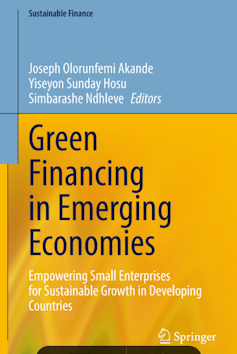
We are accounting and small business researchers who recently wrote about how South African SMEs approach sustainability for the book Green Financing in Emerging Economies. We used the annual reports of 27 SMEs listed on the AltX Johannesburg Stock Exchange between 2017 and 2024 to inform our research.
We used a computer program to look in the reports for answers to key questions. Do organisations show they understand sustainability issues? Are they prepared for climate-related risks? Are they ready to invest in or use environmentally friendly financing? What actions are they actually taking? And what’s stopping them from becoming sustainable?
We chose SMEs from a diverse range of sectors so that we could get a big picture. They included finance and business services, mining and quarrying, manufacturing, community services, electricity, gas, water, transport, and construction.
We found that SMEs are most likely to adopt sustainable practices if they are aware of green finance, want to adapt to climate change and believe in sustainability. This is even if they face many obstacles in doing so.
Read more:
How small businesses can manage their impact on the environment
Our research fills a gap in understanding what drives sustainability in developing economies, particularly South Africa.
Policymakers should promote green finance, reduce red tape such as slow municipal and government approval processes, and support capacity-building to enable SMEs to follow environmentally friendly practices.
Climate readiness matters
Small and medium businesses need to be prepared to cope with climate-related risks. These include extreme weather, water shortages and supply chain disruptions.
SMEs that recognise these risks are more likely to take steps to adapt to global warming. For example, they might invest in resilient infrastructure, such as clean energy, and use water-saving technologies.
For SMEs, climate readiness is not only about protecting the environment. It is also about making sure their businesses survive.
Awareness plays a critical role
One of our most important findings is that awareness strongly influences whether SMEs adopt sustainability practices. Being aware of climate change doesn’t automatically translate into adopting sustainability practices because of costs and other factors. However, SMEs that are aware of sustainability practices have a higher probability of adopting them.
SMEs that understand that introducing sustainability measures can reduce business costs over time are more likely to go green.
Read more:
Energy crisis: how to help small businesses survive and become more sustainable
However, our research also found that many SMEs are not taking up environmentally friendly measures. This is despite the growing push from concerned groups, like environmentalists and responsible investors for greener business. The reason: SMEs lack clear, reliable information on sustainability.
Closing this knowledge gap could unleash a wave of environmentally responsible practices across the small business sector.
Green finance alone is not enough
Green finance from providers such as banks, development finance institutions and state-owned entities is designed to support investments in renewable energy, energy-efficient equipment or production processes that don’t pollute.
It’s often assumed that difficulty in getting green finance is the biggest reason SMEs aren’t environmentally friendly.
Our findings, however, reveal an interesting and somewhat unexpected result.
Read more:
South Africa’s stock exchange for smaller firms: some benefits, but not a magic wand
In some cases, SMEs may be aware of green finance opportunities but still unable to start sustainable projects. This can happen because they lack the technical capacity, operational systems or institutional support needed.
In other words, funding alone is not enough. Businesses also need practical support.
Recognising problems shows businesses are trying
SME owners might think that going green is too expensive, that they don’t have the expertise, that they may have to comply with too many rules and that their companies might not even benefit.
However, another surprising finding from our study is that when SMEs openly identify and report these barriers, it shows that they are thinking deeply about sustainability.
Businesses that recognise challenges are often those that have already begun exploring sustainability. By identifying obstacles, they are also better positioned to seek solutions and support.
This shows it’s important for SMEs, policymakers and financial institutions to work together to solve the practical challenges that businesses face.
What needs to happen next
Supporting sustainability among SMEs requires a coordinated effort. Awareness programmes are essential. Governments, industry organisations and universities can share knowledge about sustainable business practices and their benefits. Financial institutions should ensure that green finance initiatives are accessible and practical for small businesses. This may involve simplifying application processes, providing technical guidance or offering blended financial and advisory support.
Policymakers should make sustainability easier for SMEs to adopt. This could include offering training and incentives for energy efficiency. Partnerships that help businesses access new technologies could also be a key policy requirement.
Read more:
Entrepreneurship funds in Africa: distinguishing the good from the bad
Although individual SMEs may seem small, their collective impact is significant. When millions of small businesses adopt sustainable practices, the environmental and economic benefits will be substantial.
The transition to a greener economy cannot succeed without small businesses. By supporting them much more effectively, South Africa can build a more resilient, competitive and environmentally responsible economy.