



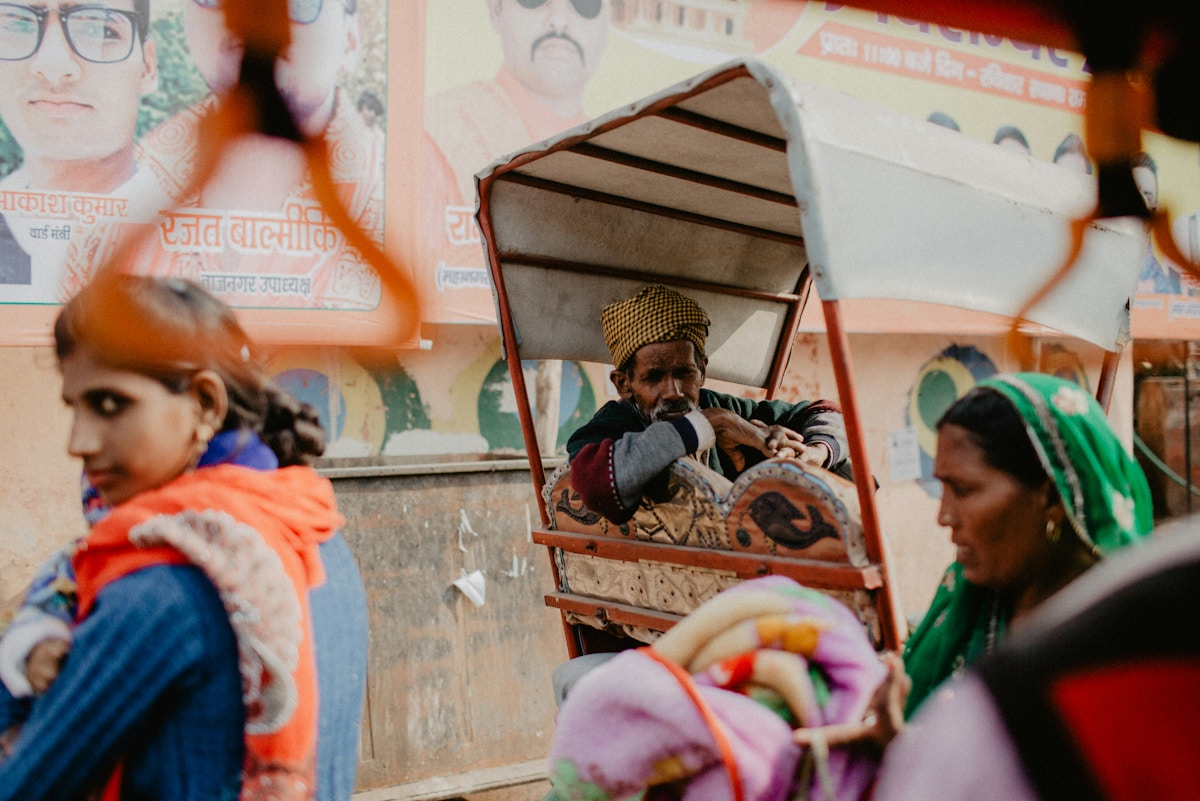
Earlier HAPs were often highly technical and included early warnings, emergency response protocols and public advisories. While they did identify vulnerable groups, they did not have tailored measures for street vendors, construction workers, waste pickers and other informal workers who face daily heat exposure, say experts.
Krishna says that the new generation of heat action plans, emerging in 2025, is more grounded in community needs, incorporating inputs from these heat-exposed groups.
In that year, the National Disaster Management Authority advisory explicitly urged better recognition of informal workers. Some cities have complied. For instance, Delhi’s 2025 HAP requires authorities to ensure undisrupted water supply and access to shaded areas and cooling shelters in informal settlements.
Reimagining city planning
Adaptation to heat from climate change, which drives temperatures higher, requires rethinking how cities are planned and developed, say experts in India and worldwide.
But one of the challenges is that cities tend to think about heat only when it is already hot, says Patricia Fabian, an expert on urban heat at Boston University in the US.
“In extreme conditions, they shift into emergency mode – trying to prevent deaths, reduce hospitalisations, check on neighbours. In that moment, it is difficult to think long term,” she says.
But long-term resilience means people can stay cool at home, at work and at school, so cities won’t have to rely so heavily on emergency response, she adds.
This means better planning for residents, and of basic services, as well as for features that cool urban areas, such as green spaces. Planting trees and installing cooler pavements could help, as could improving dwellings through better insulation, cooling equipment and white roofs that reflect sunlight instead of absorbing it. More focus is needed on such measures, Fabian notes.
But district cooling or large-scale systemic solutions seem distant when there remain struggles with basic urban coordination, notes Krishna. “Many cities lack green space, planning, zoning clarity and basic services,” he adds.
The most vulnerable populations – such as outdoor labourers and those living in bastis – also need to be more visible to planners via better data, and integrated into plans. “They don’t just need a place in the conversation; they need to be at the centre of it,” says Mehra.
Discussions of these vulnerabilities will mean dealing with sensitive sociocultural issues. “We know from research that caste and religious minorities are concentrated in particular areas. In India, caste is a critical vulnerability,” says Mehra. “We cannot choose not to see caste, religion, or race in planning.”
Expanding social protection for those least able to cope with the impacts of heat is essential, say Mehra and Krishna.
“Heat is felt very personally on our bodies, but we have to connect that experience to the broader condition of our cities,” says Krishna. “Heat collectivises us, but we must also recognise that in the 21st century, there are no natural disasters, only man-made ones.”
This is a CATCH story. This story is part of Dialogue Earth’s work on the Community Adaptations to City Heat (CATCH) project, in partnership with Boston University. The project is funded by Wellcome. All Dialogue Earth content is editorially independent. Read more stories from CATCH.
This article was originally published on Dialogue Earth under a Creative Commons licence.
