



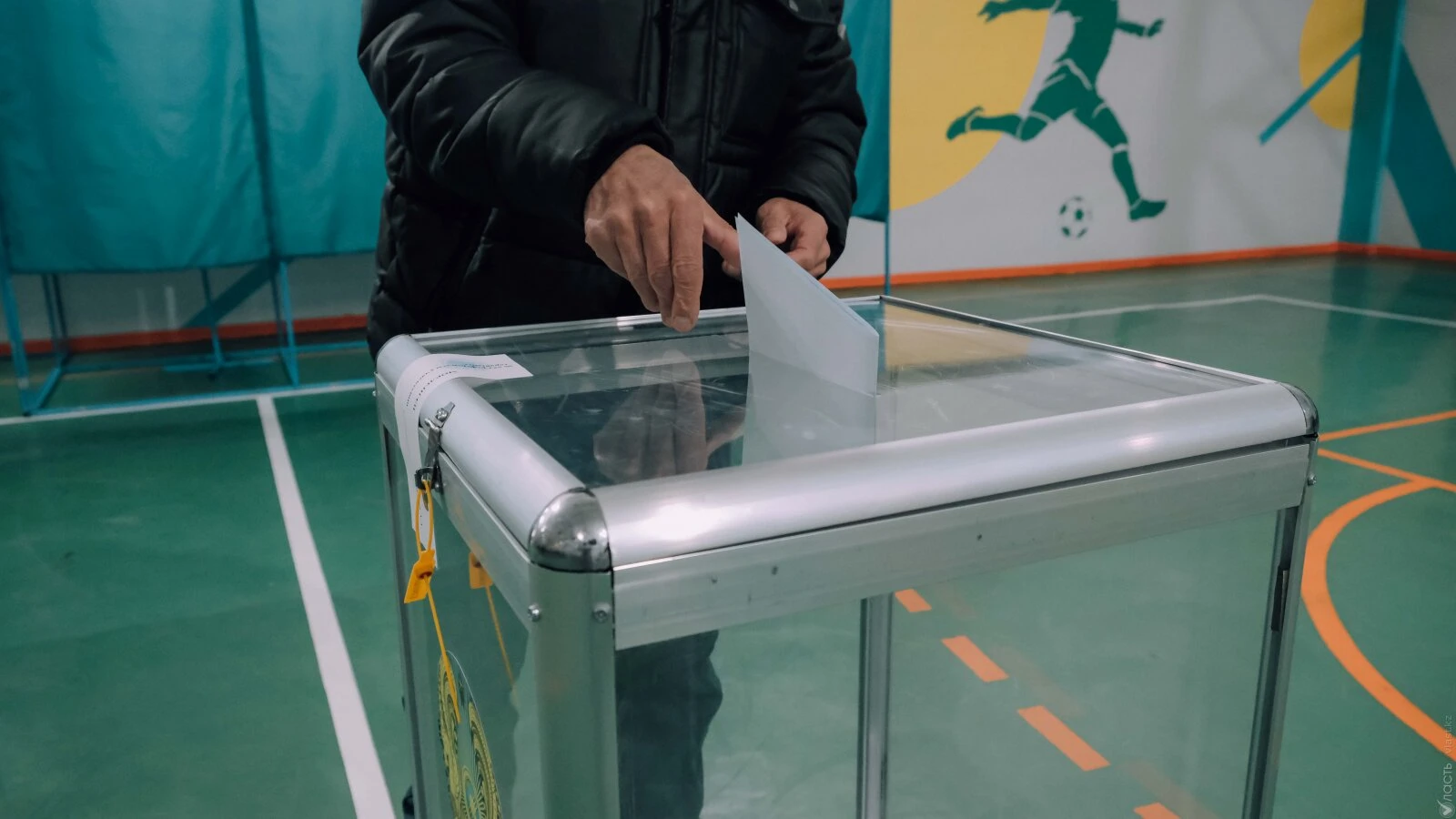
A voter casting a ballot in Kazakhstan. Photo by Daniyar Mussirov. Used with permission.
This article was written by Dmitriy Mazorenko for Vlast and published on March 29, 2026. An edited version is published on Global Voices under a media partnership agreement.
Voters in Kazakhstan cast their ballots in overwhelming favor of a proposed new Constitution on March 15, 2026. The government presented this as the final stage of a “transformation of the state,” which will signal the birth of a “New Kazakhstan.”
A number of analysts, however, hold different views. According to them, the new Constitution not only upholds but also strengthens the existing “superpresidential” model, making it significantly more difficult for the public to scrutinize or even participate in politics.
Kazakh civil society is increasingly demanding the expansion of rights and more power to participate in legislative decisions.
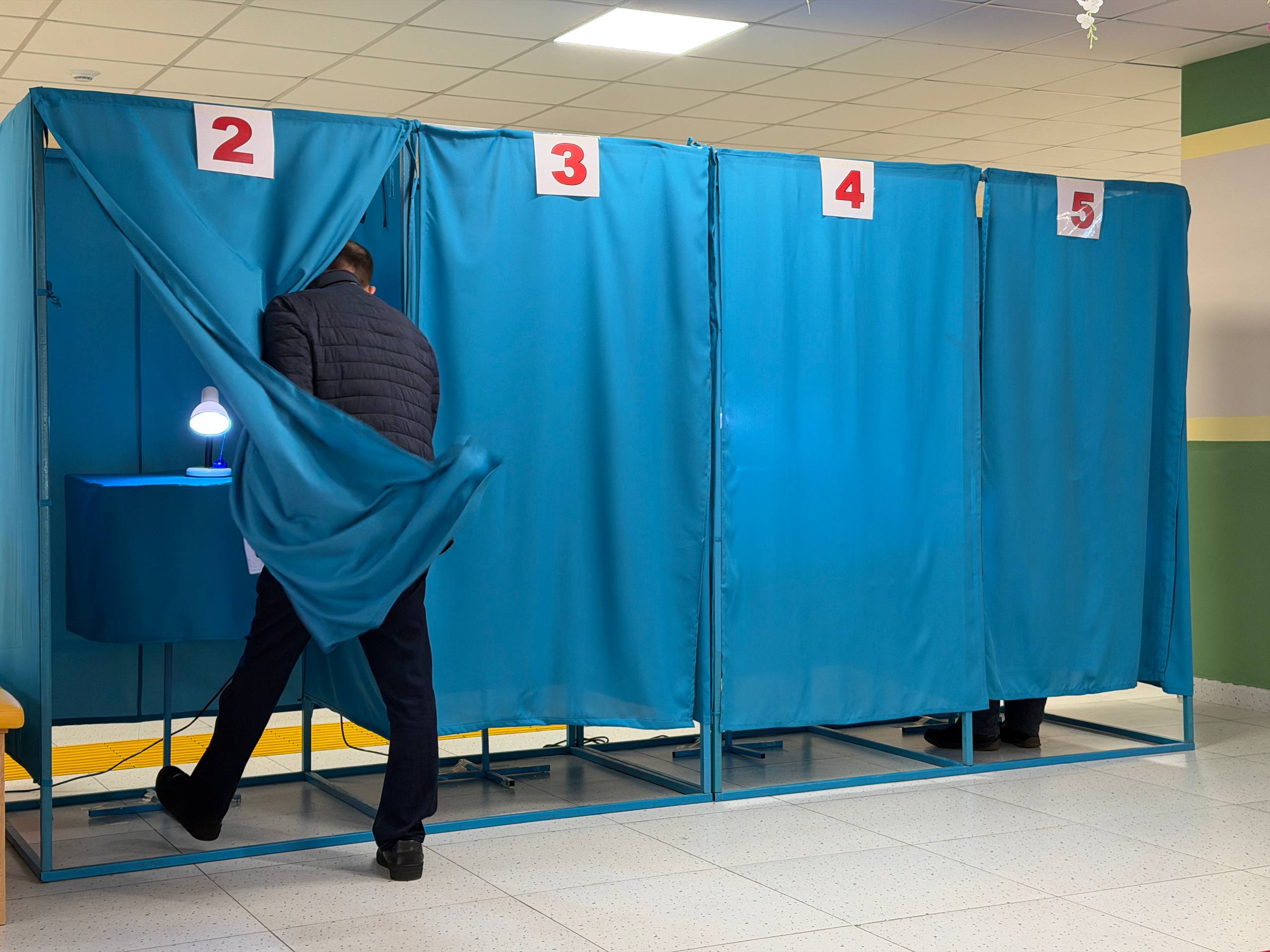
A voter casting a ballot in Kazakhstan. Photo by Daniyar Mussirov. Used with permission.
In response, the government proposed largely inconsequential reforms and referendums, the outcomes of which are seemingly pre-determined. Should Kazakhstan’s economic situation continue to worsen, these tensions are likely to boil over and lead to protests.
The new power structures established by the new Constitution are also likely to lead to many of the same issues from the era of former President Nursultan Nazarbayev: namely, intra-elite conflicts and greater political instability.
Parliament down, President up
Zauresh Battalova, head of the Parliamentarianism Development Fund, argues that the new Constitution will create an even more distorted power vertical in Kazakhstan. The “superpresidential” system established in 1995 has not only been preserved, but further reinforced by reforms initially designed to strengthen Parliament.
“Most major decisions, including most key appointments, are now the president’s prerogative,” Battalova stated. “Everything now depends on one person.”
Temur Umarov, a research fellow at the Berlin-based Carnegie Russia Eurasia Center, prefers to view the strengthening of presidential powers as a continuation of pre-existing traditions. He told Vlast:
[President Kassym-Jomart] Tokayev has shed all the appearances of a democratic president and is attempting to enshrine all of the powers he previously held.
Battalova is convinced that Parliament’s authority has significantly decreased in this new power structure. Instead of being strengthened, Parliament’s legislative and representative functions, as well as the ability to provide effective scrutiny to the executive, are being eroded to reinforce other institutions.
Namely, the President, the government, and the People’s Council, a newly established consultative body designed to help foster dialogue between people and government.
She believes the establishment of the People’s Council will impact both Parliament’s legislative and representative functions. This body will have the right to propose legislation and suggest referendums on any issue.
Umarov also considers the People’s Council as a functional replacement for the Senate, but from a different perspective. The new body will be staffed by former senators, providing them with continued access to power and personal guarantees.
Political analyst Dosym Satpayev said he does not expect anything unpredictable from the upcoming parliamentary elections, scheduled in August 2026. Candidates will be selected exclusively from party lists.
Sociologist Serik Beissembayev also believes that the outcome of these elections will be fairly predictable. However, there is a small chance that one or more new parties will be established. He predicted:
One [new party] will be more conservative, focusing on the Kazakh language, national traditions, and identity. The other will be more feminist in tone, which will likely have a female leader to showcase the system’s openness.
However, Beissembayev noted that the window for such new parties to appear is very narrow. Any potential founders will have only a few months to register their parties, run campaigns, and meet the necessary voter threshold.
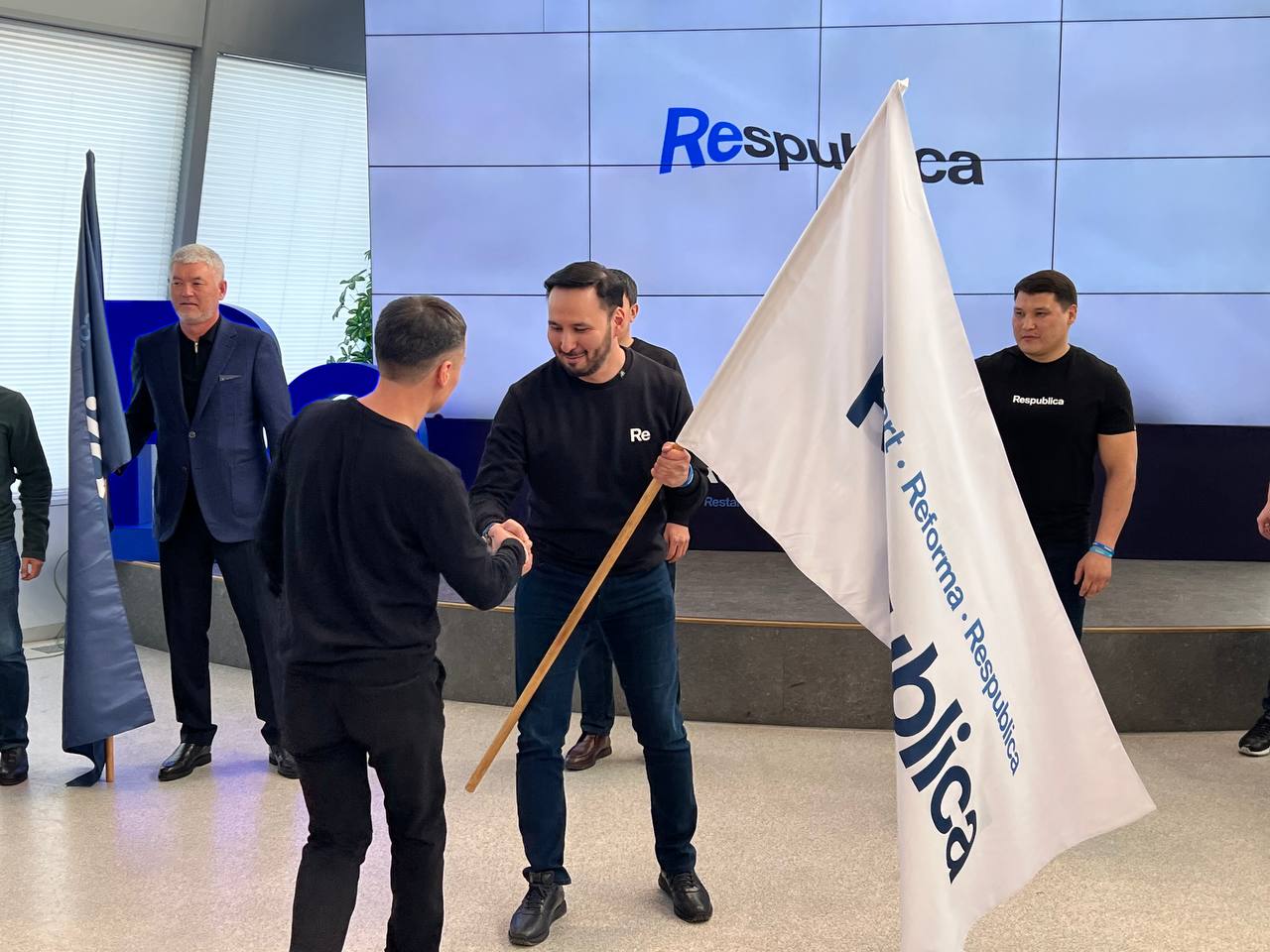
A new party, Respublica, was established in 2023. Photo by Tamara Vaal. Used with permission.
Tough times ahead
Satpayev points out that, alongside the ongoing constitutional reform, there is a growing sense of fatigue among the population with “choreographed politics.”
Citizens who previously expressed little interest in politics are no longer comfortable merely witnessing politics unfold. Instead, they want to play an active role in the decision-making processes.
The current social contract with the state is very simple, according to Satpayev: loyalty in exchange for economic efficiency, as well as basic functioning of public services and institutions.
Currently, however, the state demands loyalty whilst seemingly not fulfilling its side of the bargain, and this incentivizes these otherwise passive elements of society.
Kazakhstan is now witnessing the emergence of a new urban class, which does not view politics as taboo, Satpayev argued. For them, discussing the national budget, the quality of state services, and the state’s repressive practices is normal. This could create the conditions for new political forces to emerge.
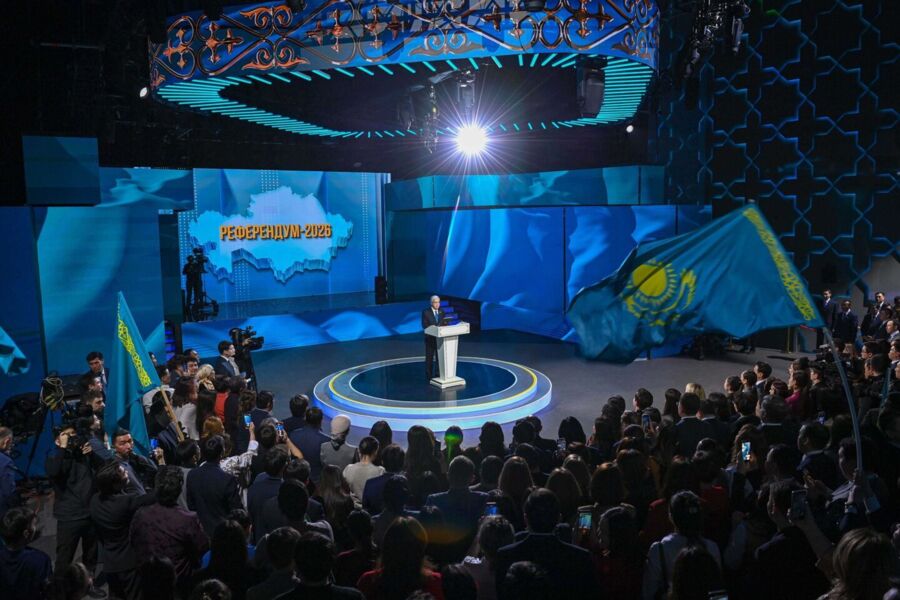
Kazakh President Kassym-Jomart Tokayev. Photo by the President’s Office. Fair use.
Despite this, Beissembayev does not expect a mass political mobilization in the near future. Over the next six months, the government will be preoccupied with organizing elections and restructuring state institutions in accordance with the new Constitution. Meanwhile, civil society will remain on the sidelines.
Beissembayev argued that repression of civil society will continue, and perhaps even worsen. The new Constitution provides the basis for this, allowing any action to be viewed as undermining national stability or contrary to traditions.
Three possible scenarios
Umarov believes that the constitutional reform was a step in the transfer of power. In his opinion, Tokayev’s career could go down one of three different paths.
The first is a successful transfer of power via the soon-to-be-appointed vice-president; the second is his potential bid for the position of UN Secretary General, and the third is nullifying presidential term limits and re-running for office.
According to Umarov, a scenario where the vice-president takes control would be the safest option, as long as intra-elite conflicts can be avoided and the new transfer of power can be successfully established.
However, Battalova does not believe that this will play out smoothly:
The state should be equipped with a reliable institution which can deal with any attempts to usurp power.
If Tokayev were instead nominated for the post of UN Secretary General, which he has expressed interest in, then this would provide him with a guaranteed level of protection that he may not otherwise receive in Kazakhstan, according to Umarov.
“His ascension to some international diplomatic position would therefore also be seen as a great elevation in Kazakhstan’s global position and a source of national pride,” Battalova said.
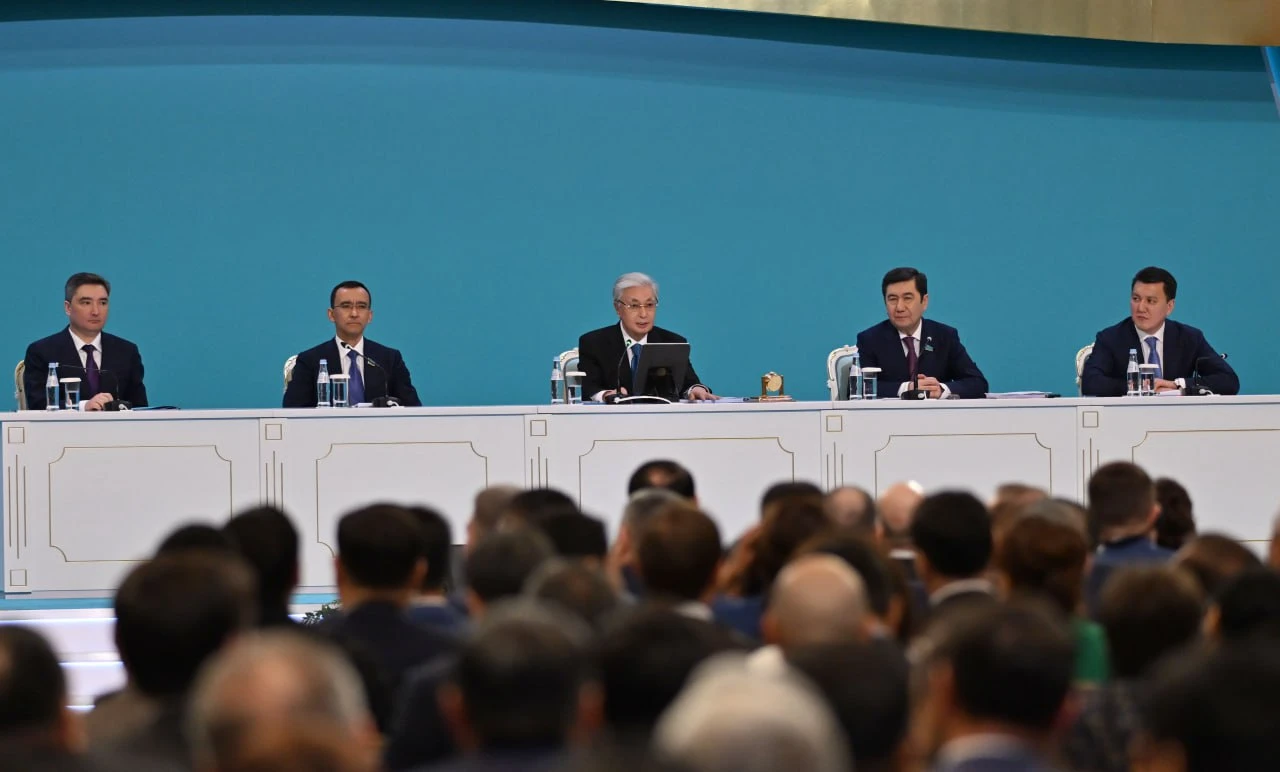
President Kassym-Jomart Tokayev (in the middel) and top level officials. Photo by the President’s Office. Fair use.
Umarov considers the third possible scenario the most undesirable for civil society, because Tokayev has already promised to serve only one term in office, an institutional rule enshrined in the Constitution.
Satpayev sees Kazakhstan’s trajectory as part of a system of adaptive autocrats, which passes through several stages.
The process starts with populism and improvements in social welfare, followed by the redistribution of property among the elite, and ends with stifling public discourse. During the Nazarbayev period, this cycle ran for decades. In Tokayev’s tenure, it moved faster. Satpayev said:
They say that we are moving forward, but we are rather running in place. The current trajectory is described as reform, modernisation, and a ‘New Kazakhstan,’ but it all serves only the purpose of maintaining power.
Fair elections and referendums could become litmus tests for societal attitudes at such a pivotal point in Kazakhstan’s history. By distorting the electoral system, the government loses touch with the real situation in the country and heads further towards a point where any shift in the power dynamic risks sparking conflict among the political elites.