



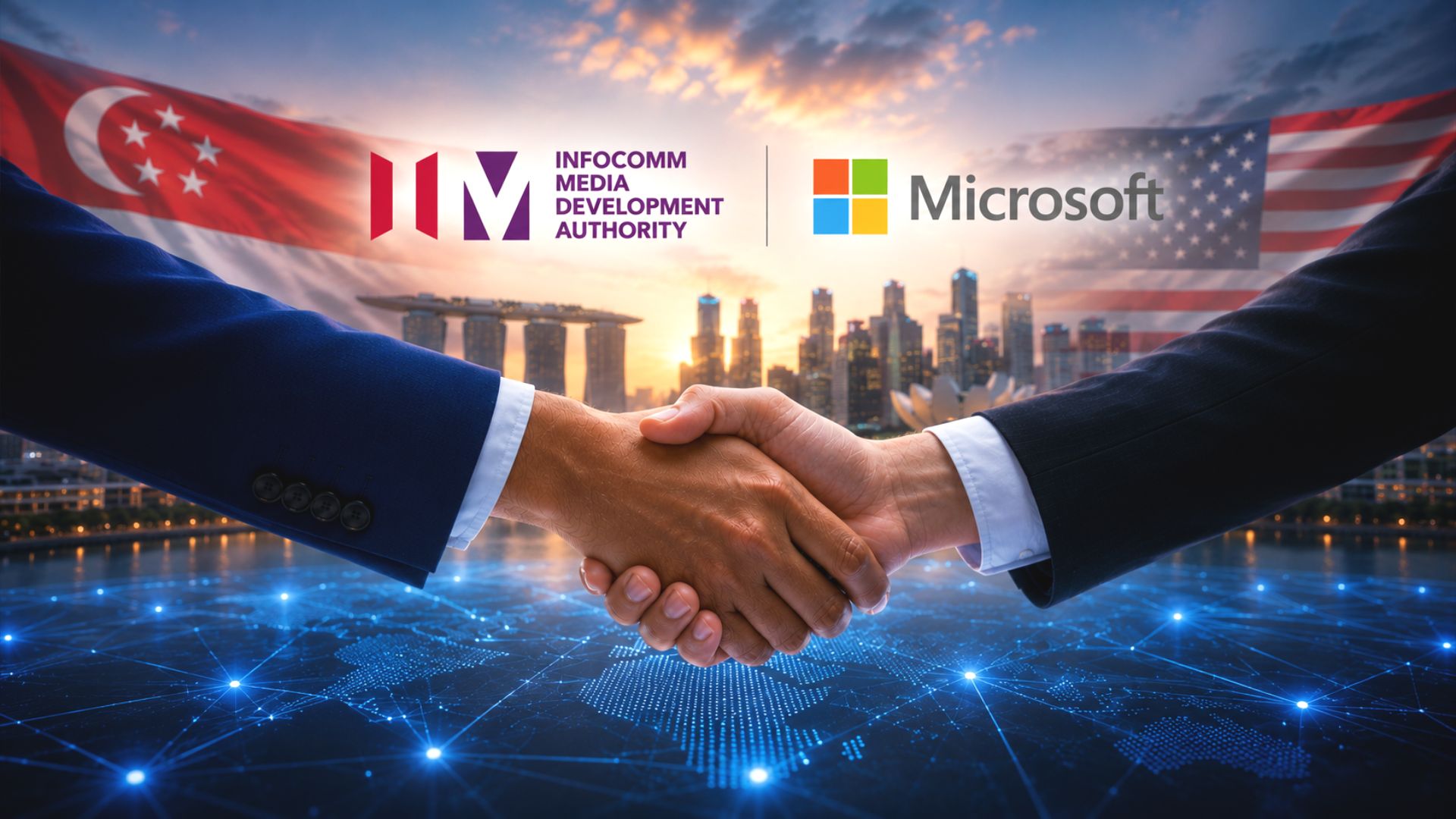
SINGAPORE: Singapore is taking another step to keep artificial intelligence (AI) development on the right track. The Infocomm Media Development Authority (IMDA) and Microsoft have signed a new memorandum of understanding (MOU) to deepen cooperation on AI safety and security, according to a joint announcement on June 12.
The partnership comes as governments and technology companies grapple with a growing challenge: AI systems are becoming more capable at a pace few organisations can keep up with alone. Under the agreement, IMDA and Microsoft will work together on research, information sharing and policy development. The aim is to encourage innovation while reducing the risks that come with powerful AI tools.
Building safeguards as AI grows more powerful
One key focus will be technical research into AI safety. The two organisations plan to study emerging areas such as agentic AI, where AI systems can perform tasks with greater autonomy. They will also develop methods, tools and benchmarks to evaluate how AI models behave and whether they meet safety standards.
Part of that work will examine multilingual AI safety, a topic that carries particular relevance in diverse societies such as Singapore. The effort also seeks to strengthen public resilience against issues linked to AI systems, including misinformation and other safety concerns. This is a growing recognition that AI safety is becoming a public policy and national security concern.
Knowledge sharing and policy development
Beyond research, IMDA and Microsoft will exchange governance frameworks, research findings and operational experience related to AI safety and security.
The collaboration will also involve the Singapore AI Safety Institute and other government agencies. Together, they will explore how governments and critical infrastructure operators can responsibly access and use frontier AI models.
This work is expected to lead to a white paper examining both sides of the equation: what governments and infrastructure operators need from advanced AI systems, and what responsibilities should fall on AI model providers.
The discussion comes as policymakers around the world try to strike a balance between encouraging AI development and preventing misuse.
Preventing powerful AI systems from automating cyberattacks
Advanced AI models are becoming more accessible to businesses, organisations and individuals. While that creates opportunities, it also raises concerns.
Security experts have warned that powerful AI systems could be used to automate cyberattacks, spread false information more effectively or assist criminal activity. Singapore has already flagged these risks.
Recently, threat actors have increasingly used frontier AI technologies to strengthen cyberattacks, highlighting the telecommunications sector as an area that must remain especially vigilant.
Against that backdrop, the IMDA-Microsoft partnership can be seen as part of an effort to prepare for threats before they become harder to manage.
Singapore’s growing role in AI governance
The partnership also reinforces Singapore’s position in international discussions on responsible AI development. Kiren Kumar, Deputy Chief Executive of IMDA, said the collaboration goes beyond policy discussions. It will involve building practical tools, benchmarks, and evaluation methods to improve the assessment of advanced AI systems.
Meanwhile, Natasha Crampton, Microsoft’s Chief Responsible AI Officer, said Singapore is helping shape global conversations around responsible AI. She noted that combining government expertise with Microsoft’s operational experience could help improve AI evaluation methods, address emerging risks and strengthen confidence in advanced AI systems.
According to IMDA and Microsoft, the goal is to create an environment where innovation can continue without compromising safety and reliability.
For Singapore, that balancing act may become one of the defining technology challenges of the decade. AI is advancing rapidly, but public confidence will depend on whether safeguards can keep pace. Building those safeguards early is easier than fixing problems after they emerge.