



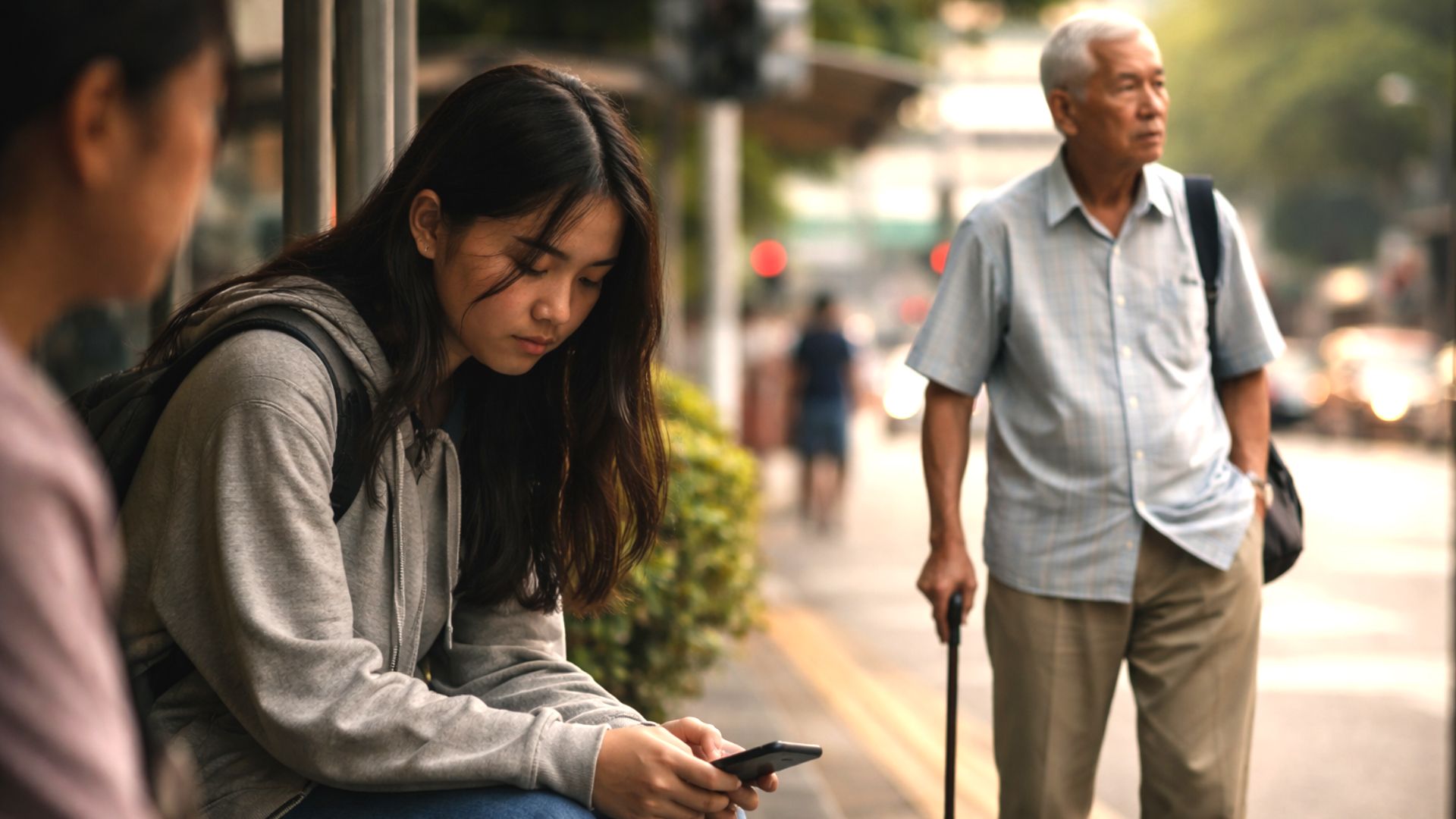
SINGAPORE: Singapore’s missing person cases are climbing, with youths and seniors now accounting for almost nine in ten public appeals.
Police recorded about 1,450 reports last year, the highest since 2021. Youths alone made up roughly four in 10 cases.
Seniors form another large share, often linked to dementia or isolation. Most cases are resolved fast, usually within a day. But the reasons behind them are more complex and harder to fix.
Youths running away, but it’s not always away from danger
For some teens, leaving home feels like a relief in the moment, but the reality tends to be harsher.
In one case, published on April 20, Channel NewsAsia (CNA) spoke to a girl who began running away at 13. She had no plans, was moving from place to place and ignoring calls from home. Over time, she went missing more than ten times. Each return didn’t end the cycle.
Social workers say such cases are becoming more frequent. Care Corner Singapore now sees about one runaway case every two months, up from a handful each year before. At the PPIS Family Service Centre, about 20 cases are handled annually.
Family conflict is common—so are school pressure, bullying, and struggles with identity or belonging. Some youths also face family violence, which makes their home feel unsafe.
Some teens also rely on people they barely know for shelter. In extreme cases, help comes with conditions, including physical exploitation, according to social worker Muhammad Zahin Saini.
Others move around, using wide social networks and staying with different friends across the island. It gives them mobility but little stability.
Mental health plays a growing role. Leela Samy from the Singapore Association for Mental Health said distress among youths has risen in the past two years. Leaving home becomes a way to cope, even if only for a short break.
Social media helps locate missing persons
When a youth goes missing, word spreads quickly online. Friends, classmates, and even strangers share posts to help locate them.
Content creator Kao Rong Sheng, known as RunnerKao, has helped amplify about ten such cases since last year. His posts often generate dozens of leads.
The leads increase the chance someone nearby will spot the missing person. It can also nudge youths to return home once the situation cools.
In some cases, parents take to social media directly. One appeal drew nearly three million views before the youths involved were found.
Police stress there is no need to wait before filing a report. Investigations start immediately, with priority given to vulnerable groups.
Seniors go missing for very different reasons
At the other end of the age spectrum, the risks look different but just as serious.
Singapore’s ageing population is one of the factors. About 100,000 people currently live with dementia. That figure could reach 152,000 by 2030.
More seniors are also living alone. Over the past decade, that number has doubled.
These conditions raise the chance of someone wandering off or leaving home without telling anyone. Some cases stem from confusion or memory loss. Others are linked to loneliness, depression, or anxiety.
One example involved a man with dementia who disappeared while walking behind his wife. He had followed someone else into a lift. He was found hours later, but the incident shows how fast things can happen.
Families are adapting to seniors going missing. Some take photos before heading out to record what their loved one is wearing. It may seem small, but it helps during a search.
Support systems are expanding
Efforts are underway to manage both ends of the problem.
For youths, agencies are working more closely with them and their families. Training programmes are now set to help parents handle conflict and improve communication.
For seniors, community networks play an important role. At active ageing centres, regular attendance helps others notice when someone is missing.
Technology is also stepping in. The CARA app alerts nearby users when a person with dementia goes missing. It currently has about 14,000 users and could grow further this year.
There are also around 800 “go-to points” across Singapore, including MRT stations and supermarkets, where lost seniors can be brought. That number is expected to rise.
Programmes like reminiscence therapy are helping seniors stay mentally engaged while allowing early signs of cognitive decline to be spotted.
The missing person trend expresses disconnection
The numbers point to something deeper than just missing persons.
For youths, it expresses unresolved stress at home or at school. Leaving becomes an escape, even when it leads to greater risk.
For seniors, it expresses that society is ageing faster than its support systems can fully keep up.
Both groups are vulnerable in different ways. One is searching for space. The other may not even realise they are lost.
The common thread is disconnection, whether emotional, social, or cognitive.
Ensuring fewer people feel the need to disappear
Families need earlier support to prevent conflict from escalating. Schools and agencies should step in sooner.
For seniors, habits like routines, ID tags, and community check-ins can make a real difference.
And for everyone else, paying attention helps. A shared post, a quick check, or a call can shorten the time someone stays missing.
Most cases are resolved within hours, but the goal is to make sure fewer people feel the need to disappear in the first place.