



A sweeping overhaul of the National Disability Insurance Scheme (NDIS) is on hold until at least August, after the federal government agreed to an eight-week extension to its NDIS bill, along with amendments, in exchange for Greens support for passing its tax changes.
The government said this week that delay will cost “a few hundred million dollars” – though won’t give a more specific figure than that until the end of this year.
The proposed changes to the NDIS represent the biggest reforms to the scheme since its founding in 2013. The government says the changes will secure the scheme’s future by restraining growth to just 2% a year over the forward estimates, far less than its current, rapid growth.
But critics argue the deep cuts planned will hit many disabled Australians hard, leaving thousands more isolated, or with fewer services than now.
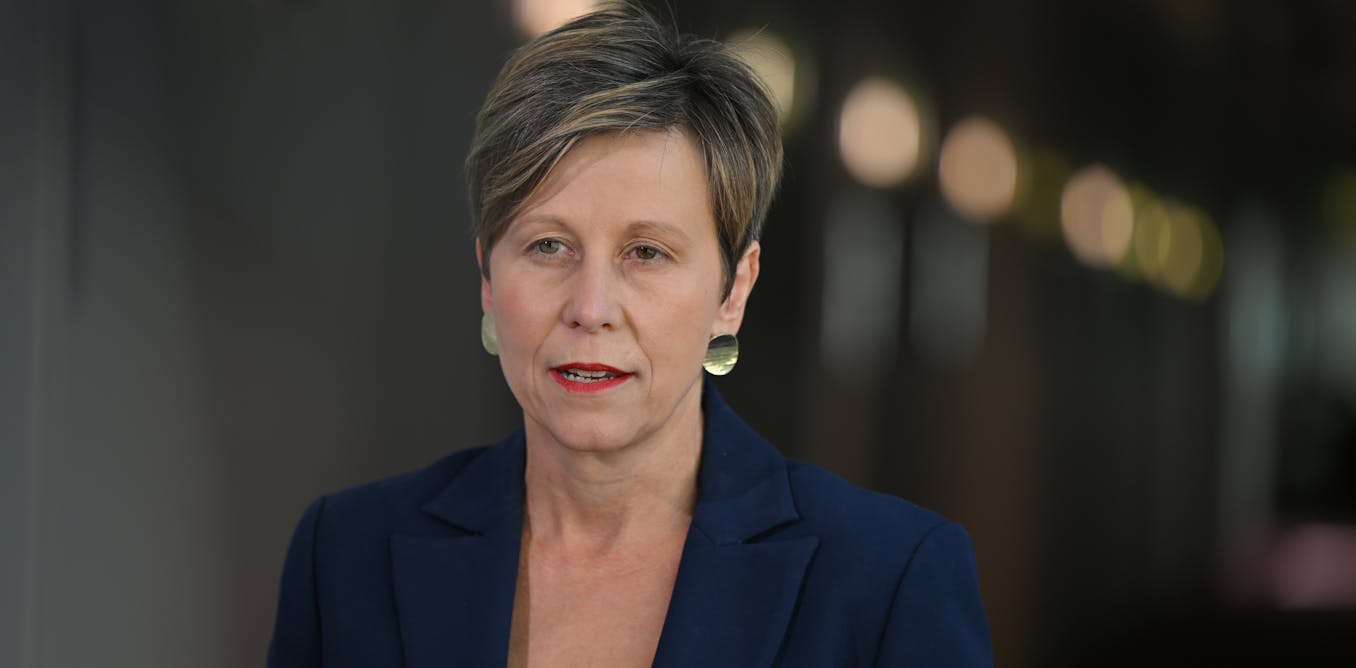
The Minister for Disability and the National Disability Insurance Scheme, Senator Jenny McAllister, joined us on the podcast to discuss what the government is trying to accomplish – and its chances of success from August onwards.
McAllister acknowledged many “people feel protective about the NDIS”.
We know that a change to a scheme that is as important as this will be confronting for people with disability. In part, that’s why we chose to make public our intentions back in April, well before the budget, so we could have a longer public conversation about the approach that the government wished to take. And that that conversation could involve close discussion with disability leadership across the country.
[…] We listen really carefully when the disability community talks to us about their hopes and their fears for the future of the scheme. Our broad posture is that the reforms we’re undertaking are necessary to make sure that the scheme is here in the long term. We want the scheme to be in place for the child with disability that’s born in ten years time. Not just the child with significant disability that’s born today.
What happens to 160,000 Australians losing NDIS access?
According to the government’s own estimates, about 160,000 Australians will lose access to the NDIS by the end of the decade because of the proposed reforms.
So what happens for those people if replacement state-based support schemes are not in place in time?
We don’t want to see people fall between two stools. And the prime minister [Anthony Albanese] and [Health] Minister [Mark] Butler have been very clear that will work with the states and territories to make sure that the supports are in place. Changes to access aren’t expected to be in place until January 2028. We have time to work with the states and territories.
We know it’s an ambitious timetable, but we’re determined to get on with it. The scheme was never intended to cover all people with disability. It was always intended to meet the needs of people with permanent and significant disability. We’re taking steps, necessary steps, to just make clear who that target group is.
It’s work we need to do with the disability community. We’ll shortly announce a technical advisory group that will provide advice to government about the sorts of criteria we should use to assess permanent and significant disability. We’d expect deep consultation with the disability community themselves, and also the states and territories, as we step through that process.
Cuts to social supports
McAllister said supporting people on the NDIS with social and community participation would continue to be “a very significant part of NDIS” – but that cuts were necessary because it had “grown very significantly in recent years”.
Just a few years ago, it was $4 billion per year. It’s now $12 billion per year, around the same size as the [Pharmaceutical Benefits Scheme]. By the end of the decade, without intervention, it’s projected to be $20 billion a year. And it’s why we’re taking the steps we are to bring that part of the NDIS budget under control.
[…] Social and community participation will continue to be a feature of plans under the NDIS, even with our reforms. We’re resetting budgets back to where they were in 2023 […] But we do think that by choosing this area of people’s plans to focus on, to tackle runaway cost growth, we can therefore preserve some of the other supports that we know are really important to people. Supports for people with continence, with showering, with other forms of personal care, assistance in the home. Those kinds of supports are not touched by this element of the reform.
Doing more to curb fraud
On the fraud in the system, McAllister defended the government’s progress, saying it “had to start from scratch” on compliance controls when it was elected in 2022.
As an example, in just one day today, the NDIA [[National Disability Insurance Agency]] will check more claims today than the previous government was checking across an entire year. There were simply not the administrative capacities to deal with non-compliant claiming in the scheme. And we’ve had to make very significant investments in people, in systems, and in new laws to deal with that. We’ve invested something in the order of $1.35 billion since coming to government in tackling fraud and promoting integrity.
So how much fraud is still in the NDIS?
The previous Quality and Safeguard Commissioner estimated that the rates of integrity leakage in the scheme could be as high as 20%. The current estimate from the NDIA is 8%. We’ve made progress. There is significant work still to do.
Read more:
View from The Hill: Longer NDIS inquiry is bad for the government, costing ‘a few hundred million dollars’