



US and Iran engage in intense military exchanges for a seventh consecutive night, causing significant damage and casualties in the region.
The military standoff between the United States and Iran has escalated, marking the seventh consecutive night of strikes initiated by US forces. US Central Command (Centcom) confirmed that they have targeted various sites across Iran, including military logistics and surveillance infrastructure.
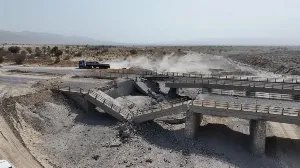
On Sunday, attacks focused on locations in Hormozgan province, specifically near Sirik, disrupting essential services. Water supplies to several villages in southern Iran have also been impacted, prompting concerns over humanitarian needs. Iran’s semi-official news agency Mehr noted that recent attacks occurred at 16:40 local time, though no civilian deaths were reported from these strikes.
In response to the US campaign, Iranian forces have retaliated against US allies in the region. For instance, Kuwait’s Ministry of Electricity and Water reported that an electricity and water distillation plant suffered damage due to recent strikes. A power facility was reportedly targeted, leading to a temporary loss of power in certain areas critical for water supply.
Jordan’s military reported intercepting ten Iranian missiles aimed at its territory, although no injuries or damage were recorded. Bahrain also confirmed their air defence systems successfully thwarted attempts from Iranian strikes.
The head of the Gulf Cooperation Council, Jassim al-Budaiwi, condemned Iran’s actions, labelling them as severe violations of international law and suggesting they amount to war crimes. “Iran’s actions constitute… a grave violation of international law and the United Nations Charter,” he stated.
Academics and analysts have noted a growing sentiment within Iran advocating for a more aggressive retaliation against US interests. Roxane Farmanfarmian, a political expert at the University of Cambridge, expressed that there appears to be a diminishing belief in the efficacy of restraint from Iran’s leadership. This perspective has been reflected in Iranian media, where there is a call for decisive action against US positions. Farmanfarmian also pointed out that Kuwait has become a focal point for Iranian retaliatory measures, further complicating regional dynamics.
Ali Fathollah-Nejad, director of the Center for Middle East and Global Order, argued that the US military is acting as a protector of the Strait of Hormuz, asserting that the attacks are targeted at dual-use infrastructure. This tension places Iranian civilians at risk, caught as they are in the crossfire between military strategies of both nations.
Recent developments also include extensive destruction reported in Iranian cities such as Yazd and Bandar Abbas. Iranian media confirmed incidents of explosion and damage to critical facilities, including telecommunications infrastructures, impacting access to services in northern Hormozgan province.
The situation remains fluid, with rising casualties reported. As of this month, strikes in the region have resulted in at least fifty fatalities and over five hundred injuries according to various reports. US military officials have categorically rejected claims from Iranian sources regarding significant civilian infrastructure attacks attributed to them, insisting that targets have been strictly military.
As the US and Iran continue their military exchanges, the wider implications for regional security and stability remain uncertain, drawing the attention of global stakeholders.