

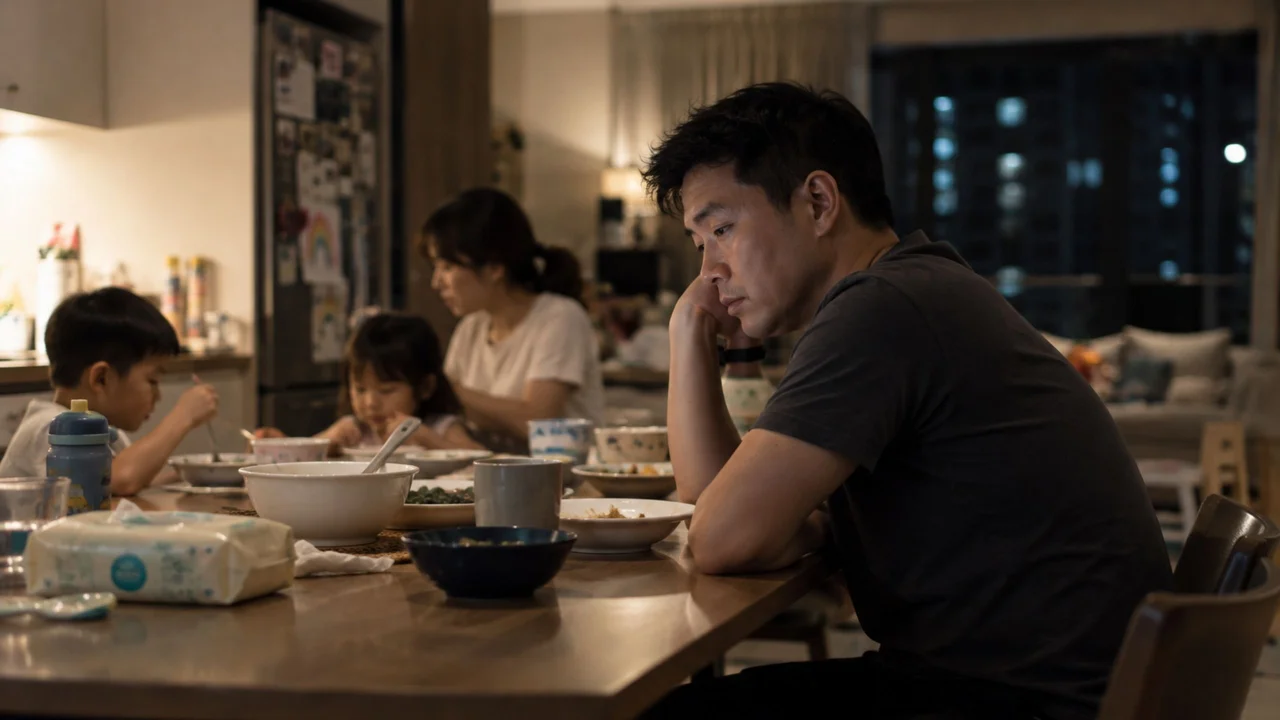


A decade ago, nonprofit leaders in Arizona’s most populous county boasted that they had created the Amazon of homeless service systems. Families in crisis would no longer have to contact a dozen agencies in search of shelter or housing. A single system could point them to help.
But for all the hype, this system has become a dead end for many families. A 2023 evaluation found 94% of people who were assessed for housing help by the system didn’t receive it. And that didn’t account for parents who were unable to connect with a worker to see if they qualified for assistance.
Families say it hasn’t improved.
In interviews, 30 families that are homeless told ProPublica that calling the hotline, meeting with outreach workers or showing up at shelters rarely results in offers of help. Some families said they called 211 multiple times without being connected to the homeless response system for families, known as the Family Housing Hub. Others, who said they were sleeping in cars or outdoors, said they couldn’t get a spot on the waitlist for shelter.
The system has returned to what it was a decade ago, with families calling as many shelters as they can, repeating the very situation the hub was intended to fix.
Those who did make it onto the hub’s waitlist said they were left guessing how long it would take to get help. Some said operators told them to sleep in their cars.
Vanessa Lopez said she experienced this frustration after leaving a hostile relationship in the spring. While she and her two children stayed with a friend, Lopez said she repeatedly contacted 211, which functions as a referral service for the hub, hoping it would lead to shelter for her family.
Her friend eventually asked them to leave. Overwhelmed by the stress of not knowing where to take her family, Lopez took a leave from her job. By then, she said, she’d called 211 at least five times.
Yet no matter how dire her situation became, it still took months to get on the waitlist for shelter. During one call she said she broke down in tears, frustrated that others seemed to get help but she could not. She wondered if she needed to be addicted to drugs to receive assistance.
“It’s not me telling you no,” she said the operator told her. “It’s the system.”
Monique Lopez, the CEO of United Methodist Outreach Ministries, known as UMOM, which runs the Family Housing Hub and the shelter waitlist, acknowledged the frustrations of people like Vanessa Lopez (no relation). But before UMOM offers callers shelter or a spot on the waitlist, the organization first tries to help them find other options.
“We don’t start the conversation with, ‘Hey, do you want to get on the shelter waitlist?’” Monique Lopez said. “It really is ‘Let’s try to figure your situation out first.’”
Lopez attributed some frustrations to the number of organizations offering assistance through the hub. Each shelter has its own rules, and some families may not meet the requirements of every program.
To address the confusion, UMOM updated its website to provide more information about the homeless response system for families, she said. The federally funded system, known as Coordinated Entry, mandates that providers use an assessment to prioritize scarce housing.
“It’s not me telling you no. It’s the system.”
211 operator
But families told ProPublica that the process in Maricopa County often leaves them confused and hopeless. Family homelessness in the county has risen to its highest level in more than a decade, while every shelter is full and housing vouchers are scarce. In 2025, there were 630 units of shelter and transitional housing for families in the county, down from 769 the year before, according to the most recent federal data.
Monique Lopez acknowledged that family shelters are full, leaving few good options. “People are living in unsafe and unstable situations while waiting just to get into emergency shelter,” she said.
The process, experts said, shouldn’t leave people wondering if there is help and what it takes to get it.
“You have to have some kind of method for setting priorities when there aren’t enough resources to go around,” said Marybeth Shinn, an expert on family homelessness at Vanderbilt University. “The process should be transparent. People should know if they’re on a waitlist.”
UMOM and other Maricopa County nonprofits launched the Family Housing Hub in 2014, after years of planning and strategizing over how to end family homelessness in the county that is home to Phoenix. As they envisioned it, families would meet with a worker at UMOM who could match them with the best solution for their situation.
At the time, there was a national push to create these local systems. The U.S. Department of Housing and Urban Development in 2012 asked communities to establish a Coordinated Entry system. By 2018, the agency required it in order to receive housing and homelessness grants. The mandates coincided with a Barack Obama-era plan to end family homelessness by 2020. (That did not happen.)
Experts said the systems were set up without evidence they would be effective. When researchers did look at Coordinated Entry — in a 2021 study of single adults — they found issues similar to those now faced by families in Maricopa County, including concerns about fairness and a lack of transparency. People didn’t understand the screening process and generally received vague explanations about how their information would be used to decide if they would get help.
As Maricopa County nonprofit leaders developed their system for families, they also pledged to provide a “rapid response without waiting lists” to immediately meet the needs of any family asking for help.
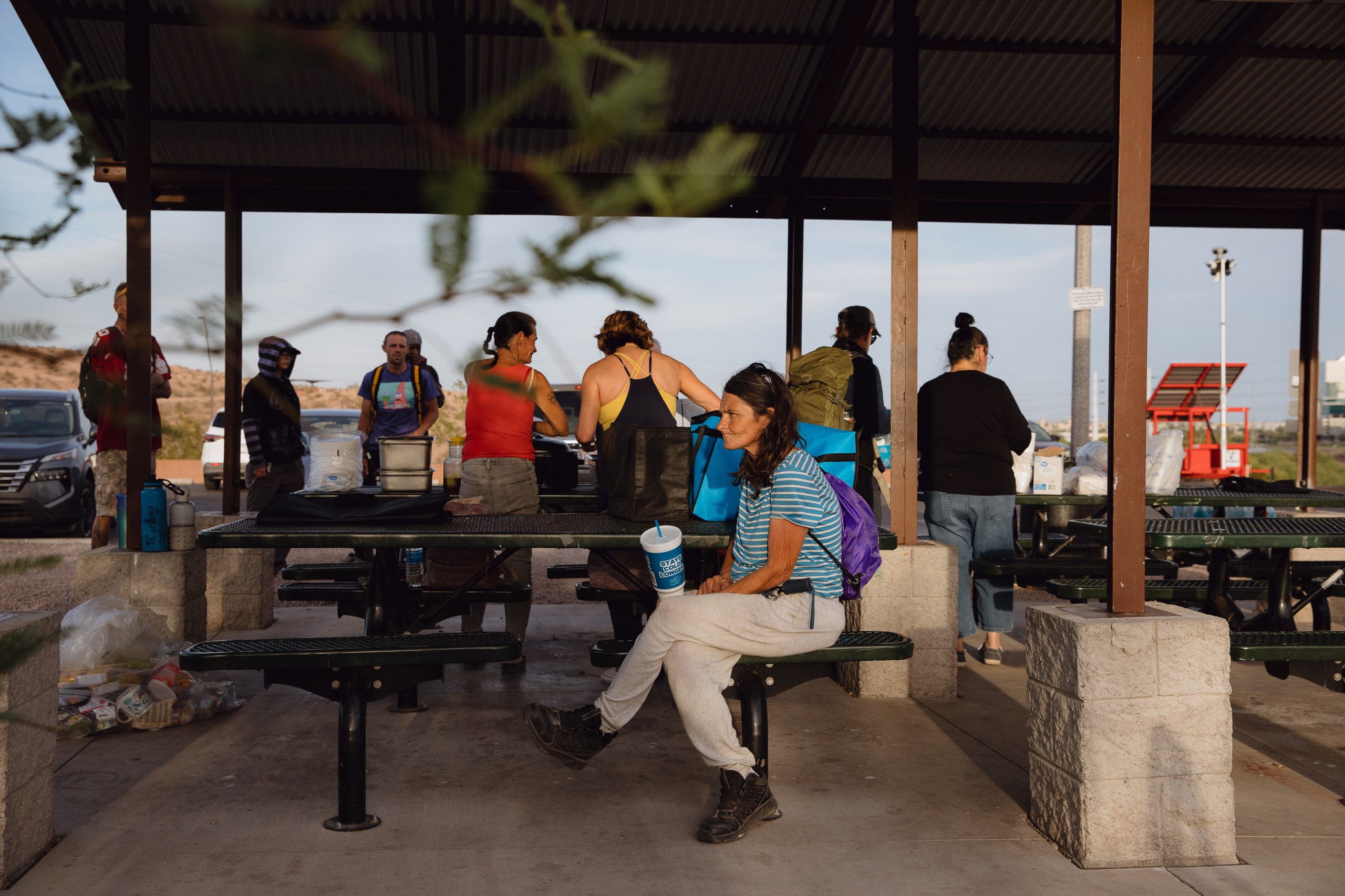
The county saw a decline in family homelessness from 2015 to 2019. But then the numbers began to rise, even as the stock of emergency shelter increased. During the COVID-19 pandemic, efforts to address the problem began to fray. The group of nonprofit leaders, which called itself “Standing Strong for Families,” stopped meeting regularly. Arizona, along with other Sun Belt states, also saw an increase in housing prices. With one of the lowest supplies of housing for low-income people in the country, eviction filings began to soar.
By 2023, only 6% of families that were assessed by Maricopa County’s homeless response system received help with permanent housing, according to an analysis of three years of enrollment data from the system and interviews with providers and people who had sought housing assistance.
The evaluation, by Homebase, a nonprofit consulting group, was requested and paid for by the Maricopa Association of Governments, which provides staffing for the regional response to homelessness.
Homebase concluded the system for single adults who are homeless was accessible, but the family system was not. Across the system, auditors said, families encountered a “breakdown in communication” and a “lack of transparency.”
Ashley Oakley, UMOM’s chief development officer, said in a statement that the evaluation reflects a gap between the need in the community and the housing that’s available. Oakley called it “one of the biggest challenges” facing those who are working on family homelessness in Maricopa County.
To decide who gets onto the housing list, workers with the Family Housing Hub conduct an assessment of vulnerability, which assigns a score based on how long a person has been homeless and whether they have a disability. That score helps determine eligibility and priority for housing programs, Oakley said.
Nonprofit leaders recently developed a new evaluation. Before it was implemented over the summer, testing had showed it didn’t fully account for the vulnerabilities of families and needed more changes. Now, for example, households with children under 6 receive a higher score, making it more likely they can get help.
Any family sleeping in a place not meant for “habitation” or in a dangerous situation is eligible for shelter, said UMOM’s Oakley. To remain on the shelter waitlist, families must check in weekly and say where they slept the previous night. Staying in a hotel for a night should not “by itself” remove a family from the waitlist, Oakley said.
But families told ProPublica that they had been removed from the waitlist because they stayed in a hotel. (UMOM said it is reviewing its process to make sure check-ins are handled “consistently.”)
Families in dire situations may not get help, said Richard Southee, a regional executive director at Central Arizona Shelter Services, the largest shelter provider in Arizona. Southee also works on a committee that oversees Maricopa County’s response to homelessness.
That’s in part because the federal government has focused funding on more noticeable forms of homelessness, such as people living in encampments. Homeless families are typically less visible and move more frequently. They couch surf, stay in hotels or do other things to avoid drawing the attention of the Arizona Department of Child Safety. Child welfare officials sometimes consider a lack of shelter to be evidence of child neglect, along with other factors.
“We’re deciding who’s going to be at the back of the line, and we as a nation really have said people who are not chronically homeless are going to be at the back of the line,” Southee said. “You have to stay homeless to get to the front, and that’s a design choice.”
Felicia Vela and her two children were kicked out of a guest house they were renting in February, text messages from that time show. She said she searched online for help and was repeatedly directed to 211 for “emergency shelter,” which she called at least twice and explained her situation: She had stashed her belongings in a storage unit, text messages show, and was staying at a hotel that she couldn’t afford for much longer.
There was nothing immediately available, she said operators told her, with one saying the waitlist was closed and the other telling her it could take six months to a year to get shelter. (UMOM said to protect the privacy of clients, it does not comment on individual families. The organization also said that the waitlist does not close.)
When Vela didn’t have anywhere to go, she slept in her car while her children stayed with a friend. She tried to make extra money by donating plasma, but her blood pressure was too high.
Vela, who works a warehouse job, moved into an apartment with the help of a local nonprofit that is not associated with the hub, but she’s now fallen behind on rent and is facing eviction. Her car broke down, and she can’t get to work. She started calling 211 again, seeking rental assistance.
“It’s like I can’t get a break,” she said.
Every January, volunteers in cities across the country spend one night trying to count people who are homeless. In Maricopa County, the 2026 count showed the number of people in homeless families, at 2,103, was the highest it had been since 2015. The survey is considered an undercount, especially for families.
Over the summer, the waitlist for shelter ballooned to more than 200 families. It takes about seven weeks for those on the list to get shelter, according to UMOM.
Some families interviewed by ProPublica said they waited longer. And more people are entering the system than leaving it, delaying help for newly homeless families.
In Maricopa County, 139 units of shelter for families closed from 2024 to 2025, after COVID-19 pandemic relief funds expired. The state also cut $867,000 in funding to help families get into housing quickly. It had helped about 40 families.
As families wait, they have searched for other ways to access the homeless service system.
Some go to one of the city of Phoenix’s heat relief centers, inside a 21,000-square-foot former charter school. City officials said the number of families seeking help has doubled from a year ago. Some families said they were able to immediately get shelter through the workers there.
After city officials learned a local advocate, Austin Davis, was sending families to the center to receive shelter, he said they asked him to stop sending families.
Davis runs a local nonprofit that helps families like Vela’s find emergency shelter. He said his interactions with hundreds of families over the past year have shown the official channels to shelter are “too complicated.” Calling weekly to stay on the waitlist is time-consuming. The families are already managing day-to-day responsibilities while trying to resolve an overwhelming personal crisis, he said.
“The system is really designed to run people in circles until they either give up or hit enough roadblocks where they can’t continue,” Davis said.
Davis crowdsources donations to put the families in hotel rooms on and off for days, weeks or sometimes months.
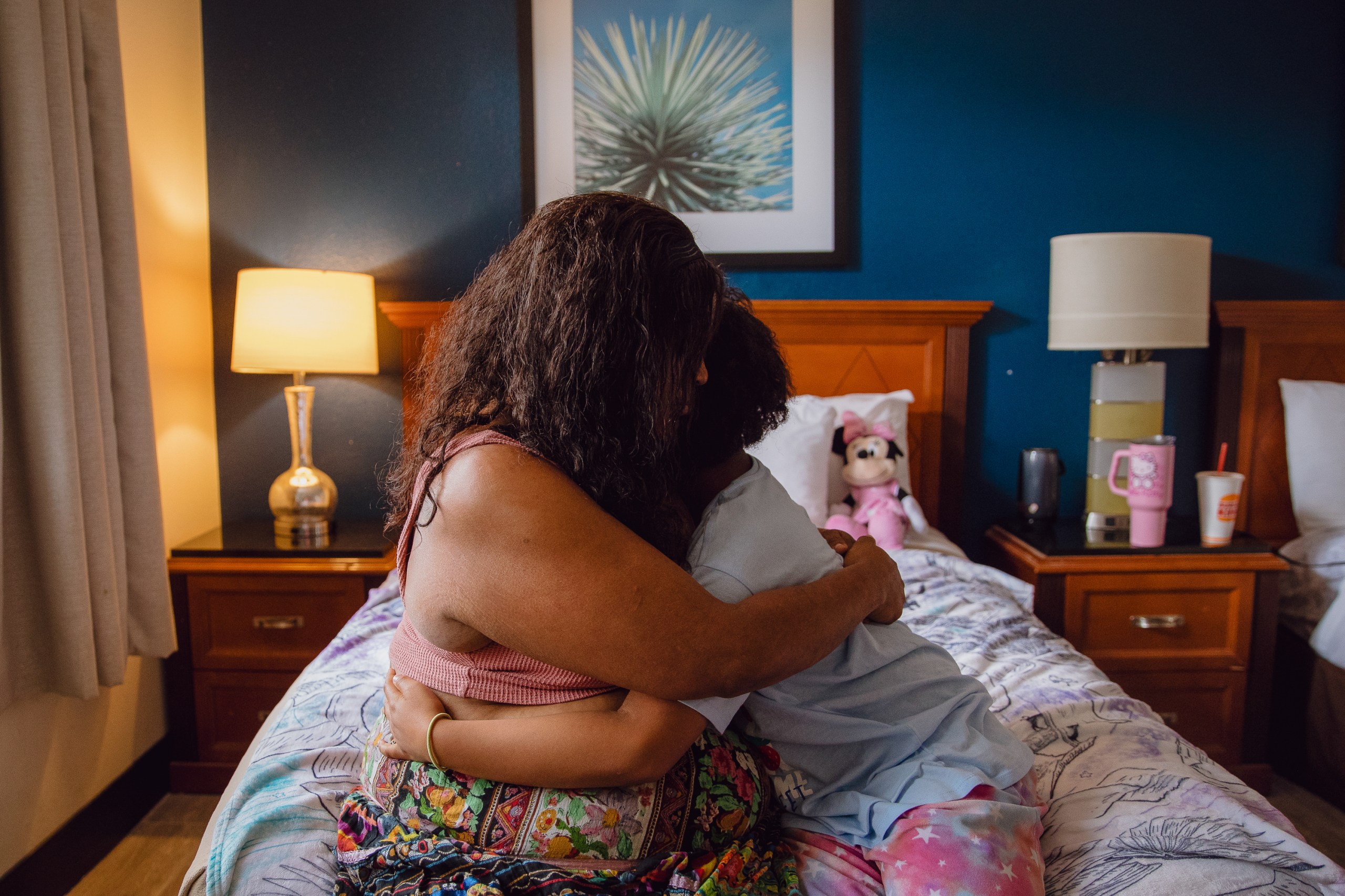
Ebony, a single mother of six who has breast cancer, needed longer-term help. She lost her job as a security guard this year after a chemotherapy treatment caused her to faint as she was about to begin her shift, she said.
In April, she lost her apartment. Ebony, who asked that her last name not be used to protect future job opportunities, said she called every number she could find looking for help, including 211. Eventually she was placed on the waitlist, but that didn’t solve her immediate problem of where to sleep.
She and her children stayed in hotel rooms until she ran out of cash. Then, she said, the family slept in an alley.
If a mother with breast cancer and young children sleeping outside was not vulnerable enough to get help, she wondered, who was?
The next day, she connected with Davis, who helped her pay for weeks of shelter. Then one morning she texted Davis with some good news.
She had met a pastor who helped her get into a local housing program. But she needed help for a few more days, until she could move into her new apartment.
