





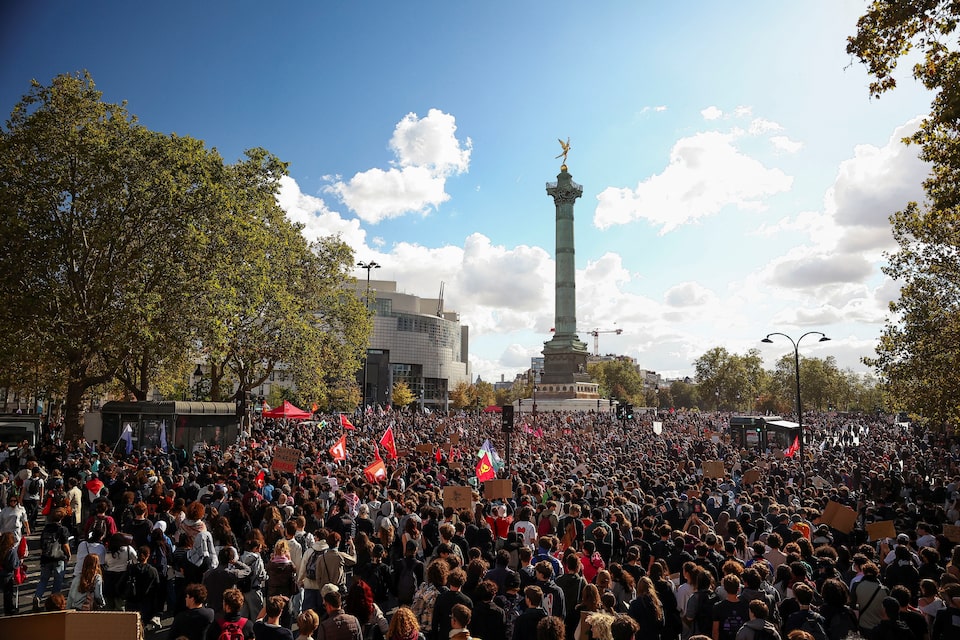
Nationwide protests in France highlight student dissatisfaction with education funding and conditions, echoing the events of May 1968.
Recent protests in France are drawing parallels to the student uprisings of May 1968, with experts pointing to a wave of generational dissatisfaction. The scale of these demonstrations—reportedly involving 266,000 protestors as noted by government sources—has been labelled as extraordinary by both unions and student organisations. ‘I believe this is historic and unprecedented in size,’ stated Alice Cohen-Morzadec, the international spokesperson for France’s Student Union. The protests, which started on September 21 at a poorly equipped high school in a Paris suburb, focus on a range of issues including inadequate funding for education, teacher shortages, overcrowded classrooms, and poor school facilities. However, historians argue that these issues merely serve as immediate triggers for deeper societal frustrations.
Andrew Smith, a historian and lecturer at Queen Mary University of London, emphasised the notion of a ‘crisis of hope’ among young people today. He remarked, ‘Students are inundated daily with economic troubles, political extremes, the threat of warfare in Europe, concerns regarding careers due to artificial intelligence, high levels of youth unemployment, and the climate crisis.’ Moreover, he pointed out that there has been a lack of meaningful communication between the government and student representatives in recent times.
Robi Morder, a researcher focused on social movements within France, highlighted historical context, explaining that previous administrations have had officials experienced in negotiating with youth representatives. In contrast, today’s government officials appear less equipped to handle social conflicts, often resorting to policing rather than dialogue. ‘Their first reflex is to dismiss the issue and apply force,’ Morder said.
Chloe Grunenwald, vice president of the Federation of the General Association of Students (FAGE)—France’s largest student organisation—expressed frustration with the government’s negligence. She insisted, ‘Enough is enough. We have been making these demands for years,’ referring to the urgent need for increased education funding and improvements to facilities.
The current protests have attracted a diverse coalition, including high school pupils and university students standing in solidarity. Observers have noted a shift in protest dynamics, with contemporary students facing extreme conditions such as classrooms overcrowded with over 40 individuals during heatwaves exceeding 40 degrees Celsius.
Amid the protests, issues such as alleged police violence have also surfaced, with protest leaders arguing that media coverage tends to focus on vandalism rather than the underlying causes of discontent. Cohen-Morzadec remarked, ‘The true violence is coming from the government side.’
In response to the unrest, Prime Minister Sébastien Lecornu acknowledged the need for student voices to be heard, while Interior Minister Laurent Nunez directed police to halt the use of stun grenades against student protestors. However, experts suggest that these gestures may not quell widespread agitation.
The students aim to maintain pressure on the government, especially as significant protest dates approach later in October and November, focusing not only on education but broader issues such as rising energy and food costs, budget cuts, and public sector salary freezes. Criticism has emerged against political figures like Jean-Luc Mélenchon, leader of the left-wing France Unbowed party, who has been accused of manipulating these protests for political gain.
Student unions have put forth a list of ten demands aimed at securing an investment of one billion euros for various enhancements to the educational system, including better facilities, increased staffing, and more financial support for disadvantaged students. The demands also call for an end to what they describe as repressive actions related to student activism. This movement highlights ongoing tensions within France’s socio-political landscape, reflecting a broader struggle for equitable education and representation.
