



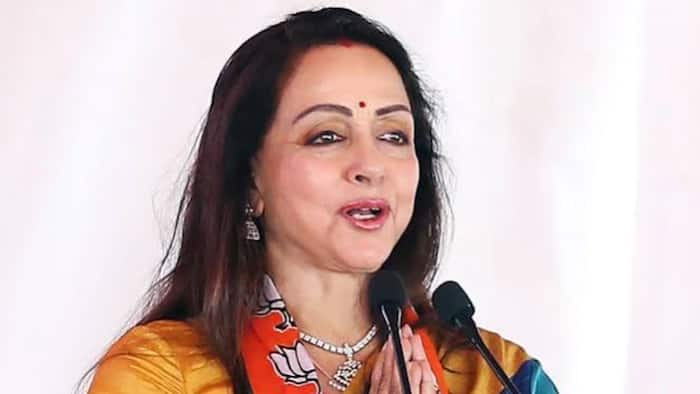
BJP MP Hema Malini discusses protests around education reform claims, suggesting dialogue over disruption during Parliament’s Monsoon Session.
The opening day of Parliament’s Monsoon Session was marked by significant political activity both inside and outside the Parliament complex. While lawmakers congregated for deliberations, thousands of demonstrators took to the streets of central Delhi, participating in the Chalo Sansad march organized by the Cockroach Janta Party (CJP). The protest escalated tensions, leading to clashes between demonstrators and police, thus becoming a focal point of discussion. During this time, Bharatiya Janata Party (BJP) Member of Parliament Hema Malini voiced her views on the protest, stating that such issues should be addressed through dialogue rather than disrupting the legislative process. In comments to the media, Malini questioned the rationale of protesting during a parliamentary session and emphasised the importance of constructive discussions to resolve disputes. “Unko disturb karke, unko aap involve kara rahe hai in cheezo mein toh unko kya milega, You should be happy to do something good,” she remarked, noting that creating unrest does little to further one’s cause. The MP refrained from elaborating on the demand for the resignation of Union Education Minister Dharmendra Pradhan, expressing her belief that the government would adequately address the situation. She remarked, “Iss Vishay me mai jyada bolna nahi chahungi jiske liye kya stand lena hai, yeh humari Sarkar barabar legi.” The Chalo Sansad protest aimed to highlight demands for educational reforms and advocate for Pradhan’s resignation over alleged irregularities surrounding the National Eligibility cum Entrance Test (NEET). The march commenced from Jantar Mantar, intending to reach Parliament as lawmakers began their proceedings. Numerous student activists and supporters joined the demonstration, drawing attention to their calls for accountability. Among the prominent figures present was climate activist Sonam Wangchuk, who had previously participated in a hunger strike alongside students. Wangchuk’s involvement attracted considerable attention and intensified the movement’s call for greater transparency regarding examination processes. Various public figures and activists expressed solidarity with the protesters, urging for reforms within the education sector. Tensions heightened as police attempted to manage the crowd due to concerns about safety and order. Reports indicated that security forces deployed tear gas and engaged in lathi charges to restrain the protestors, particularly as they attempted to breach restricted areas close to Parliament. Despite stringent security measures, the protest continued to garner widespread attention throughout the day, with videos and images from the march circulating across social media platforms. This engagement underscored the public’s growing interest in the issues raised surrounding education and governmental accountability, setting the stage for ongoing dialogue as the Monsoon Session of Parliament unfolds.