



Asia’s infrastructure was largely planned and built during decades of relative climate stability, steady population growth and predictable energy demand. But today, these assumptions are shifting — and faster than most governments previously planned for.
The challenge is no longer simply about building more. It is about building differently — with stronger project preparation, clearer risk allocation, more resilient financing structures, and deeper collaboration between the public and private sectors.
One of the main drivers behind this rethink of infrastructure planning is the increasingly severe impacts of climate change.
When three tropical cyclones converged with the Northeast monsoon across Southeast and South Asia in November 2025, it killed more than 1,300 people and inflicted losses exceeding US$20 billion.
At the same time, extreme heatwaves expected in India this year during the summer months puts increasing numbers of residents at risk of heat stroke. El Nino, a climate pattern caused by unusually warm waters in the tropical Pacific that disrupts weather worldwide, is expected to cause lower rainfall and hotter temperatures in Asia this year.
This has a mounting economic impact. India lost an estimated 247 billion potential labour hours in 2024, with the informal sector and small business owners amongst those most affected.
These numbers reinforce Asia’s position as among the most climate-vulnerable regions on Earth, accounting for more than three-quarters of the global population living in low-elevation coastal zones and at risk of sea level rise.
Climate events such as these point to something fundamental — many systems were built around assumptions that no longer hold.

A man pushing a wagon through a flooded-street in Kolkata, West Bengal, India. Image: Dibakar Roy/Unsplash
Increased energy demand
Energy demand is also quickly increasing, and in more concentrated bursts, than many systems were designed to accommodate.
Data centres, electric vehicles (EV) manufacturing facilities and green industrial parks are expected to add more than 100 terawatt-hours (TWh) of electricity demand across Southeast Asia by 2030, with artificial intelligence (AI)-related computing accelerating the timeline.
Dale Hardcastle, Partner at Bain & Company and co-author of the firm’s Southeast Asia’s Green Economy Report 2026, argues this is fundamentally reshaping where the bottleneck now sits.
“Historically, infrastructure investment in Southeast Asia has focused on generation capacity. Today, the critical question is increasingly whether power can be delivered reliably, affordably, and quickly enough to strategic demand centres.” he said. “Time-to-power is becoming a major determinant of investment allocation.”
Strategic industries, such as advanced manufacturing, AI infrastructure, industrial clusters, can move from investment commitment to operation in one to three years. Yet transmission upgrades and grid interconnections often take far longer.
Dale sees this forcing a rethink of what infrastructure is actually for.
“Infrastructure is no longer viewed only as a supporting utility layer — it is becoming a direct lever of competitiveness to attract investment into the country,” he said.
Countries that plan reactively, expanding capacity after demand has already arrived, risk falling behind those that build ahead of it.
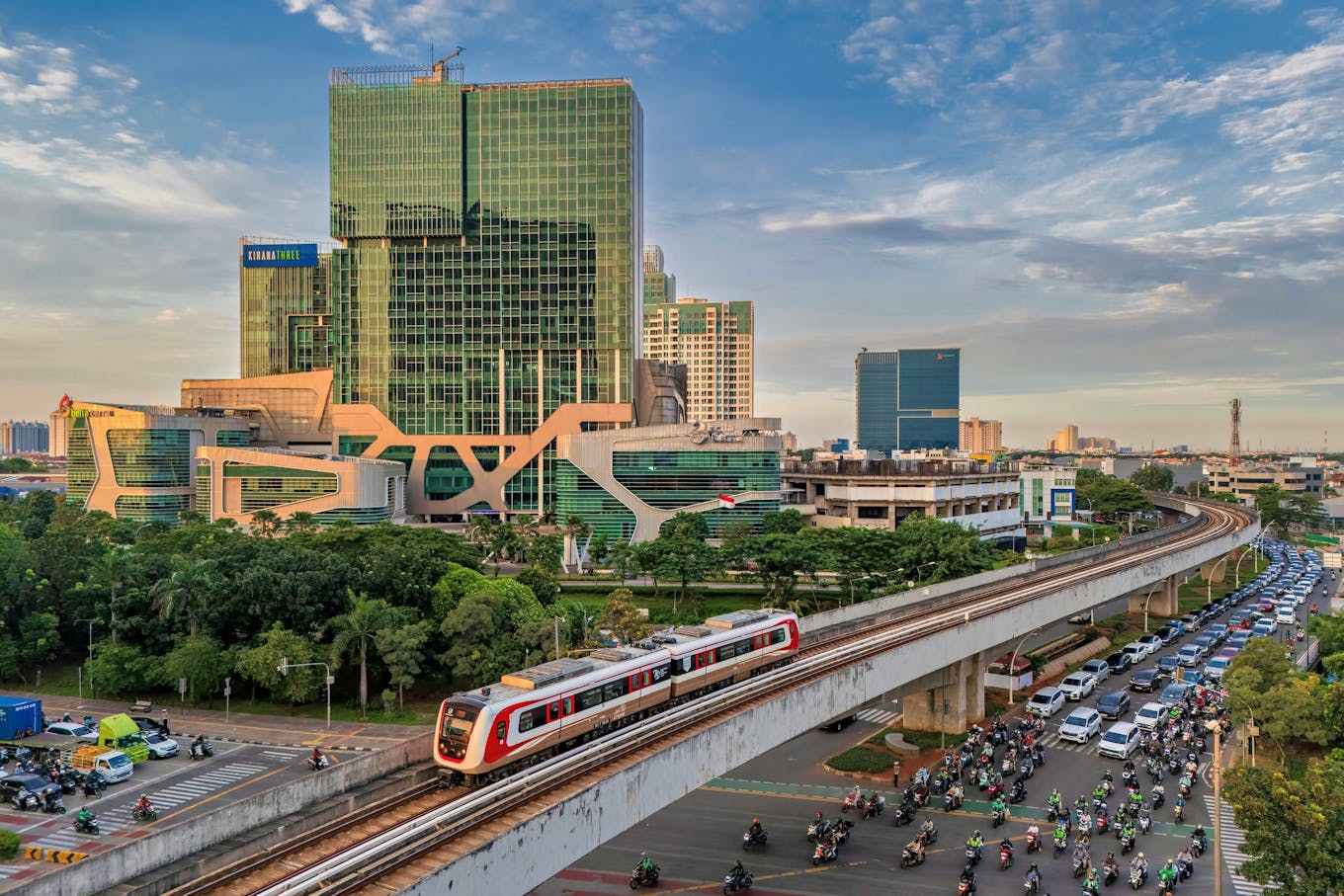
Elevated train passing through a bustling Jakarta cityscape with modern buildings. Image: Arief santras/Pexels
Ambition coupled with early moves
Across Asia, governments have set ambitious targets that signal a desire to build infrastructure not just faster, but differently.
Countries like Vietnam, India, and the Philippines have committed to significant expansions in renewable capacity, with India targeting 500 gigawatts and several members of the Association of Southeast Asian Nations (Asean) pledging to raise the share of renewables in their electricity mix as part of broader climate commitments.
On transport, there is growing emphasis on mass transit and rail connectivity — from Indonesia’s expanding urban rail network to Bangladesh’s newly completed Padma Bridge Rail Link, which has dramatically improved rail access between Dhaka and the southwest while strengthening regional connectivity — reflecting a shift away from road-centric development models that have long dominated the region.
Early policy moves are beginning to give these ambitions greater shape and direction.
The Philippines Department of Energy, for example, has announced a 10-year Green Energy Auction Programme aimed at scaling up the share of renewables in the country’s power mix. The programme is significant because it represents a more systematic and market-oriented approach to scaling up renewables than the ad-hoc project approvals that characterised earlier years.
Vietnam has also directed provinces to design infrastructure that is adapted to seasonal flooding, rather than suppressing or redirecting water flows. This represents a significant conceptual shift, as it also means converting land previously used for rice cultivation to aquaculture or left as wetlands, with implications for local politics and livelihoods. This has resulted in projects such as mangrove restoration programmes along the Ca Mau coastline as a form of coastal protection infrastructure, as well as the Can Tho urban flood resilience project.
Lavan Thiru, executive director at Infrastructure Asia, a Singapore-based agency that facilitates sustainable infrastructure investment and project development across Asia, is cautiously optimistic about the growth of the sustainable infrastructure sector in Asia.
“The pipeline of regional infrastructure projects has grown substantially over the past decade. We have observed regional governments approach projects in the transport, energy and circularity sectors with renewed vigour, and a strong interest in getting these projects off the ground,” he said.
While Asia is moving in the right direction, challenges remain in translating ambition to project implementation.
“Pressure on local governments expected to deliver such infrastructure has also grown in parallel. The gap between project ambition and delivery capacity is widening,” Lavan opined.
Across the region, this rethinking is beginning to translate into concrete actions, though financing gaps remain in the way.
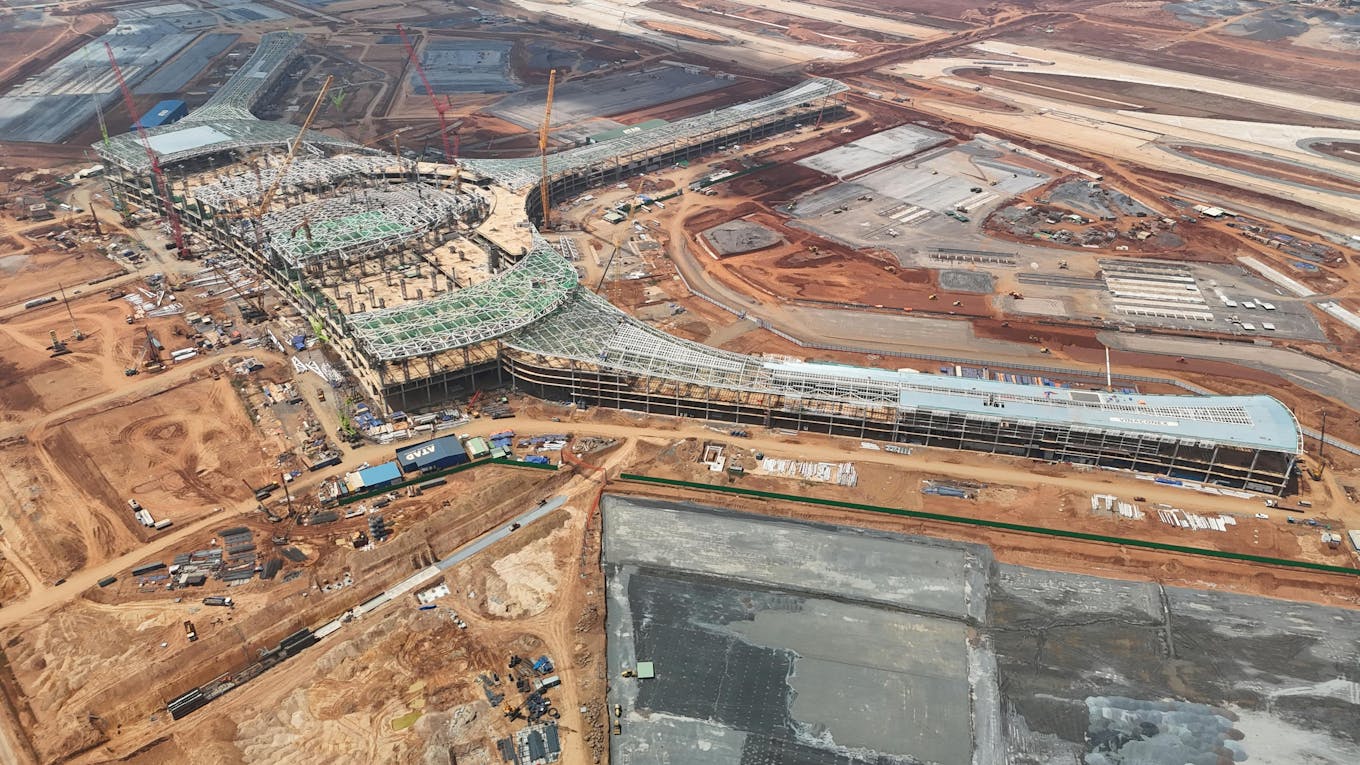
Expansive aerial shot of a construction site with cranes and building foundations in Dong Nai, Vietnam. Image: Toàn BDS/Pexels
Addressing the bankability challenge
The Asian Development Bank (ADB) estimates Asean needs approximately US$184 billion in infrastructure investment annually through 2030. This means that Southeast Asia’s energy investments alone would need to more than double from current levels to meet stated climate and development goals. But by most measures, the gap is not narrowing.
The frustrating reality, as Deven Chhaya, partner and head of infrastructure advisory at KPMG Singapore, sees it is that capital is not the constraint.
“In today’s environment, the challenge is less about the availability of capital and more about the availability of investable, bankable projects. There is significant capital ready to be deployed — from institutional investors, development finance and private capital — but it is competing for a relatively small pool of projects with clear risk allocation and predictable long-term cash flows.”
What keeps projects out of that pool, Chhaya argues, is not risk itself but the inability to price it reliably across long time horizons.
“Investors are looking for resilience in revenues, clarity in policy frameworks and alignment between long-term investment horizons and shorter regulatory cycles. Where regulatory uncertainty or contract instability exists, it becomes difficult to price risk appropriately over a 20- to 30-year investment horizon.”
The solution, in his view, requires governments to do more of the structural preparation work upfront.
“Governments can play a catalytic role by professionalising project preparation, standardising structures, strengthening demand forecasting and creating repeatable project archetypes that improve investor confidence,” he said. “Strategic use of public balance sheets, including risk-sharing or first-loss mechanisms, can also crowd in private capital particularly where the social value of projects is high.”
Infrastructure Asia was established to help shift more regional infrastructure projects towards better bankability. As a project facilitation office set up by the Singapore government to support Asia’s social and economic growth through sustainable infrastructure development, it works closely with governments and project developers across the region.
The Philippines’ North-South Commuter Railway, a 147-kilometre elevated line that will eventually serve up to one million passengers a day, is one of the clearest recent illustrations of what that work looks like.
Infrastructure Asia worked with the Philippines’ Department of Transportation ahead of the tender, running a market sounding exercise in Singapore to test deal terms with private sector players before formal documents were finalised.
“The whole idea is to soft test the market, so that when the tender comes out, there will be a good consortium of players from everywhere around the world who are able to participate,” said Lavan.
The resulting contract uses an availability-based payment model, under which the government pays the operator for delivering reliable train services, rather than requiring the private sector to take on ridership uncertainty for a brand-new line. The Philippines is also seeking an US$800 million partial credit guarantee from the ADB as a payment backstop.
“Public-private partnerships have increasingly become crucial in Asia’s infrastructure development, accelerating advancement and encouraging cooperation between public and private entities. Infrastructure Asia plays a critical role in enhancing regional cooperation to catalyse more bankable projects in Asia,” Lavan added.
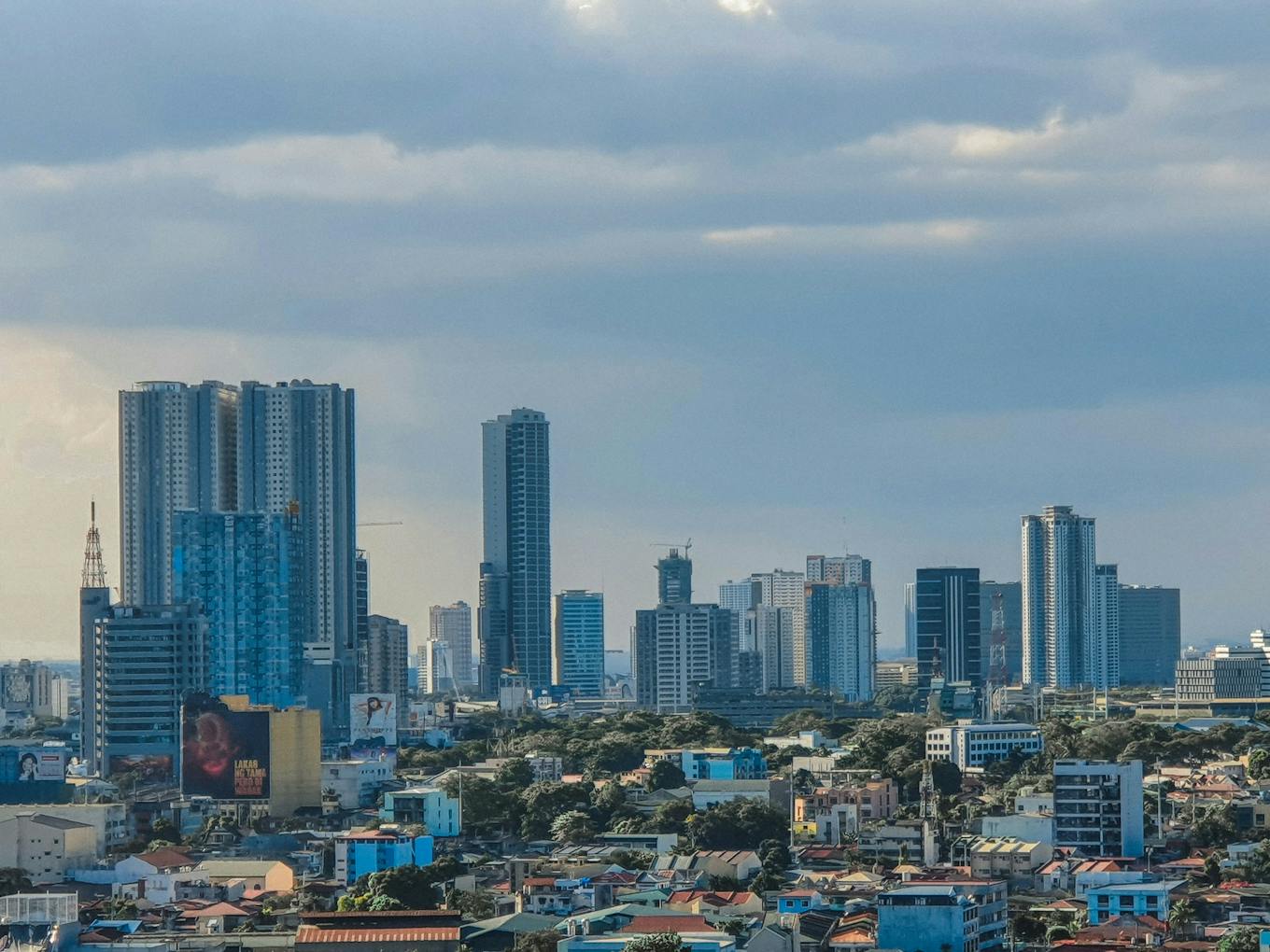
Construction projects in Quezon City, Metro Manila, Philippines. Image: Rey Melvin Caraan/Unsplash
Shared experience
Structural reform and better-designed projects can only be delivered if the officials responsible for implementing them have the skills to do so. This is where knowledge sharing and the exchange of experiences become necessary.
Infrastructure Asia enables such exchanges by bringing together governments, investors, multilateral institutions and industry stakeholders to address these issues at a level of ambition commensurate with the challenge through the Asia Infrastructure Forum (AIF). The 2026 edition, themed “Bold Actions for a Sustainable Asia”, brought together more than 800 participants across the infrastructure value chain, and featured more than 15 projects with an estimated combined value of over US$16billion.
Beyond AIF, Infrastructure Asia’s capacity building programme, the Growing Infrastructure Course, in partnership with the Singapore Management University and the World Bank Group, has trained more than 500 regional government officials with a deliberate focus on what private sector participation requires in practice for infrastructure projects.
The coordination challenge
The final obstacle is one that no single government can solve on its own. Many of the region’s biggest infrastructure opportunities require systems that work across borders, but the frameworks governing them remain largely national.
Bain & Company’s Dale identifies this as the region’s most structurally difficult challenge to solve.
“Many of the region’s biggest infrastructure opportunities increasingly depend on cross-border systems — whether power interconnection, EV supply chains, logistics corridors or industrial networks.
“However, standards, regulations, financing structures, and approval processes are still largely organised at the national level. This creates friction for projects that require coordinated regional build-out and scale.”
The result, he argues, is a misalignment between where the investment opportunity lies and where the enabling conditions are in place.
“Capital is increasingly concentrated in markets and corridors where governments are coordinating infrastructure, policy, and industrial development together.”
For the region’s most ambitious cross-border projects, that coordination is still more aspiration than reality.
Understanding where the gap sits is one thing. Closing it requires a different kind of work — the hard, unglamorous process of restructuring how individual projects are designed, de-risked and brought to market.
It is work that the region can no longer afford to defer.