



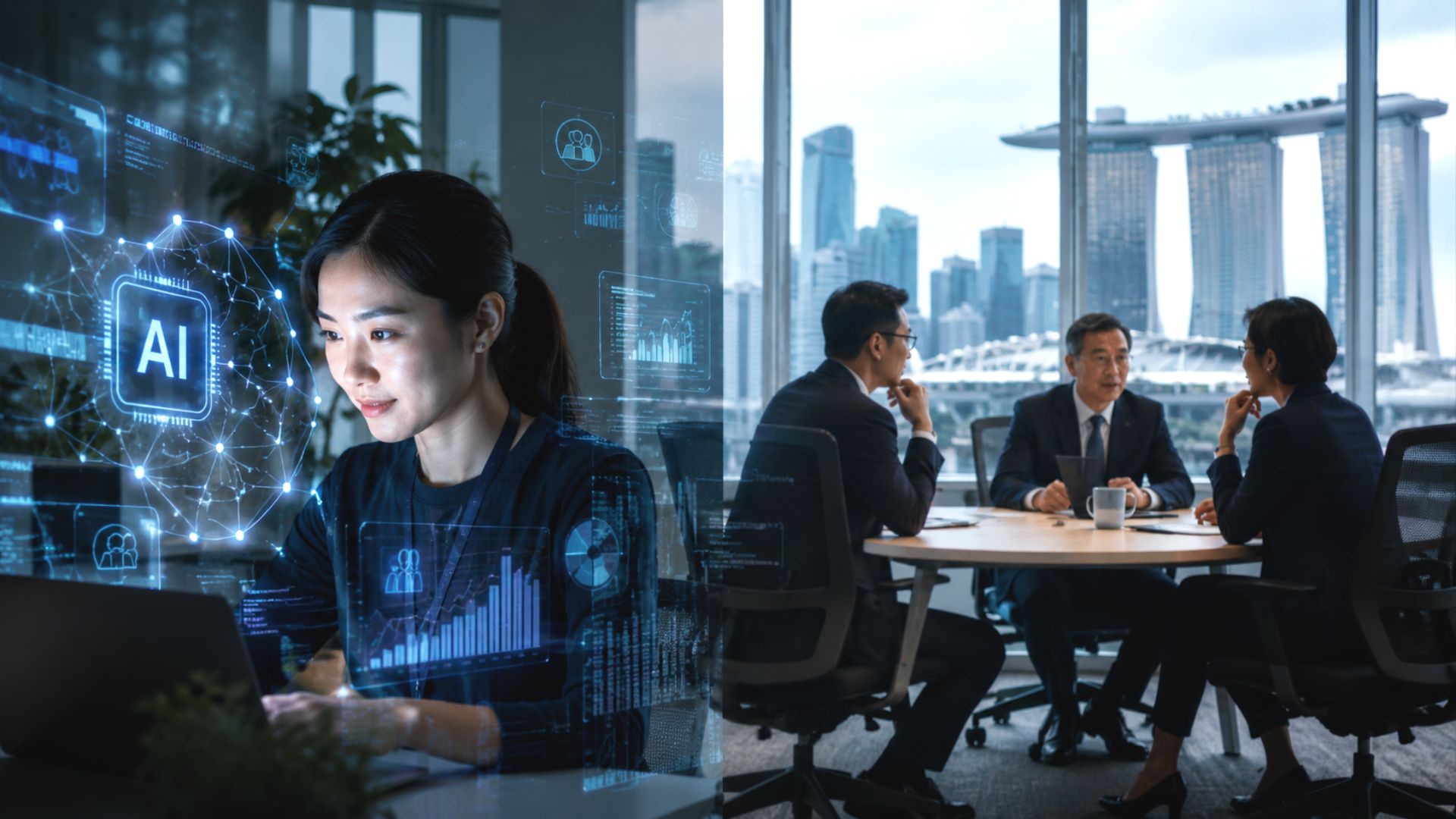
SINGAPORE: Singapore’s workforce is among the most enthusiastic users of artificial intelligence (AI) in the world, but many employees believe their organisations are moving more slowly in leadership and long-term planning.
According to Microsoft’s 2026 Work Trend Index, Singapore ranked second globally on the company’s AI Diffusion Index, a measure of AI use across the workforce.
The findings suggest that workers are integrating AI into their daily tasks fast, while leadership teams are still working out how to steer that change effectively, Malay Mail reported (June 18), citing Bernama-Xinhua.
Workers are creating new kinds of work with AI
Microsoft’s study found that 66% of AI users in Singapore are now producing work they couldn’t have created a year ago. This is higher than the global average of 58%.
Among a group Microsoft describes as “Frontier Professionals,” advanced users who are at the forefront of AI adoption, the figure jumps to 82%.
The results point to beyond simple productivity gains. Workers are using AI to support tasks and create new outputs that were previously difficult or impossible within existing workflows.
The findings suggest those efforts are translating into real workplace use for Singapore, which has invested heavily in digital skills and workforce training.
Human judgment is still central
The report also found that Singapore workers aren’t handing decision-making over to machines. About 88% of respondents said they are still responsible for the thinking behind their work, slightly above the global average of 86%.
More than half identified critical thinking as the most important skill in an AI-powered workplace. This finding may help ease concerns that AI is replacing human judgment. Instead, many workers appear to view the technology as a tool that supports decisions rather than making them.
Leadership strategy lags behind adoption
While employees are embracing AI, the report showed a space between workforce readiness and organisational direction.
Nearly 8 in 10 AI users in Singapore said there is an urgent need to adapt to AI fast, yet only 24% felt their leadership teams were aligned on an AI strategy. This figure sits below the global average of 26%.
Widespread AI use alone doesn’t guarantee long-term success. Without proper goals, governance, and training plans, organisations risk employees adopting AI faster than company policies and leadership strategies can keep up with.
A signal for Singapore’s next AI challenge
Singapore’s next challenge may not be getting workers to use AI. It may be helping organisations develop straightforward strategies for managing it.
Wee Luen Chia, Managing Director of Microsoft Singapore, said the findings show that Singapore workers are already finding new ways to work with AI while keeping human judgment at the centre of their decisions.
As AI becomes a normal part of office life, the conversation is changing from whether employees will use it to how organisations can use it responsibly and effectively.
For employers, that means providing direction, not just tools. For workers, it means continuing to build the critical thinking skills that technology cannot replace.