



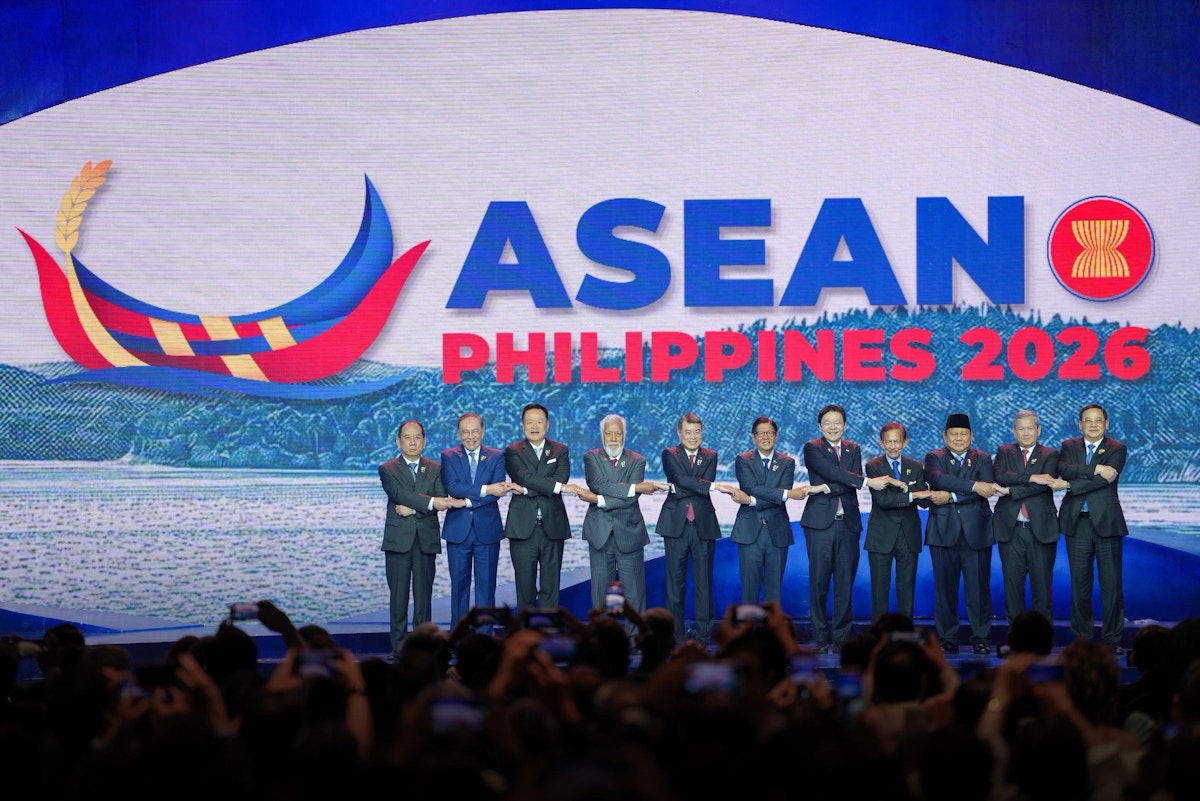
Last week, Asean leaders gathered in Cebu, Philippines, under the theme “Navigating Our Future, Together”, but the future we are navigating is at a dangerous crossroads.
The escalating conflict around the Strait of Hormuz, a chokepoint for roughly 20 per cent of global oil supplies, is hitting the region’s most vulnerable hardest. Indigenous Peoples, rural communities, women, farmers, fishers, and small businesses are absorbing rising costs of fuel, food, and transport whilst already living with energy poverty and climate disasters.
This is the core inequality of the energy crisis: those who contributed least to fossil fuel dependence are paying the highest price for its failures.
This is more than a supply disruption. It is a bitter reminder of how fragile fossil fuel dependence makes us all. The Asean Plan of Action for Energy Cooperation 2026–2030 sets a “Just and Inclusive Energy Transition” as its headline goal. Yet in practice, the region’s energy security remains anchored in fossil fuels. The Asean Power Grid and Trans-Asean Gas Pipeline continue to prioritise natural gas.
Joint oil stockpiling plans are moving forward. And the Middle East crisis is now being used to fast-track all of it — locking in the very dependence Asean claims to be moving away from, trading long-term equity for short-term stability.
As Asean 2026 Chair, the Philippines must confront this contradiction directly. It has the second-highest electricity prices in Southeast Asia, and is ranked the world’s most climate-vulnerable country. Cebu was an opportunity to turn that lived reality into regional leadership.
“
If Asean’s transition is built on the same logic of sacrifice, the same disregard for the communities on whose lands it depends, then we have not broken the cycle. We have simply changed the fuel.
Asean is both the engine room and the frontline
The answer to fossil fuel dependence is, of course, a rapid shift to renewable energy. But that shift runs on minerals — nickel, copper, rare earths — and Asean holds nearly 25 per cent of the world’s nickel reserves, with Indonesia and the Philippines at the centre. In other words, the region that is most exposed to the failures of fossil fuels is also the one the world is counting on to supply the raw materials for what comes next.
That should be a position of strength. Instead, it risks becoming a new form of the same trap. The surge in mineral demand has already triggered an aggressive extraction rush, routinely bypassing Free, Prior and Informed Consent (FPIC) for Indigenous Peoples and leaving behind ecological destruction.
At the same time, five of the ten most climate-vulnerable countries in the world are in Southeast Asia. We are powering the global green transition whilst bearing its worst consequences: extracting minerals to decarbonise the Global North whilst being left with toxic waste, rights violations, and mounting debt.
This is “green extractivism,” and it is colonialism by another name. If Asean’s transition is built on the same logic of sacrifice, the same disregard for the communities on whose lands it depends, then we have not broken the cycle. We have simply changed the fuel.
Transition financing must reflect this reality. Grants, not loans that deepen fiscal crises in developing nations, must be the basis for any credible just transition support.
Asean leaders must recognise that a just energy transition cannot be achieved without confronting the material foundations of the Paris Agreement: the minerals, lands, waters, and communities that will carry the burden of renewable energy expansion.
In our view, the Cebu Leaders’ Statement should commit to a binding Just and Inclusive Energy Transition mechanism that embeds rights-based mineral governance in national climate plans, including nationally determined contributions (NDCs), and supports the inclusion of minerals and human rights within the Just Transition Work Programme negotiations toward COP31 and global Paris Agreement implementation through the Just Transition Mechanism.
This is essential to ensure that the shift away from fossil fuels does not reproduce the same patterns of extraction, exclusion, and harm experienced by Indigenous Peoples and local communities.
Asean leaders must also reject investor-state dispute settlement provisions that allow corporations to challenge public-interest climate, environmental, and human rights measures, as these mechanisms can lock governments into extractive pathways and weaken democratic decision-making.
At the heart of this commitment must be the protection of FPIC and the right of communities to say no to mining projects that threaten their lands, livelihoods, and self-determination.
The Strait of Hormuz crisis is a reminder that fragile fossil supply chains are not security. “Navigating Our Future, Together” only means something if “together” includes farmers, fishers, and Indigenous Peoples, not just governments and corporations. Leaders in Cebu have a choice: use this crisis to entrench the old model, or have the courage to build something better.
It is time for Asean to lead the transition — not just remain a victim of it.
Aryanto Nugroho is the National Coordinator of Publish What You Pay Indonesia, and a member of Resource Justice Network’s Global Council, and Angela Asuncion is the Asia Pacific Coordinator and Transition Mineral Focal Point of Resource Justice Network
