



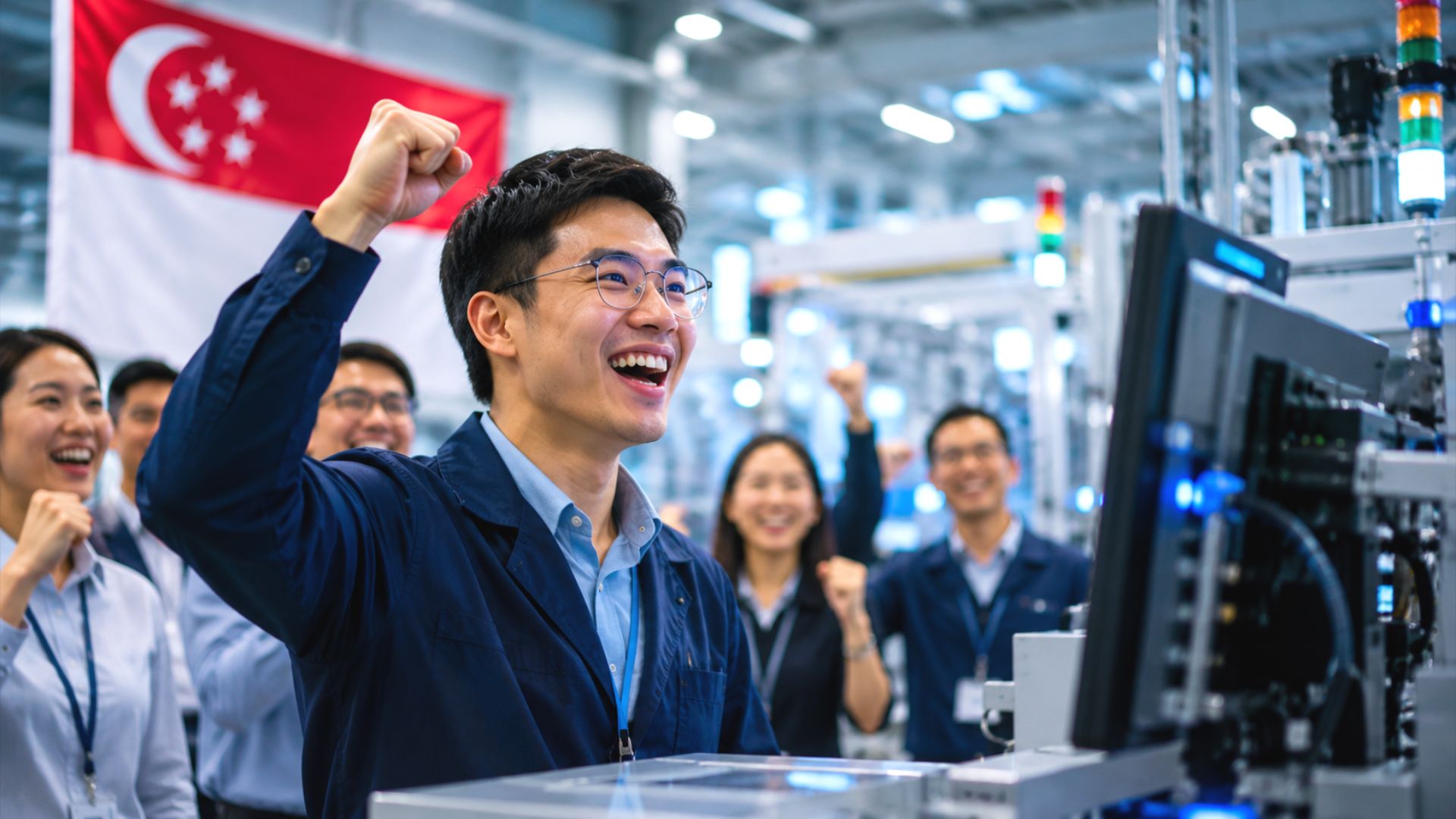
SINGAPORE: Singapore’s semiconductor industry is getting another boost, with US-based semiconductor equipment maker Applied Materials planning to create 1,000 new jobs in Singapore over the next few years as demand for artificial intelligence (AI) chips continues to surge.
The announcement came during the opening of the company’s new S$600 million manufacturing facility at Tampines Industrial Crescent on June 10, Channel NewsAsia (CNA) reported. The expansion is more than just a factory upgrade. It is also a signal that Singapore is firmly in the race to support one of the fastest-growing industries in the global economy.
Deputy Prime Minister and Minister for Trade and Industry Gan Kim Yong said the expansion will generate 1,000 roles across manufacturing, research and development (R&D), headquarters functions and field services. He described them as quality “good jobs” that will give Singaporeans opportunities to work with advanced technologies while gaining exposure to international operations.
The company is also expanding its internship programme, with plans to offer 100 placements annually by 2027, giving more students a direct pathway into the semiconductor industry at a time when demand for skilled talent continues to rise.
AI demand is driving the next chapter in Singapore’s technology advancement and job opportunities
The investment comes as AI systems require increasingly powerful chips and data centres, creating strong demand throughout the semiconductor supply chain.
Applied Materials said its new facility has already begun volume production and is focused on supporting chipmakers that are increasing output to meet AI-related demand.
The site more than doubles the company’s advanced cleanroom capacity in Singapore and includes autonomous assembly and testing systems, AI-assisted quality inspections, and augmented and virtual reality tools for technician training and maintenance work.
Gary Dickerson, President and Chief Executive Officer of Applied Materials, said AI is reshaping industries and creating unprecedented demand for advanced semiconductors. He added that the operation expansion in Singapore will help the company deliver equipment to chip manufacturers more efficiently as they develop next-generation chips.
Singapore’s semiconductor ecosystem continues to attract AI chip investments
Singapore has spent decades building a semiconductor ecosystem that spans wafer fabrication and chip design to advanced packaging, chemicals, precision engineering, and research, a network that has become one of the country’s strongest selling points.
Mr Gan noted that companies today need more than factory space. They are looking for locations that offer skilled workers, reliable infrastructure, deep industry connections and long-term stability.
Competition for semiconductor investments has intensified in recent years as countries around the world try to strengthen their own chip industries. Against that backdrop, landing a major expansion from a global player like Applied Materials reinforces Singapore’s standing in the sector.
Their operation expansion to Singapore is also expected to benefit local suppliers and supporting industries. As multinational manufacturers expand, smaller Singapore-based companies gain opportunities to join global supply chains and grow alongside them.
The artificial intelligence chip race is also a human intelligence talent race
The semiconductor industry always makes headlines for billion-dollar factories and advanced technology today, yet the more profound story is the people behind those investments.
The promise of 1,000 new jobs and more internship opportunities points to a growing need for engineers, technicians, researchers and skilled workers who can support increasingly sophisticated manufacturing processes.
Students considering future careers or mid-career workers looking to enter high-growth sectors, Applied Materials’ expansion of operations offers another sign that semiconductors remain one of Singapore’s most important industries.
As with major investments, developing local talent is crucial in the country’s overall growth and success. New buildings can be constructed in a few years, but building a strong pipeline of skilled Singaporeans takes much longer, and that is what will determine whether the industry continues to thrive in the decades ahead.
Read related: NVIDIA to launch its new research hub in Singapore, marking latest boost to city-state’s artificial intelligence drive