



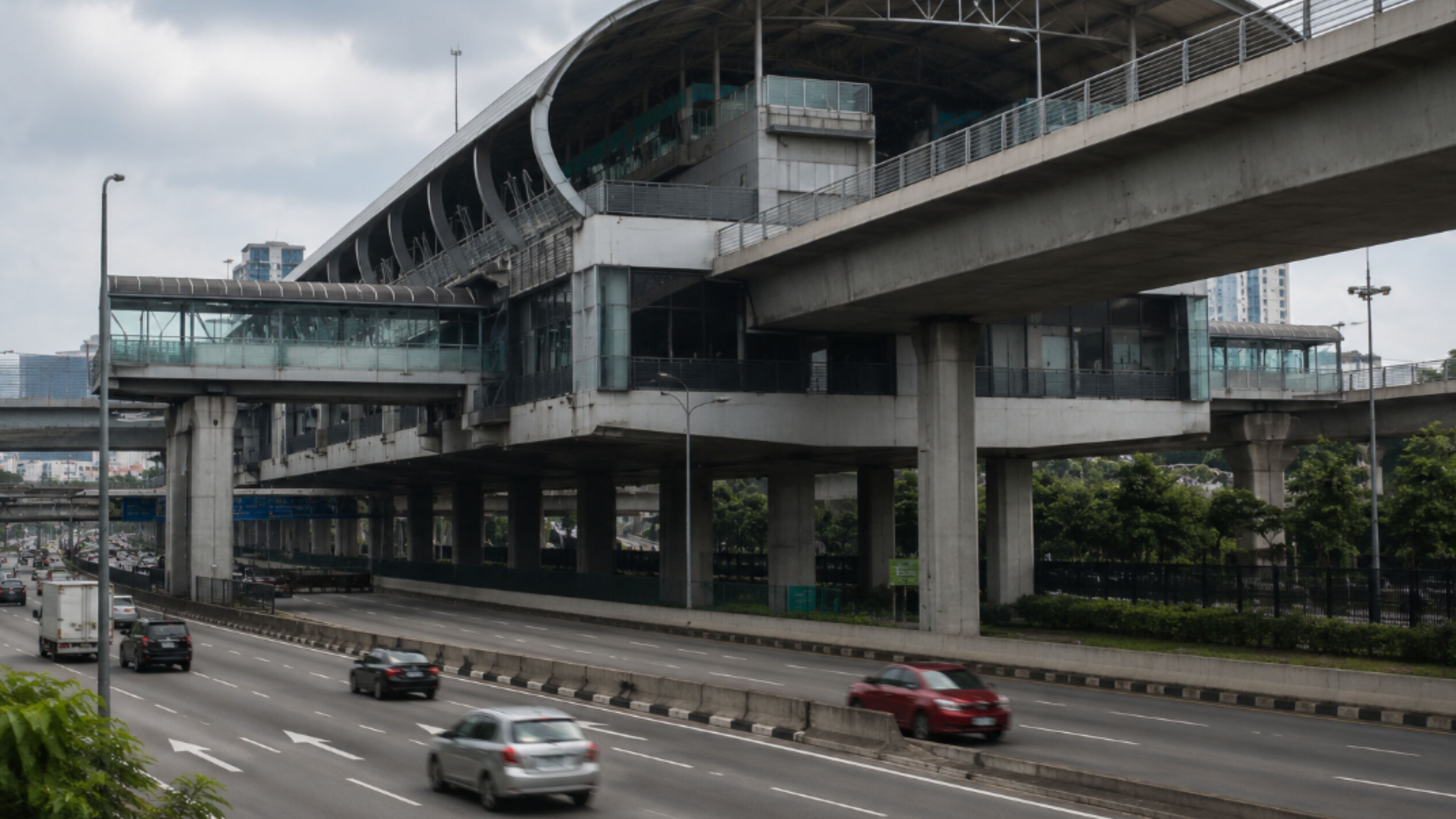
MALAYSIA: Behind Malaysia’s impressive infrastructure lies a system that remains largely unwalkable. MRT stations have often been criticised for failing to provide adequate pedestrian access, with some ironically built right in the middle of busy highways.
In certain residential areas, commuters face a 20-minute walk to the nearest station despite its proximity to their neighbourhood. This is because access routes were blocked off during construction, as local residents raised safety concerns. The result is a transit network that looks modern but leaves everyday users struggling with basic walkability.
Some Malaysian social media users have sharply criticised city planners, saying they “did not use their brains” when designing the infrastructure system. In the Klang Valley, MRT stations have drawn particular scrutiny for dropping commuters directly in front of busy highways or congested toll plazas.
Others defended the city planners, arguing that local residents were partly to blame. One netizen pointed out that TTDI residents in Damansara had actively protested against the MRT line passing through their neighbourhood. The commenter added that, even after the line was eventually approved, complaints on social media are now surfacing.
More criticism directed at residents has also emerged. One social media user claimed that the attitudes of some residents a decade ago are the root cause of the problems commuters are facing today. According to this view, the current state of the public transportation network is due to poor urban planning and a lack of cooperation from the public.
Other netizens complained that commuting by MRT in Malaysia often requires driving to the station, parking, and then waiting for the train. Walking is rarely an option, as many stations are surrounded by busy roads with unsafe or inadequate pedestrian access, forcing commuters to rely on cars even when using public transport.
Some commenters also responded sarcastically, remarking that MRT stations built next to highways appear to be designed more for the convenience of Grab drivers than commuters. Others joked that toll booth operators also need transportation to and from work.
This trend may unfortunately persist in Malaysia due to weak urban planning and communities that remain hesitant to welcome commuters from other districts.
As a result, future MRT stations risk being built either alongside highways or in isolated areas, with only optional parking facilities provided—further entrenching a system that prioritises cars over walkability.