



Much of the world is adopting the electric-vehicle technology the U.S. just banned.
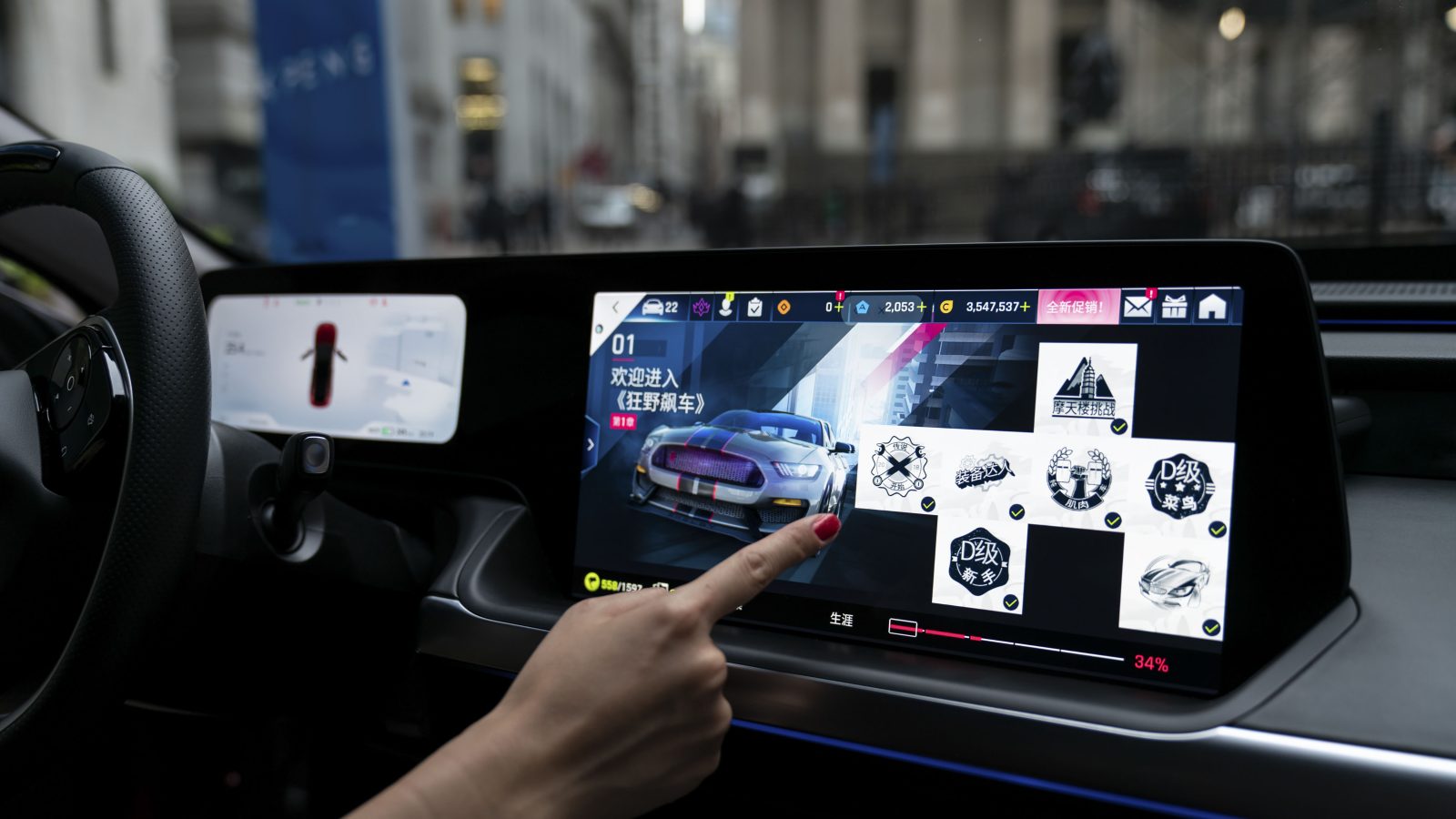
On March 17, the U.S.banned any vehicle with Chinese software from its roads. Beginning with cars arriving at dealerships this July, every automaker selling in the U.S. must certify that its connected systems contain no Chinese-developed code.
Chinese EV companies are the market leaders in much of the world. BYDiBYDBYD Auto is a Chinese carmaker that became the world’s leading EV manufacturer in 2023, competing with Tesla for market share and global attention.READ MORE is the top-selling EV maker globally, outselling Tesla and Ford in many markets. The U.S.’ move in the opposite direction may cut off its automakers from the technology the rest of the world is adopting, analysts and industry executives told Rest of World.
If U.S. automakers “are shielded from Chinese competition at home but are not competitive on cost, speed, or intelligence abroad, they risk becoming regionally relevant rather than globally formative,” said Bill Russo, CEO of Shanghai-based consultancy Automobility Limited and a former Chrysler executive who has spent 21 years advising automakers in China.
U.S. policy circles maintain that the bans do not amount to isolation. The country’s automakers can study Chinese technology in China, according to the Information Technology and Innovation Foundation, a Washington think tank that advises the U.S. government on competitiveness.
“It doesn’t restrict U.S. companies from conducting R&D or technology scouting activities in China,” Stephen Ezell, the foundation’s vice president for global innovation policy, told Rest of World. The restrictions are justified because the Chinese EV industry was built on “IP theft, massive industrial subsidization, forced technology transfer,” he said.
Ford tried to go further than scouting. The company began talks with China’s Geely in 2025 about licensing Chinese EV technology for the U.S. market, but walked away after concluding a collaboration would be “politically fraught,” according to a report on April 24. Ford has denied the talks.
Two different cars
Chinese EV makers, led by BYD, have built an integrated system. The company designs the battery, makes the chips, and writes the software, so every part of the car works together.
U.S. automakers, meanwhile, operate a fragmented system where companies such as Ford, GM, and Tesla buy their technology from different vendors, making it impossible to build EV infrastructure around a single acceptable standard.
BYD makes roughly 75% of its components in-house, including its own lithium iron phosphate battery cells, the chips that manage power and charging, and the software platform for the cars. Chinese rivals, including XPeng, Chery, Geely, and Li Auto, have adopted the same integrated approach, designing their own software and electronics.
By contrast, when a consumer buys a Ford EV, Google runs the dashboard screen, BlackBerry provides the brakes and steering software, and the battery comes from a factory in South Korea or China.
Tesla is the one U.S. automaker that writes its own software, but its system is proprietary, meaning no other company or country can adopt it as a shared standard. The company, meanwhile, buys batteries from Japan’s Panasonic and China’s CATL, the world’s largest battery maker.
Where roads split
The divergence between Chinese and U.S. EVs is widest in batteries and charging, two areas where global standards are being set right now.
The world is moving toward lithium iron phosphate, the battery chemistry used by BYD and CATL. It is cheaper, safer, and lasts longer than the nickel-based batteries most U.S. automakers rely on. Beijing will release a national standard for solid-state batteries in July, the next generation of cells that promise ranges of 965 kilometers (over 600 miles).
Even something as basic as the charging plug has split three ways, with North America, Europe, and China each using a different one.
China and Japan are jointly developing a next-generation plug called ChaoJi that can handle almost four times the power of NACS, the North American charging standard that Tesla designed, according to the ChaoJi consortium. If ChaoJi is adopted globally, U.S. cars would be stuck charging on a slower, older system.
The gap in self-driving technology is growing also because these systems improve by collecting real-world driving data, and scale determines who learns fastest. China has roughly 2,300 self-driving taxis across 30 cities, while the U.S. has about 700 in five. The connected vehicles rule prevents Chinese systems from even being tested on U.S. roads.
The Chinese integrated system also produces cars faster and cheaper. BYD will bring a new model to the market in 18 months, and sells its cheapest car for about $7,800. The average U.S. EV costs over $55,000, according to Cox Automotive, which tracks U.S. vehicle pricing data. Ford and GM take more than three years to bring a new model to showrooms.
Price of switching
BYD is now the world’s top-selling EV maker, and is quickly finding local partners and growing its ecosystem in several countries. For instance, in the United Arab Emirates, BYD distributor Al-Futtaim Electric Mobility has built showrooms, service centers, and a charging network called Charge2Moov around BYD specifications.
Once a country builds its EV infrastructure around Chinese parameters, undoing it would be costly and slow. The cost of changing course amounts to a “resilience tax,” which would take years and burden consumers and service providers alike, Babak Hafezi, founder of HafeziCapital, a consulting firm that advises governments and companies on EV market strategy, told Rest of World.
“Reversing would constitute major infrastructure issues, changing software, connections, and charging stations,” Hafezi said. “This could not be done overnight.”
European and Asian automakers that started out by buying Chinese parts now share software platforms, co-develop vehicle architecture, and jointly build electronics systems with their Chinese partners, Russo said.
“Chinese partners are being used to close capability gaps in speed, software, electronics, and EV economics,” he said. “Once that happens, dependency is not just industrial. It becomes organizational and strategic.”
U.S. automakers are shut out of these partnerships because the same rules that keep Chinese cars off U.S. roads also block the technology collaborations that could help them keep pace. The USMCA, a trade agreement governing the movement of goods between the U.S., Mexico, and Canada, comes up for review on July 1, with tighter barriers expected.
Ford and Tesla have both promised affordable EVs for U.S. buyers without delivering. The challenge goes beyond trade barriers and will require a sustained effort to rebuild competitiveness, Ezell said.
“We need to step up our innovation game in autos here at home,” he said. “But that’s going to require a serious U.S. auto industry competitiveness policy.”
