



The first Monday in May marks the annual Met Gala: a collision of celebrities, designers and cultural icons. Established in 1948, the gala was originally a high-society event held to raise money for the Costume Institute of The Metropolitan Museum of Art.
When former editor-in-chief of Vogue Anna Wintour took over in 1995, she shifted the focus from New York’s elites to celebrities, launching it into a fashion juggernaut.
Each year brings a new theme and new dress code. The theme reflects the Costume Institute’s latest exhibition (which opens the following day). The dress code translates this theme into creative direction for gala attendees.
Evan Agostini/Invision/AP
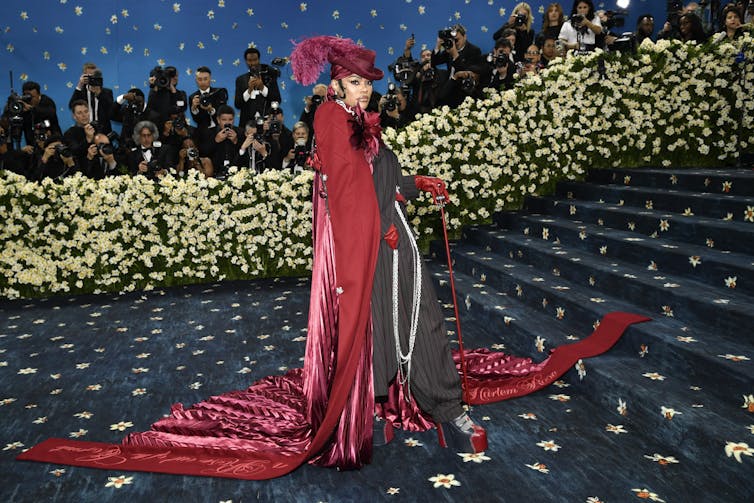
This year’s theme is Costume Art, and the dress code is Fashion is Art. These ideas showcase fashion as an embodied art form, and explore the historical connection between clothing, the body, the wearer and art.
So, is fashion art? And if so, at what point do clothes transform from something practical to something artistic?
Is fashion art?
Throughout his career, German fashion designer Karl Lagerfeld (1933–2019) upheld the separation of fashion and art. “Art is art, fashion is fashion”, he said.
Lagerfeld’s words were based on a distinction that is commonly understood in the art world between fine art and decorative art.
Fine art is a creative expression designed to elicit an emotional or intellectual response. Artists can work on a single piece for years to create something unique. Traditionally, this category has included paintings, sculpture and poetry.
Decorative art is aesthetically pleasing, but also functional, commercial and mass produced. Examples include home decoration and fashion.
Unlike fine artists, decorative artists or designers generally don’t have the luxury of time, and must continually produce products for market consumption. For these reasons, Lagerfeld didn’t see fashion as art.
Conversely, pop artist Andy Warhol (1928–87) declared: “fashion is more art than art is”.
Warhol’s works were defined by themes of pop culture, consumerism, capitalism and the mass media. They held a mirror to society. Fashion does this too. In addition to being emotional, intellectual and creative, it can reveal the norms and values of a society.
Warhol’s art often crossed into the fashion world through collaborations with designers such as Diane Von Furstenberg and Halston.
Italian fashion designer Elsa Schiaparelli (1890–1973) also saw the merit of fashion as art, stating “designing is not a profession but an art”.
Schiaparelli was one of the earliest designers to challenge the distinction between art and fashion. Her works are currently on display at London’s Victoria and Albert Museum, as part of a broader trend of museums and galleries showcasing haute couture as art in its own right.
Haute couture (which translates to “high dressmaking”) is exclusive, high-end fashion that is different from mass-produced ready-to-wear clothing.
One of the first major haute couture exhibits came in 2011 from the Met itself. Over three months, more than 600,000 people visited Alexander McQueen: Savage Beauty, making it one of the Met’s most visited exhibits in history.
Public appetite has only grown since then. Last year, the Louvre Couture exhibit in Paris received more than one million visitors.
Read more:
How self-taught, self-made mavericks Vivienne Westwood and Rei Kawakubo redefined punk
Fashion and modern society
Haute couture may be art, but what about everyday fashion? Can that be art too?
Designer John Galliano (1960–) suggested as much when he said, “the joy of dressing is an art”.
Dressing is an active practice and is vital for participation in society – not just for the sake of modesty, but because attire speaks of identity. Clothing designates how people want to be perceived, and can be an important marker of gender, social status, political affiliation and heritage.
Haute couture artists are also becoming more accessible to the public, reflecting a societal shift that recognises – and even craves – fashion as art.
John Galliano was the lead designer at Christian Dior from 1997 to 2011, the so-called “golden age of haute couture”. He is currently partnered with fast-fashion giant Zara in a two-year collaboration deal.
Perhaps then, fashion becomes art when it transcends functionality and becomes performative, creative or inspirational.
Interpreting Met Gala fashions
So how might we approach judging fashion as art at this year’s Met Gala?
First, ask yourself if the outfit evokes emotion. Not just awe or joy – but even shock, hate or fascination. The primary purpose of art is to elicit feeling.
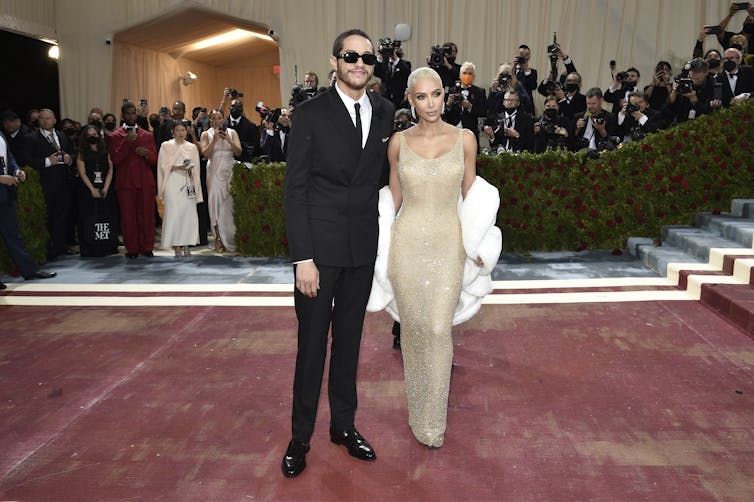
In 2022, Kim Kardashian sparked outrage when she wore Marilyn Monroe’s famous “Happy Birthday, Mr President” dress to the gala.
The theme that year was In America: An Anthology of Fashion. For many people, Monroe and her famous gown represented the height of American culture.
Kim’s use of the dress sparked broader conversations about historical objects, ethics and celebrity culture. Some also accused her of damaging it.
Evan Agostini/Invision/AP
As you watch this year’s gala, it’s worth examining whether any of the outfits stimulate a thought or conversation about politics, history, technology or culture.
Designers often use colours, textiles and shapes to express something about society. These messages may be subtle, or at times quite explicit.
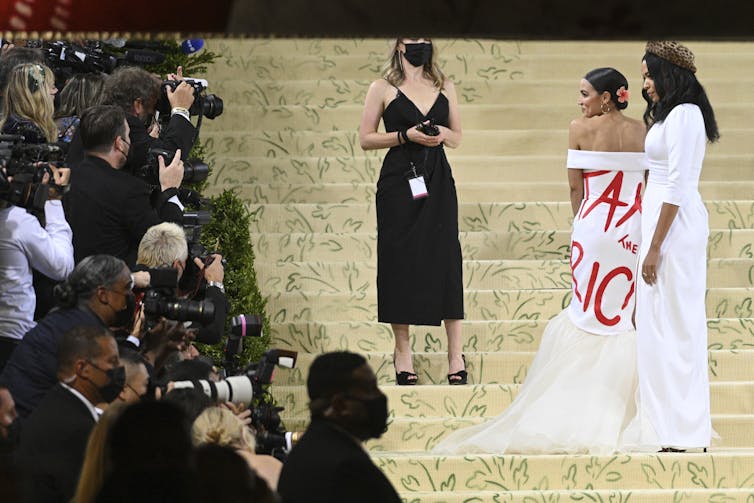
In 2021, American politician Alexandria Ocasio-Cortez wore a white gown with “tax the rich” written on the back, referencing the extreme wealth disparity in the United States.
Fashion reflects who we are, and the world we live in. If that isn’t art, I don’t know what is.
NDZ/STAR MAX/IPx