



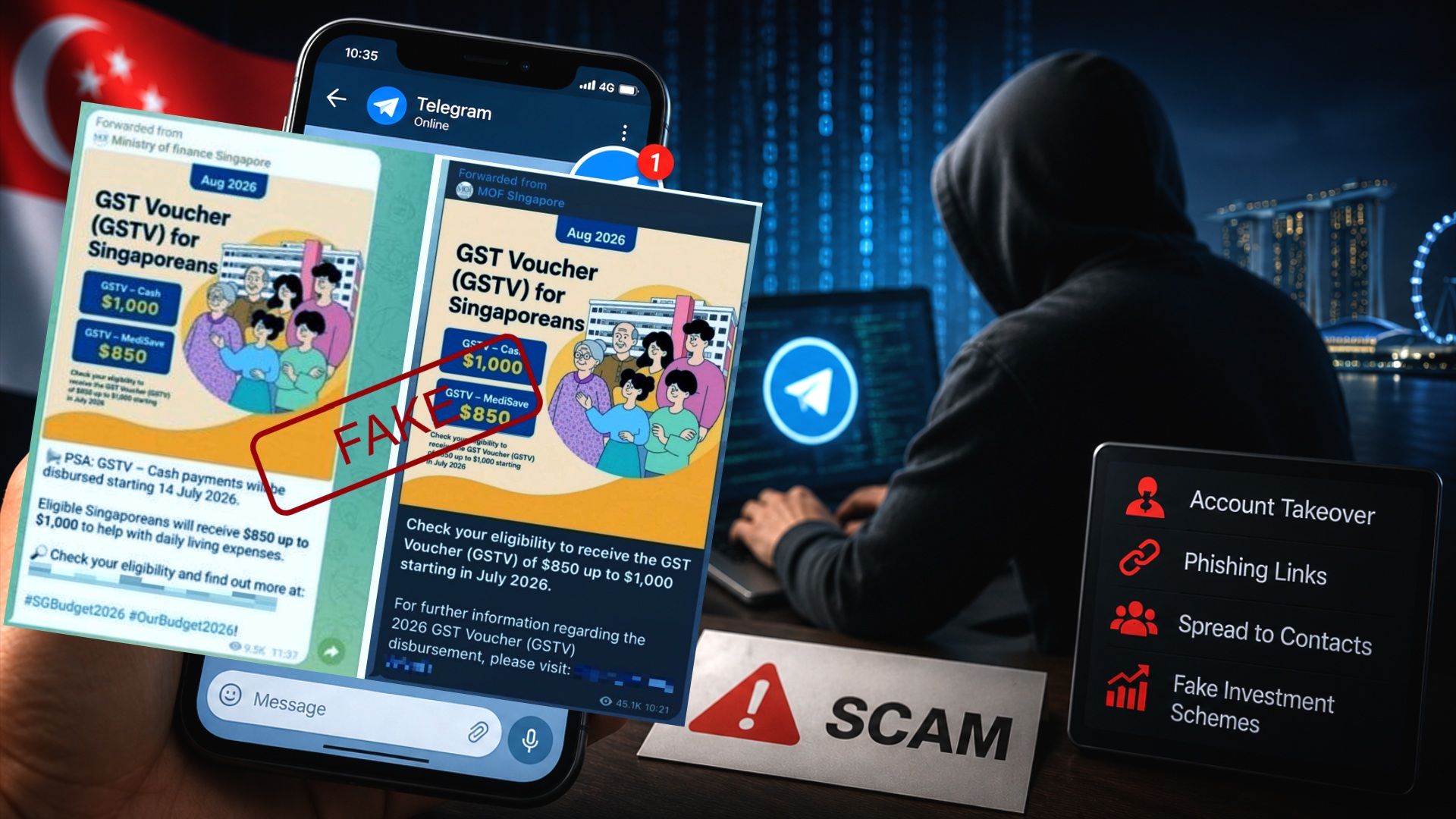
SINGAPORE: The Singapore Police Force (SPF) has warned of a new wave of Telegram scams that use fake GST Voucher (GSTV) Cash and MediSave messages to trick people into giving up their Telegram accounts. The advisory was issued on July 16, 2026.
The scam starts with a Telegram message containing an infographic and a fake link claiming to help users check their GSTV eligibility. Victims who click the link are asked for personal details such as their mobile number, name, or NRIC. They may also be asked for their Telegram verification code, allowing scammers to seize control of the account.
Once inside, scammers use the stolen account to send phishing links to the victim’s contacts or add them to Telegram groups promoting fake investment schemes. The SPF said the scam has resurfaced and urged the public to stay alert.
The government won’t ask for your personal details
The police stressed that legitimate GSTV payments don’t require people to click links or submit personal information.
Singaporeans who have already signed up for the GSTV scheme will receive payments automatically if they are eligible. SMS notifications sent from “gov.sg” only inform recipients of their benefits. They won’t ask people to reply, click a link, or provide personal details.
The SPF also reminded the public that the Ministry of Finance (MOF) doesn’t operate a Telegram broadcast channel and won’t contact people through Telegram about GSTV payments. Information is released only through the MOF’s official communication channels.
Protect your Telegram account before scammers take over
The police urged the public to strengthen their digital security by enabling Telegram’s Two-Step Verification, using the ScamShield app, and switching on banking security features such as two-factor authentication, transaction limits, and Money Lock, where available.
People should also avoid clicking links from unknown contacts and verify that government websites end with “.gov.sg” before entering any information. Suspicious links, phone numbers, and messages can be checked through the ScamShield app or website. Most importantly, Telegram verification codes and one-time passwords should never be shared with anyone.
A stolen account can become a scammer’s next tool to scam others
Account takeover scams can spread fast because messages come from someone a victim already knows. Friends and family may trust the sender without realising the account has been hijacked, allowing phishing links and fake investment promotions to spread further.
The safest habit is also to treat every unexpected message asking you to click a link or share a verification code with suspicion, even if it appears to come from someone you know. A few seconds spent checking could stop a scam before it reaches the next person.
Read related: MOF: 1.5 million Singaporeans to receive up to S$850 GSTV cash payouts in August; SG senior citizens to receive up to S$450 Medisave top-ups