



SINGAPORE: Relationships with domestic helpers usually break down due to small oversights in planning, vague instructions, or a lack of basic respect.
A guide published by Help Is Here (HIH) takes a direct approach to address such issues, outlining how employers in Singapore can improve that relationship through steady, practical steps.
The advice focuses on three important areas to address for domestic helpers: preparation before arrival, clarity in expectations, and daily empowering gestures after the helper settles in. These important steps shape whether a home will run smoothly or become a source of stress later on.
Helper’s cost planning and preparation before arrival
The hiring process begins well before a helper enters an employer’s home. According to HIH, employers should first prepare financially, as hiring a domestic helper involves more than just a monthly salary since there are also upfront and recurring costs that need to be planned in advance.
The guide estimates one-time expenses at about S$1,434, which includes an agency fee of around S$1,100, along with smaller charges such as work permit application fees, issuance fees, onboarding programmes, and medical checks. Optional costs, such as vaccinations, may also apply.
Beyond the initial stage, annual costs can reach about S$12,000, which include salary, levies, insurance, and daily living expenses. Employers who enter the process without a proper understanding of this budget planning may face pressure later, which can affect how they treat the helper.
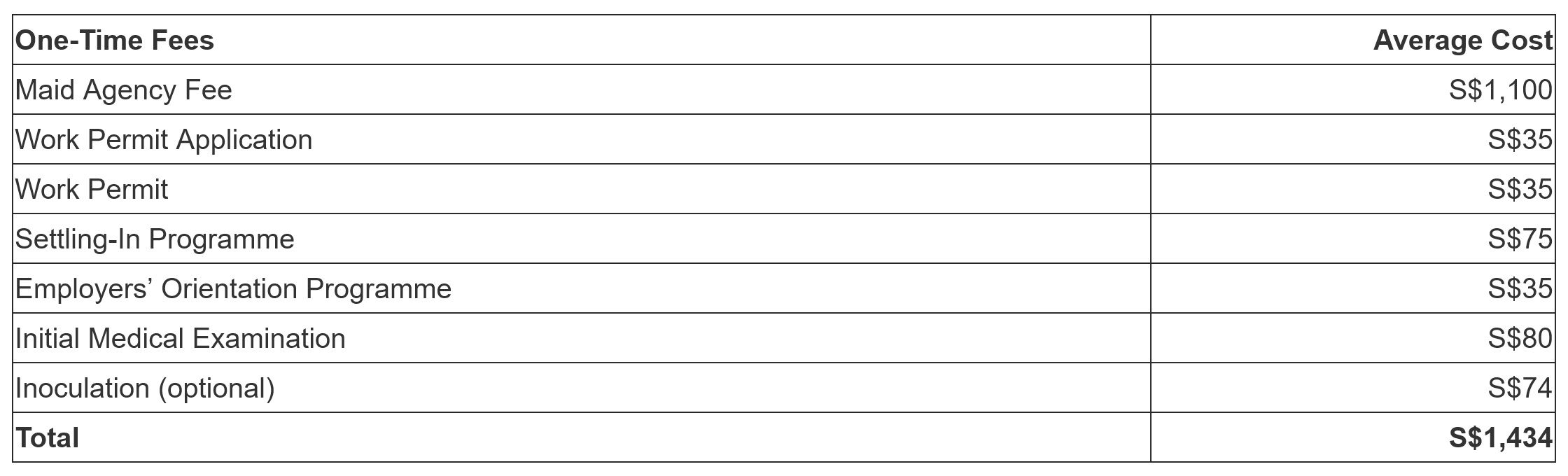
One-Time Fees/Help is Here
One-Time Fees – Practical guide to being a better employer to your maid in Singapore
____________________
Insurance coverage is another point raised in the guide. Adequate coverage protects the employer and the helper and also allows the helper to carry out duties with greater security.
Time planning is equally important, as the work permit process can take several weeks, with the initial approval taking more or less about a week, followed by a longer period for final clearance. Delays are not uncommon. Employers who understand this timeline are less likely to rush decisions or create stress for the incoming helper.
Preparation also extends to the home itself, so the guide advises employers to ensure the helper’s living space is ready even before she arrives. Preparing basic items such as bedding and towels, and ensuring easy access to daily necessities, should be included. Cleaning tools and easy-to-understand instructions for household tasks must also be prepared.
Though optional, some employers provide small welcome items to help ease a helper’s transition into a new environment because, for many helpers, moving to Singapore from their home country involves leaving family and friends and adapting to new surroundings and routines, so a prepared environment reduces the pressure of that adjustment.
Being clear to the helper about what’s expected from her
Once the helper arrives, the next step is to establish clear and consistent expectations, as many disputes arise from unclear roles rather than intentional conflict.
To avoid such misunderstandings, employers are advised to outline helpers’ duties in detail, including their daily chores, weekly routines, and any special responsibilities such as childcare or eldercare, because vague instructions can lead to repeated corrections and, over time, cause tension in the employer-helper relationship.
Work schedules must be made as clear as possible from the start. This includes working hours, rest periods, and designated days off. Meal and break times should be included in the routine because, when these are confusing, helpers may be unsure when they are allowed to rest.
Mobile phone use is best set with easy-to-follow rules because this is a common source of disagreement in many households, so by stating the dos and don’ts from the start, both sides avoid misunderstandings later.
Emergency procedures are another critical matter; helpers must know what to do in urgent situations, who to contact, and how to respond.
Written or printed guides can help helpers rather than relying on memory alone, and create a shared reference point that reduces misunderstandings.
Communication should not be one-sided either, as helpers may hesitate to ask questions, especially in the beginning, due to language barriers, uncertainty about their role, or any other personal reasons. As such, employers asking for feedback can prevent small issues from growing into bigger problems.
Daily empowering gestures after the helper settles in
Once routines are established, the relationship enters a longer-term phase. This is where daily empowering gestures towards the helper matter more than formal rules.
Employers giving helpers opportunities to take on tasks they are comfortable with, and allowing them to handle specific areas independently when they perform well, can improve efficiency. However, adding responsibilities shouldn’t lead to an excessive workload.
Beyond formal arrangements, simple acts of showing appreciation towards the helper can shape how they feel about their work. These include verbal thanks, small gifts during special occasions, or including the helper in selected family activities.

Nick Karean/AI-Generated
Employer presents gifts to their maid (for illustration purposes only)
____________________
Such gestures don’t require much effort other than recognizing the helper, which can improve cooperation and reduce tension.
Employers’ small helpful actions creates lasting impact on helpers’ reactions
The guide concludes with a direct point that improving the employer-helper relationship doesn’t require major changes. It is usually just the smaller actions that matter most.
Preparing early reduces uncertainty, and simple instructions prevent confusion. Consistent respect also builds a stable working environment. When these elements are all properly in place, the household functions with fewer disruptions.
For Singapore households, this is highly relevant because domestic helpers play a key role in supporting daily life, from childcare to eldercare, so a stable working relationship benefits the employer, the helper, and the household as a whole.
HIH states this is a long-term approach, in which small, steady actions create a sustainable working arrangement, improved productivity, and a more manageable, predictable home environment.