



MALAYSIA: As scammers are known to depend on speed to deceive potential victims by rushing, confusing, and pushing for fast action, this playbook, however, starts to fall apart when someone refuses to play along and starts asking investigative questions.
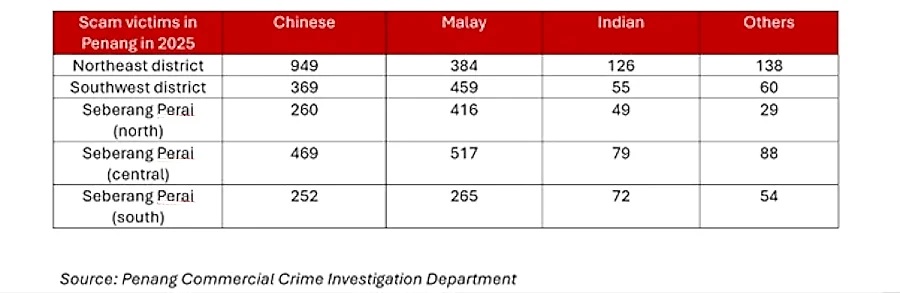
Police in Penang say one behaviour pattern keeps showing up among Malaysians of Indian ethnicity who tend to ask more questions, which scammers say they eventually give up on their criminal pursuit. According to The Rakyat Post (TRP) in an April 28 report, this habit has made Indians less likely to fall victim compared with other ethnic groups.
Penang Commercial Crime Investigation Department deputy chief DSP Pang Meng Tuck shared that the arrested scammers themselves pointed out that when faced with detailed questioning by targeted victims, the scammers’ stories crack, so they lose control of the conversation and decide to move on to easier targets.
Instead of reacting, they respond calmly with steady questioning
Usually, scammers rely on creating panic in victims, such as a fake kidnapping of a family member, a frozen bank account notice, a sudden “urgent” request from a friend and/or even made-up emergencies of some kind.
In such panic-infused situations, some targeted victims, instead of reacting, respond calmly with steady questioning, such as asking who was involved, where it happened, when it took place, and why it is happening.
That line of investigative questioning forces scammers to improvise, but the more they talk, the more inconsistencies appear, so eventually, their acting collapses. According to Malaysia Sin Chew (MYSinChew), police say this calm questioning process disrupts the core tactic of scams, which is to push victims into fast decisions without asking too many questions.
Reacting vs Responding
Police data from Penang shows Indian victims are targeted just as with any other ethnicity, but Indians are less likely to be successfully deceived. This distinction then redirects scammers’ focus from “who gets targeted” to “how people react/respond.”
MYSinChew
The lesson learned here is that calm thinking and responding beat emotional reaction and irrational actions.
Nevertheless, this case data doesn’t mean that all Indian Malaysians are completely safe from scams. They just fall for them less than usual. Police say every ethnic group still faces risk regardless, as scam tactics keep evolving, so staying alert matters for everyone.
Women are still heavily affected by romance scams
The same police briefing also pointed to another scam trend, whereby romance parcel scams still affect women more than men.
In the 2024 Penang data, there were 57 female victims compared with 17 male victims. Police believe some men may not report such cases due to embarrassment.
These scams play on loneliness or financial temptation, drawing victims into long conversations before asking for money.
Ethnicity vs Mindset
Beyond ethnicity, scam prevention is more about mindset: the strongest defence against scams is how one reacts or responds under pressure. Asking questions does three things:
The actions above alone can be enough to stop a scam.
Treating every urgent request as unproven until it has been fully investigated
Authorities continue to remind the public to verify unknown calls, avoid sharing personal or banking details, and report suspicious contact.
There is no need for complex tools or expert knowledge to prevent being scammed. Just a little pause and a few basic questions can change the outcome. As scammers look for speedy action, denying them that demand means the advantage becomes yours instead of theirs.
A practical approach is to treat every urgent request as unproven until it has been fully investigated. Call back through official channels. Speak to someone you know. Take a moment to breathe and think carefully before making any rash decisions.
That small delay can be the difference between losing money and keeping it.