



SINGAPORE: Images circulating online of destroyed Mahan Air aircraft amid the ongoing conflict in Iran have drawn attention from observers in Singapore, after it emerged that several of the planes were once operated by Singapore Airlines (SIA) before being covertly transferred to Iran.
The aircraft in question are five Boeing 777-200ERs that were first delivered to SIA between 2001 and 2003. They remained part of the airline’s fleet until being retired in 2018 and 2019, after which they were passed on to NokScoot, a Thai low-cost carrier that has since ceased operations.
Following NokScoot’s closure, the jets were left in storage for several years. Their status remained unchanged until May 2025, when they were reactivated under circumstances that now appear to point to an illicit transfer.
Records show that all five aircraft were parked at Siem Reap Angkor International Airport in Cambodia between July 4 and July 15. Data from flight tracking service Flightradar24 indicates that one of the jets, registered 5R-HER, departed on July 15 and was later stored at Mashhad International Airport in Iran.
During that journey, the aircraft’s ADS-B transponder was switched off while flying over Afghanistan, effectively masking the remainder of its route. This method has been observed in previous transfers involving aircraft entering Iran, where planes disappear from tracking systems before resurfacing in Iranian airspace.
Recent images believed to be from within Iran suggest that these aircraft may have since been destroyed. One photograph shows a Mahan Air plane with its upper fuselage torn away as thick smoke rises from the wreckage, while another depicts a separate aircraft split into two sections.
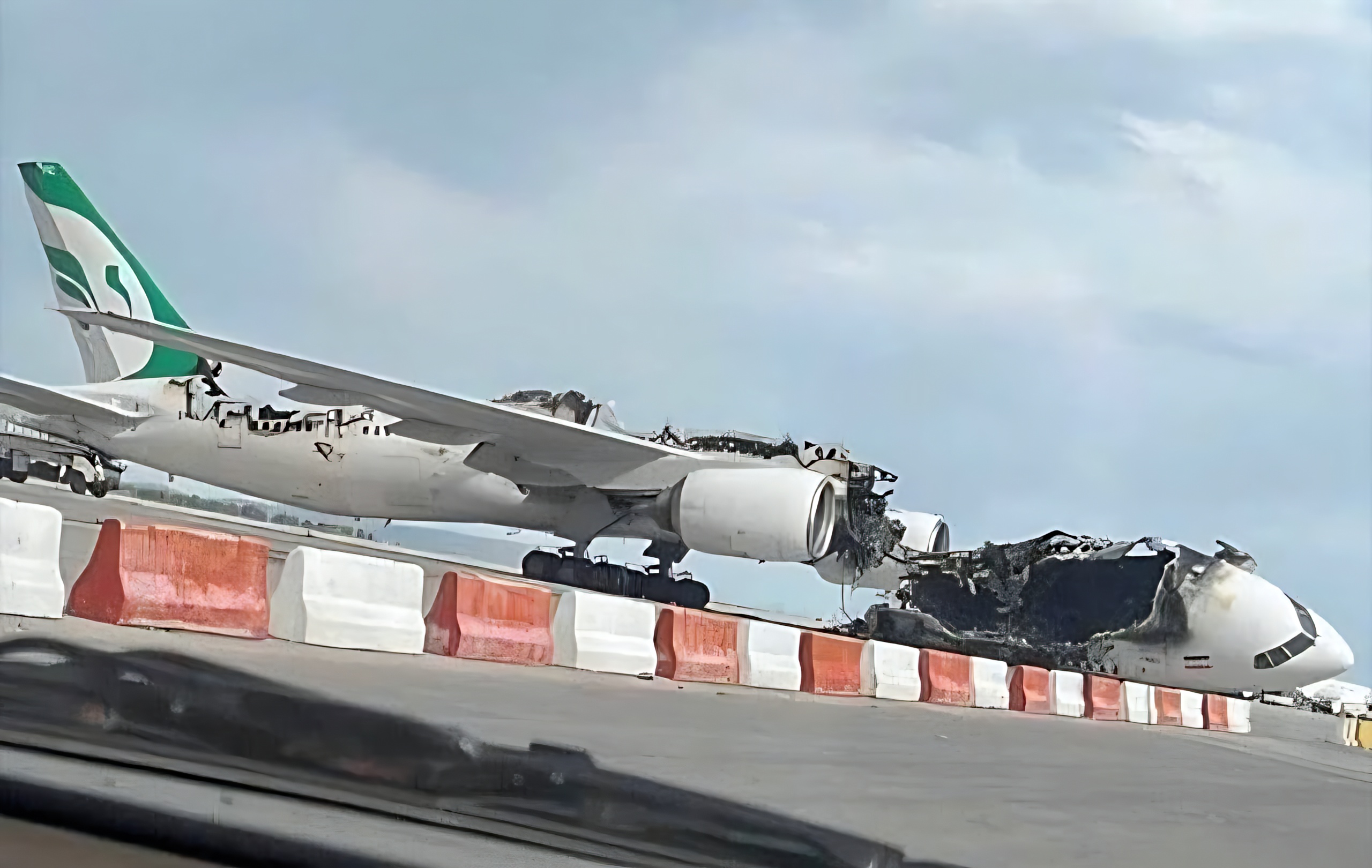
The incident comes against the backdrop of longstanding United States sanctions on Iran, which restrict the country’s ability to procure commercial aircraft. The measures bar the sale of planes containing more than 10 per cent US-made components, effectively preventing Iran from acquiring Boeing jets and most Airbus models.
As a result, Iran’s aviation sector has faced significant constraints. Much of its fleet is considered outdated, with limited access to spare parts and certified maintenance. Estimates from last year suggested that fewer than 200 of the country’s approximately 330 registered aircraft were operational.
To work around these restrictions, Iran has relied on indirect and often opaque methods to obtain aircraft. In recent years, this has included reactivating grounded planes and using complex ownership changes and flight routes designed to avoid detection.
In April, two Airbus A330-200 aircraft previously operated by Hong Kong Airlines were flown from Oman to Tehran without interference. A similar pattern was seen in May 2023, when two Airbus A340-200s formerly used by the French Air and Space Force were transferred after a period of storage in Indonesia. Those aircraft were re-registered in Mali and disappeared from radar near India before eventually arriving at Chabahar.
Reports have also pointed to other cases, including two Airbus A340s linked to a Gambian leasing company that departed Lithuania in 2024. Originally bound for the Philippines, the planes diverted mid-journey, ceased transmitting tracking data, and later surfaced in Iran, landing in Tehran and Chabahar, respectively.