



Witnesses report severe mistreatment of detainees by police during recent protests demanding Chief Election Commissioner’s resignation.
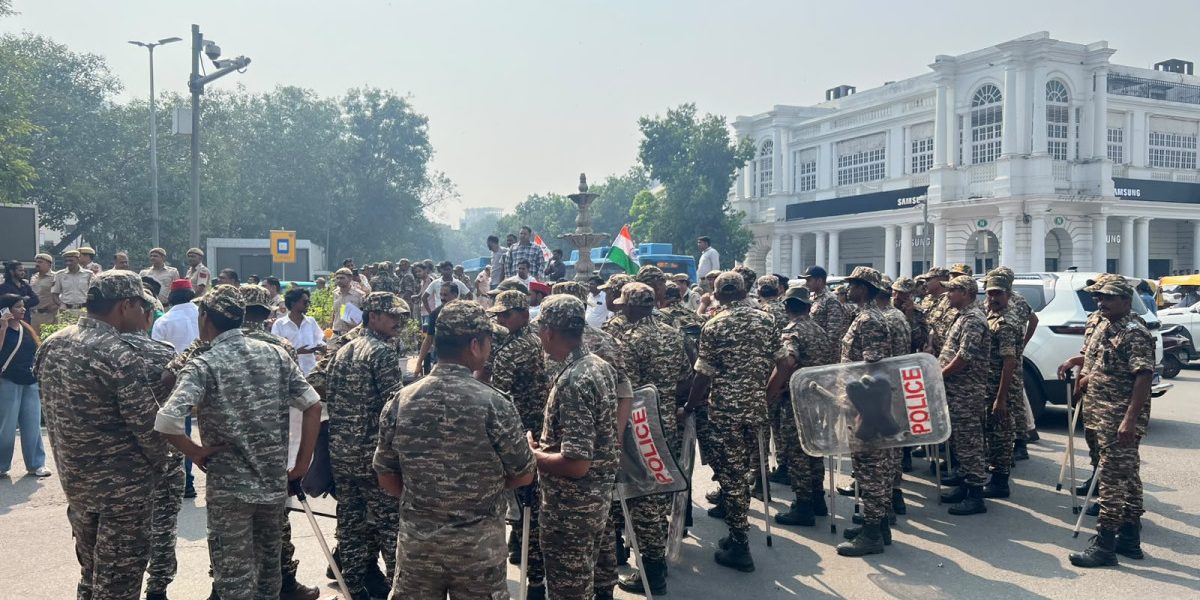
Detainees in Delhi have shared alarming accounts of their treatment by police following protests demanding the resignation of Chief Election Commissioner Gyanesh Kumar. On October 11, over 50 individuals, including minors, were arrested at Connaught Place and Jantar Mantar. They were subsequently taken to a community centre known as Pandwalan Khurd, located approximately 40 kilometres from central Delhi.
Witness testimonies reveal that detainees faced violent assaults by police officers who reportedly beat them, targeted their private parts, and confiscated their mobile phones. According to one detainee, Arjun Unnikrishnan, a 30-year-old lawyer, officers behaved aggressively. “They made us sit on the road in rows, and then they started identifying individuals who had been recording video or taking photos earlier, snatching their phones in the process,” he recounted.
The detainees were initially taken to Chhawla police station where they reported prolonged periods of uncertainty about their situation. Unnikrishnan noted that the officers did not allow access to legal representation or medical assistance, despite a Supreme Court ruling earlier that day affirming the right of lawyers and journalists to perform their duties.
“It was horrific,” Unnikrishnan said, describing how detainees were treated as they were moved to the community centre. The environment in the detention buses was reportedly prison-like, with detainees unable to move freely and subjected to physical violence.
A 20-year-old student, who opted to remain anonymous, described experiencing violence during his detention. He stated that police officers took turns hitting detainees and inflicted bodily harm despite their cries for mercy.
The situation for detainees worsened as they arrived at Pandwalan Khurd, where they found themselves without food or water. While some individuals managed to keep their mobile phones and contact friends or lawyers, others, particularly the minors, were frightened and confused about their fate.
Unnikrishnan noted that police meticulously recorded the details of all detainees, including minors, demonstrating an awareness of their legal obligations. He indicated that upon arrival at the community centre, detainees discovered others sustained injuries, including one case of a fractured arm.
Friends and lawyers arrived later but faced difficulties accessing their detained associates due to locked gates at the facility. Throughout the ordeal, police maintained strict control and offered little information regarding the detainees’ treatment or future actions.
The events occurring during this crackdown continue to raise significant concerns about police conduct and treatment of individuals exercising their right to protest in Delhi. As of now, there are ongoing discussions about legal recourse for the detainees who experienced violence and mistreatment.
A spokesperson from the Delhi Police has yet to publicly address the accusations made by the detainees, leaving many questions about accountability in the face of these allegations.
The treatment of protesters and detainees highlights escalating tensions surrounding civil liberties and governmental authority in India, igniting widespread discussions on the rights of individuals to voice dissent peacefully.
