



Growing demand from artificial intelligence (AI) and data centres could provide the long-term electricity purchase commitments needed to make Southeast Asian renewable energy and transmission projects bankable, energy transition specialists said.
The International Energy Agency projected that data centre electricity demand in Southeast Asia will more than double between 2024 and 2030, partly driven by the hub in Singapore and southern Malaysia. Elsewhere in Asia Pacific, consumption is expected to rise by about 170 per cent in China and 80 per cent in Japan over the same period.
Meeting this demand with clean power could gain support from the Association of Southeast Asian Nations’ (Asean) push to strengthen cross-border electricity trade. At the 44th Asean Ministers on Energy Meeting in Manila, discussions focused on operationalising the enhanced Asean Power Grid agreement, advancing regional planning and multilateral power trade, and developing a submarine power cable framework
But growing demand must be matched by policies that enable renewable energy projects, said Ann Margret Francisco, Asia Pacific Director at the Belgium-based trade association Global Wind Energy Council (GWEC).
“AI, new industries mean additional demand which should be supplied from renewable energy. But demand alone cannot build projects,” Francisco said in a media briefing on Friday.
“
The expectation in some of these jurisdictions is that data centres will need to be supplied by renewable electricity. If that happens, then it will be a way to start to see projects and support development.
Russel Marsh, Regional Lead for Southeast Asia, Energy Transition and Climate Finance, E3G
Policies must ensure that supply arrives at the right time, with adequate infrastructure and at a price that supports the operations of these industries, Francisco added.
Russel Marsh, Regional Lead for Southeast Asia, Energy Transition and Climate Finance at global think tank E3G, similarly said in the briefing that data centre demand could support new projects, but turning that potential into investment remained the challenge
He pointed to emissions-reduction commitments among some data centre providers as a potential driver of renewable electricity procurement as they expand.
Australia-based hyperscale data centre operator AirTrunk, for example, aims to match all electricity consumed at its sites with renewables by 2030. In Malaysia, a 29.99 megawatts in alternating current (MWac) solar project backed by its virtual power purchase agreement with renewable energy developer ib vogt began commercial operations in July, illustrating how data centre demand can support new clean energy capacity. MWac is a measurement of the maximum power output that an energy system, such as a solar farm or battery storage facility, can deliver to the electrical grid.
He also cited South Korea and Australia as jurisdictions considering measures requiring developers to bring additional electricity generation, including renewable supply, alongside their facilities.
“The expectation in some of these jurisdictions is that data centres will need to be supplied by renewable electricity. If that happens, then it will be a way to start to see projects and support development,” he said.
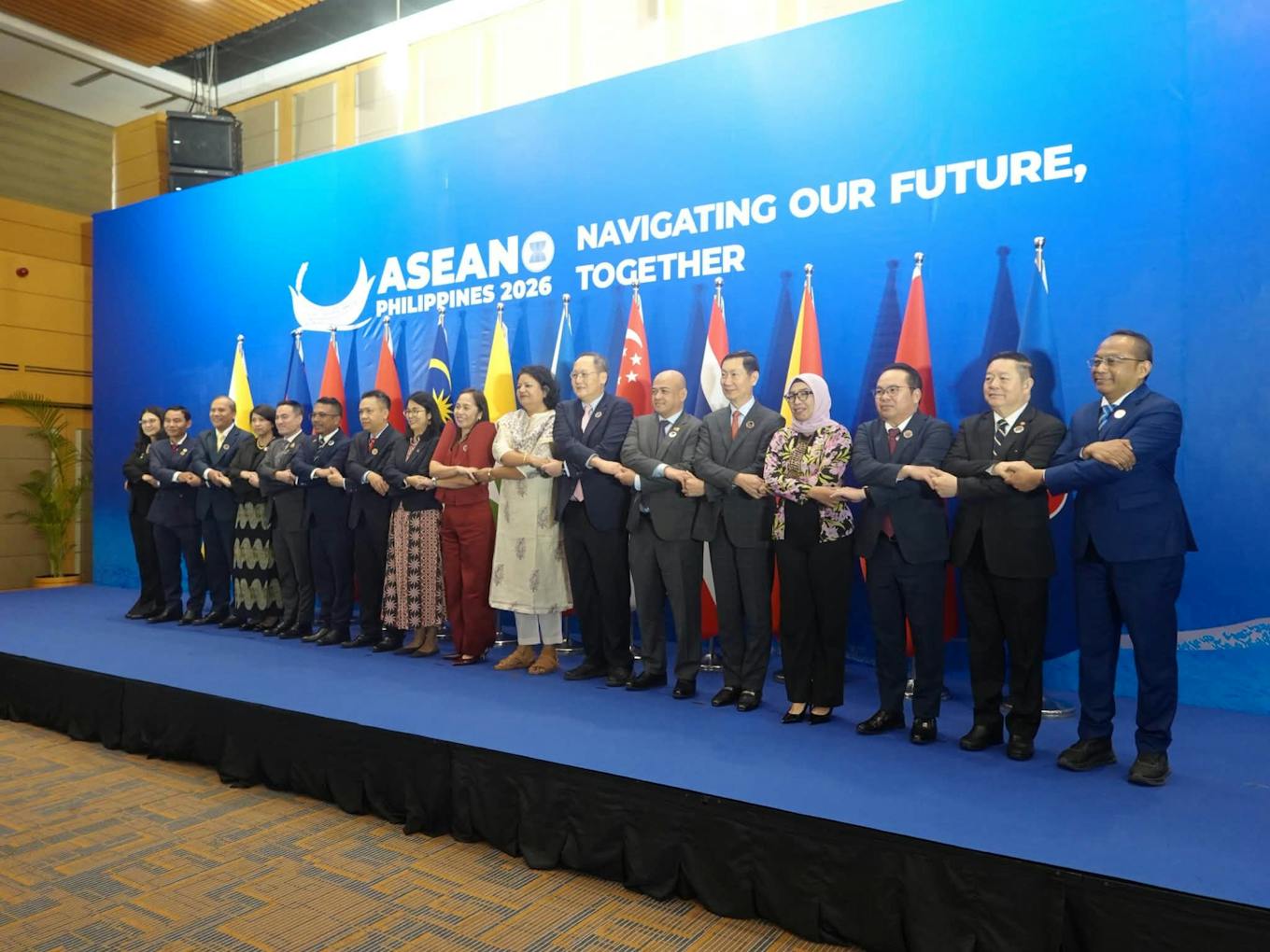
The 44th Asean Ministers on Energy Meeting (AMEM44) was held in Manila from 5 to 9 October. Image: Asean
Robert Cooke, grid advocacy lead at the Global Renewables Alliance, said in the briefing AI’s expansion should be considered alongside wider electricity demand growth and the electrification of other sectors.
Meeting the demand for electrification and AI with renewable energy has become increasingly important, he added.
Cooke cautioned that inconsistent data on AI-related electricity consumption across geographies could complicate planning. Better datasets were needed to inform energy system development and support renewable integration.
“It’s important that we have the dataset to be able to inform energy system development plans that will ultimately help support the transition and integration of renewable energy and development of AI in the sectors,” he said.
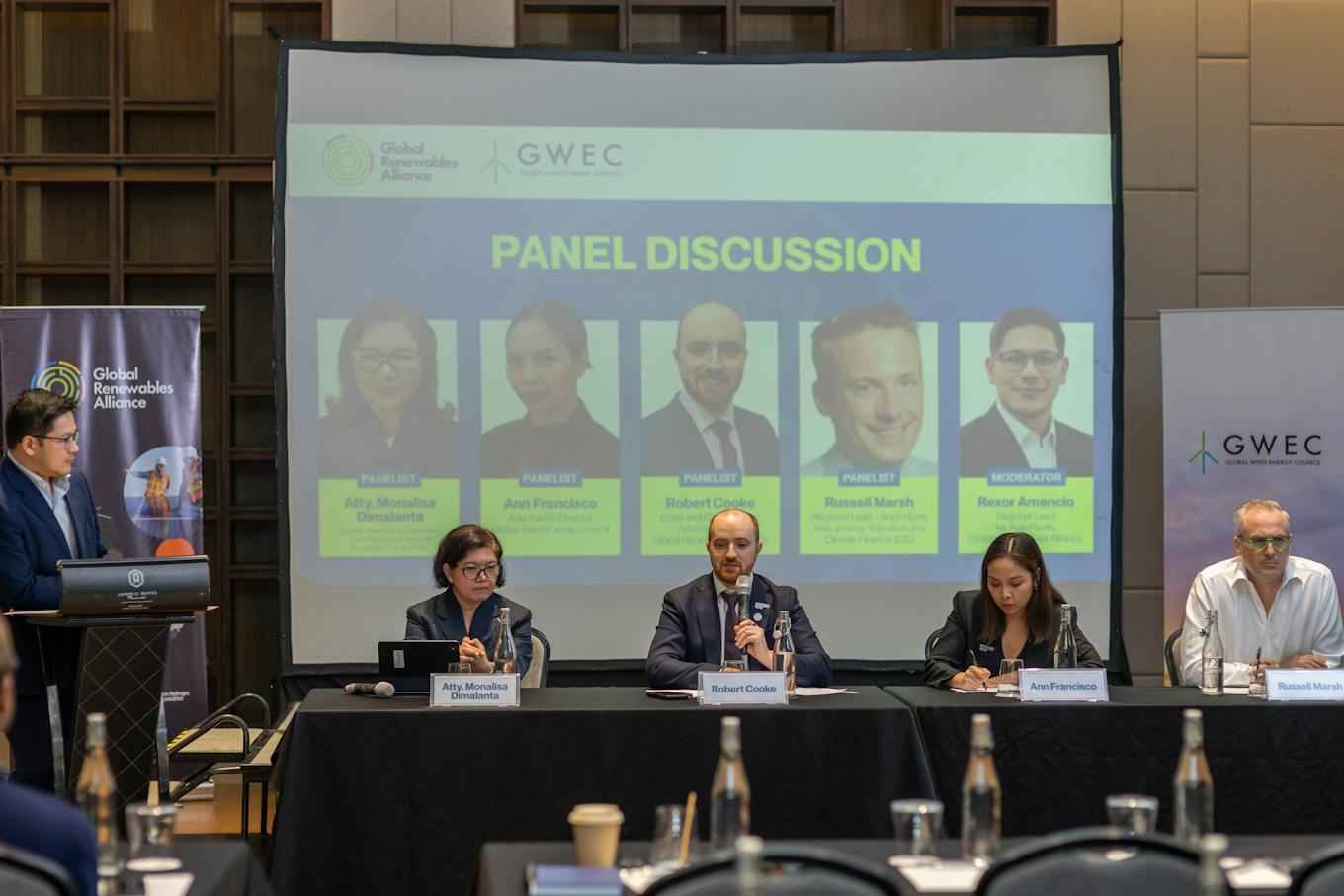
A media briefing was held on 9 October at Admiral Hotel in Manila, Philippines to discuss the outcomes of the 44th Asean Ministers on Energy Meeting (AMEM44) held from 5 to 9 October. From left, Former Chair and Chief Executive of the Philippines’ Energy Regulatory Commission Monalisa Dimalanta, Grid Advocacy Lead at the Global Renewables Alliance Robert Cooke, Asia Pacific Director at Global Wind Energy Council Ann Margret Francisco, and Regional Lead for Southeast Asia, Energy Transition and Climate Finance at E3G Russell Marsh. Image: GRA
Coal reduction in ministerial pledge
Asean energy ministers, in a joint statement released on Thursday, backed stronger regional power connectivity, renewable energy deployment and financing for cross-border projects, while reaffirming the role of oil and gas in energy security. They also called for stronger regional cooperation to reduce methane emissions from oil, gas and coal
“The meeting encouraged stronger regional cooperation to reduce methane emissions from the oil, gas, and coal sector, recognising that effective methane management can strengthen energy security, improve operational efficiency and contribute to Asean’s climate objectives,” the statement read.
“
Keeping that momentum [of staying away from fossil fuel dependence] in itself is an achievement. It’s something that we shouldn’t take for granted.
Monalisa Dimalanta, Former Chair and Chief Executive, Philippines’ Energy Regulatory Commission
E3G’s Marsh welcomed references to coal transition and continued work on the Asean Power Grid, but described the discussions as producing a “mixed result”.
Alongside progress on renewables and clean electrification, he noted continued attention to securing fossil fuel supplies and infrastructure. Moving away from fossil fuels towards clean electrification offered the strongest route to future energy security, he said.
Monalisa Dimalanta, Former Chair and Chief Executive of the Philippines’ Energy Regulatory Commission, offered a more encouraging assessment, saying that maintaining momentum away from fossil fuel dependence was itself an achievement.
Drawing on more than two decades in the sector, she recalled the challenges of preparing the Philippine National Renewable Energy Plan during the Covid-19 pandemic.
“Keeping that momentum in itself is an achievement,” she said. “It’s something that we shouldn’t take for granted.”
Dimalanta also welcomed the statement’s support for revitalising the Asean Energy Database System and called for national data portals to complement it. Greater transparency could improve investment decisions while strengthening public understanding of energy issues and trust in the sector, she said.
