



Isro employees raise questions about the future of the organisation amid growing private sector involvement in India’s space industry.
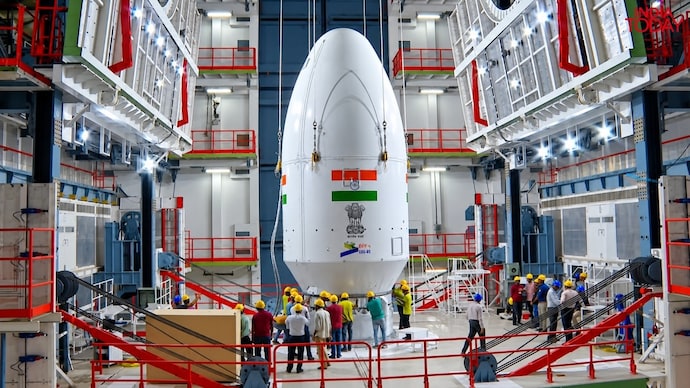
The Indian space sector is undergoing a significant transformation, with increased private sector participation that raises concerns among some employees of the Indian Space Research Organisation (Isro). Following the recent successful launch of the GSLV F-17/EOS-05 mission, concerns have been voiced regarding what these changes will mean for Isro’s core functions of rocket, satellite construction, and launch infrastructure management.
A letter from representatives of nine employee associations at major Isro centres, including the Vikram Sarabhai Space Centre (VSSC) and the Liquid Propulsion Systems Centre (LPSC), has been submitted to Isro Chairman V Narayanan. This five-page document expresses unease about the extent of privatisation and its implications for Isro’s role.
These employee associations, which represent approximately 5,000 workers—about 27% of Isro’s total workforce of 18,100—question the limits of private involvement in a sector where the government aims to enhance private participation. Since 2020, the government has encouraged private companies to design and manage space systems, allowing Isro to pivot towards research and advanced technology development.
While the associations acknowledge the value of legitimate private participation, they express concerns that critical activities currently handled by Isro might migrate to private firms over time. Their apprehensions were heightened by comments made by Pawan Goenka, chairman of IN-SPACe, indicating that Isro would eventually cease to manufacture launch vehicles, a duty that would shift to private companies or public sector undertakings.
This shift leads to deeper concerns about the retention of engineering and manufacturing capabilities within Isro. The letter highlights the transfer of technology related to the Small Satellite Launch Vehicle (SSLV) to Hindustan Aeronautics Limited (HAL) and mentions ongoing discussions regarding transferring technology involving the LVM3 and Polar Satellite Launch Vehicle (PSLV).
Moreover, employee associations fear a gradual outsourcing of satellite manufacturing and new launch facilities, including the Space Launch Complex at Kulasekarapattinam in Tamil Nadu, to private entities. They argue that the lack of a clearly articulated policy regarding the boundaries of Isro’s responsibilities and the role of private participants is causing anxiety among the workforce.
The complexity of launch vehicle construction goes beyond mere manufacturing. It incorporates decades of expertise, institutional knowledge, and safety protocols, all of which may be jeopardised if pivotal operations move outside Isro. Employees worry about the workforce implications of this shift, including reduced in-house jobs, fewer promotions, diminished skill development opportunities, and a potentially stagnant recruitment process.
The letter also cautions that some current staff might become redundant as private contractors assume roles traditionally filled by Isro employees. This concern is particularly pressing since government data shows Isro is currently operating with a significant vacancy rate of approximately 14.4%, with over 15,500 current employees out of nearly 18,100 sanctioned positions.
Amid these fears, associations have requested clarification from Dr Narayanan on Isro’s future role concerning launch vehicles, satellite manufacturing, infrastructure responsibilities, and staffing processes. They assert the need for a clearer distinction between enabling private participation and undermining Isro’s own capabilities.
The broader conversation is not solely about the rivalry between private and governmental interests but rather how India’s national space agency will evolve in the next decade. The employee associations are keen on understanding whether Isro will retain its foundational roles in developing and constructing major space systems or if it will transition into a predominantly research and technology institution while ceding operational responsibilities to private enterprises and public sector firms.
As uncertainty lingers within the Indian Space Research Organisation, many employees are urging for structured discussions with the Department of Space to address their concerns and to delineate the vision for Isro amidst growing private sector interaction in India’s thriving space industry.