



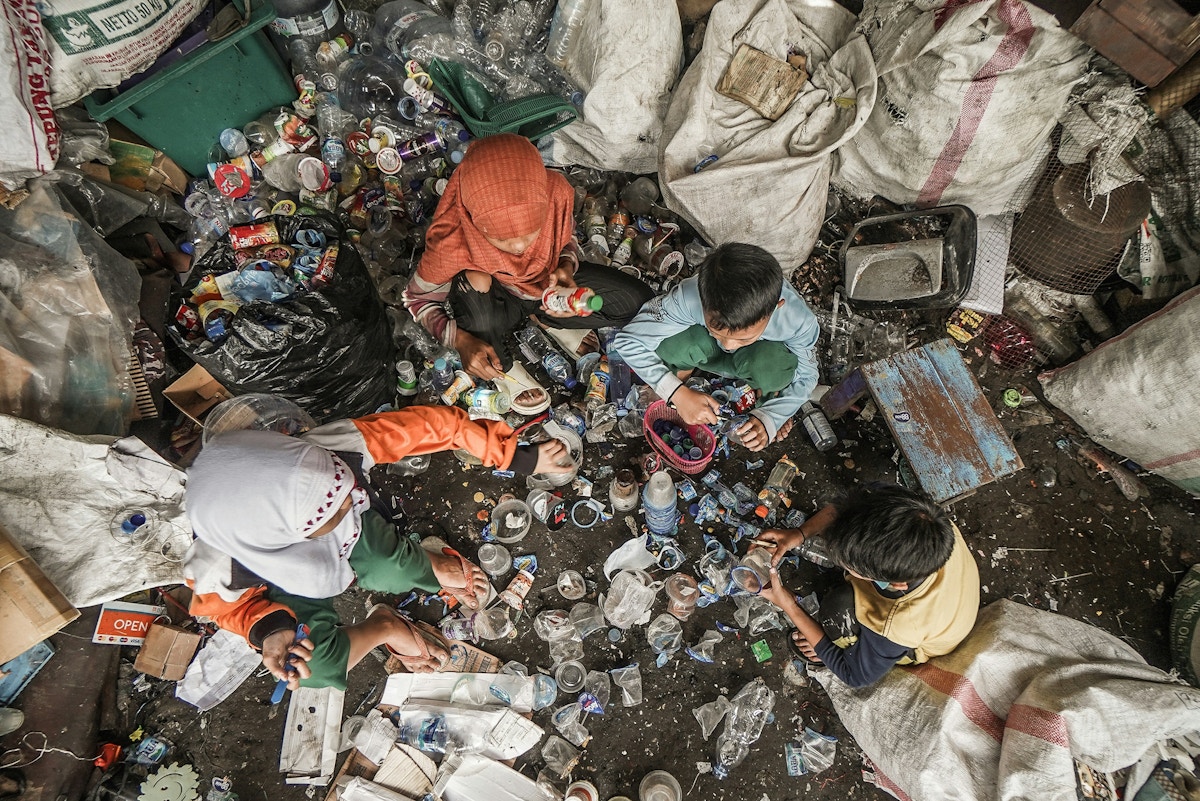
Substitute materials for making disposable goods such as packaging and single-use cutlery have been touted by some as part of the solution to tackling plastic pollution.
Franky Wibowo is head of marketing at PT Bersaudara Inti Corpora, an Indonesian company which supplies plastic raw materials for packaging. He said alternative materials often struggle to meet food safety and durability requirements for the cost, so many industries still depend heavily on plastic.
“For products that need strong protective barriers, especially food packaging, plastic is still cheaper, lighter and more durable,” Wibowo told Dialogue Earth. “A rice bag, for example, must withstand weight, transport and storage [requirements]. Many recyclable alternatives still cannot provide the same mechanical strength.”
South Korean company CJ Biomaterials has a facility in East Java manufacturing polyhydroxyalkanoates – biodegradable plastics made from bacterial fermentation of oils, sugars or food waste. Indonesian companies have also been producing biodegradable packaging made of crushed sugarcane stalks as well as cassava-based materials.
Elis Nurhayati is chief executive and co-founder of Daya Data Komunitas, a technology start-up focused on community management of local natural resources. She warns that replacing plastics with other disposable materials, such as crop-based bioplastics or paper, might shift the environmental burden instead of solve the underlying problem.
“Paper production can increase pressure on forests, while bioplastics may compete with food systems and agricultural land,” Nurhayati said. “The solution is not replacing one disposable product with another.”
Instead, the country could strengthen longstanding reuse systems many Indonesians are already familiar with, says Tiza Mafira, a co-founder of Dietplastik Indonesia and director of the Climate Policy Initiative. For Mafira, reuse is “the most realistic alternative”.
She gave the example of large refillable water dispensers and returnable cooking gas cylinders which have operated in Indonesia for decades. “That same model can be expanded for household products and food staples,” Mafira said. In Jakarta and other large cities, refill stores encourage customers to fill up on staples like cooking oil, detergent and household products using their own containers.
A 2023 study by the UN Environment Programme found that reuse systems could reduce plastic pollution by 30 per cent globally by 2040.
Nurhayati advocates for reuse and says restricting plastic to applications critical for societal functioning would stem unnecessary use.
“If waste reduction is directly connected to economic incentives, people will change behaviour much faster,” she added. “Public pressure from environmentally and financially aware consumers could eventually force industries to decarbonise.”
Act of convenience
Consumers continue to rely on plastic packaging mainly because it’s cheap and convenient, said Hilaludin, co-founder of Yayasan Rumah Pelangi, a community-based environmental organisation.
“Even when consumers want alternatives, such as wrapping food in leaves instead of plastic, those options are often harder to find and more expensive,” he added.
Herlina Agustin of Padjajaran University said conventional plastics are artificially cheap because the price excludes environmental costs. “The public ultimately pays through pollution, waste and environmental damage,” she said.
The challenge is not only replacing materials, but changing systems of consumption, she said. “People may want reusable containers, but many places still do not support them,” she added.
Yet many of the solutions being promoted in Indonesia, including better waste segregation, reuse systems and alternative materials, focus on plastics only after they have been produced, said Agustin.
According to her, Indonesia’s environmental ambitions are difficult to reconcile with policies that continue to expand petrochemical production.
“As long as success is measured by ever-growing production and continuous expansion, we will keep looking for ways to make the same system appear greener,” she said. “What we may need is not only new technologies, but a different idea of what is enough.
“Environmental communication should not be about making reality look better than it is. It should help us have an honest conversation about the future.”
Additional inputs by Ash Tan.
This article was originally published on Dialogue Earth under a Creative Commons licence.