



For five years, dangerously overpowered e-bikes have been legally imported to Australia.
Many are effectively electric motorbikes, able to reach 50km/h – or even faster if modified. Riders – often young men – can get hold of one without needing a motorbike license. Injuries and deaths have soared.
Authorities have tried to police the issue on the streets. But the real problem starts at the nation’s borders and e-bike retailers. This month, the federal government announced plans for a national safety standard for e-bikes, with e-scooters to follow.
It’s an important, if overdue, step. But the standard will only work if it clearly distinguishes safe, useful and popular pedal-assisted electric bicycles (pedelecs) from overpowered and easily-modified devices sold under the same label of “e-bike” or for “off road” use only.
How did we get here?
Pedelecs – pedal-assisted e-bikes – are legal across Australia. These e-bikes can have motors of up to 250 watts, with the electric assist capping out at 25km/h. These e-bikes have become very popular as a way to get around cheaply and sustainably.
In 2021, a previous Australian government removed e-bikes from its definition of a road vehicle. This led to an unintended consequence: overpowered e-bikes could be imported as long as they were used on “private property”.
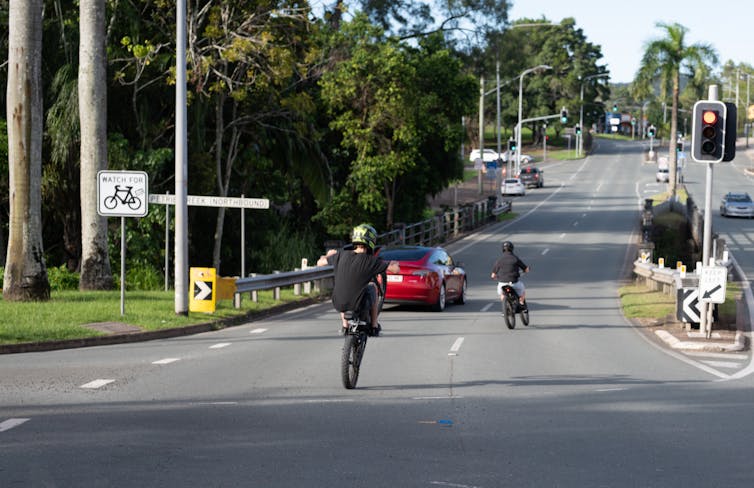
Imports of these high-powered vehicles surged. Speeds of over 50km/h are common. Some riders modify their vehicles to go even faster. It’s not legal for these overpowered vehicles to be used on public roads and paths. But the law is often ignored, especially by adolescents.
Over the past five years, states and territories have responded with their own laws and inquiries. But these laws are largely reactive, as this tier of government has no power over import rules.
Consumers have been left to navigate a confusing market. Many online and brick-and-mortar outlets sell overpowered bikes and modification kits without enough information about safety and local road rules. Police, schools and employers have been left trying to identify dangerous vehicles after they are already in use.
Travis Morrison/Getty
Risks are real – but not identical
Public discussion of e-bikes has been dominated by images of battery fires and young people riding at high speeds and doing wheelies. These are legitimate reasons for concern.
Between 2016 and 2020, seven people died in collisions involving e-bikes and another seven on other electric micromobility devices such as scooters. Deaths appear to be increasing. Eight people died in e-bike crashes in Queensland and New South Wales in 2025. Injuries are on the rise too.
The problem is, these figures do not distinguish between overpowered or modified vehicles and safer, road-legal e-bikes, which have risks similar to conventional bikes.
The batteries in e-bikes can occasionally catch fire. But the biggest risk comes from high-capacity, low-quality, unbranded or incompatible lithium-ion batteries – particularly those used in overpowered e-bikes, according to official advice. Damaged batteries, dodgy replacement chargers and poor conversions also add risks.
In short, it’s not fair to equate a safe, compliant e-bike using a tested battery and compatible charger with an overpowered electric motorbike modified for greater speed or a cheap, poorly-made device.
What should the new standard include?
Product safety standards lay out the requirements a product must meet at a minimum before it can legally be sold in Australia.
The proposed new standard must clearly define e-bikes as pedal-powered vehicles ridden like a bike. If a vehicle performs like an electric motorbike with a throttle and no need to pedal, it must not be marketed as a bicycle.
The standard must cover the complete electrical system – not simply the battery cells.
Universal chargers should be banned due to their increased fire risk.
Independent testing, certification, supplier traceability and workable recall processes should be required.
Certified replacement batteries and chargers must be part of the standard, to allow riders to safely replace batteries and chargers.
Online marketplaces based overseas must not be allowed to sell unsafe devices to Australian consumers. Importers and platforms should not be able to shift all responsibility to buyers.
The standard should specify that speed and power controls must be tamper-resistant and ban aftermarket modification kits. Bike frames, brakes and tyres must be suitable for the vehicle’s weight, cargo rating and performance.
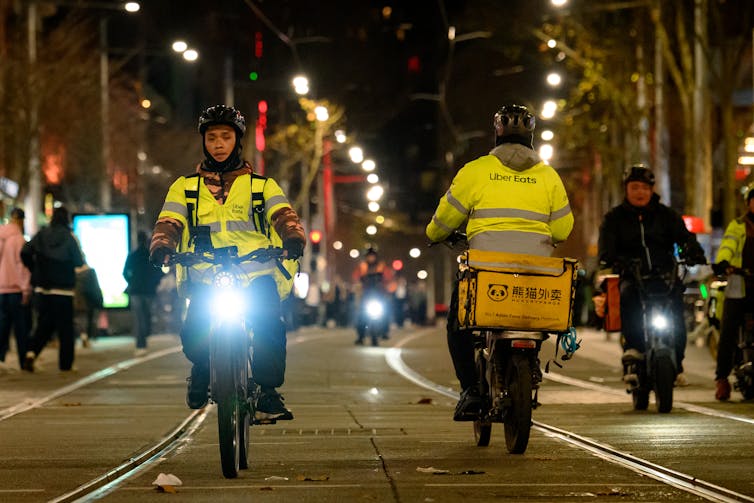
Authorities may need a separate classification for higher-powered devices used for deliveries and require them to meet the safety, registration and licensing rules applied to motorcycles.
Clear point-of-sale information is equally important. Buyers should be told the device’s power and assisted-speed limits, where it can legally be used, the local road rules, and how to charge and store it safely.
New standards will not prevent every crash or fire. We will still need enforcement, consumer education and safe cycle paths. But over time, new standards will weed out the most dangerous products.
George Chan/Getty
E-bikes are important
Ongoing controversy around overpowered e-bikes has overshadowed the very real promise of e-bikes.
This simple technology is already cutting demand for oil. Riders use e-bikes to replace short car journeys, get to train stations, manage hills and longer distances, carry children and groceries and continue cycling as they age or lose some mobility.
Better regulation is urgently needed. But policymakers must make sure the promise of this technology isn’t undermined by a crackdown on illegal models.
Success will mean dangerous devices become harder to buy – and safe e-bikes become easier to trust.