



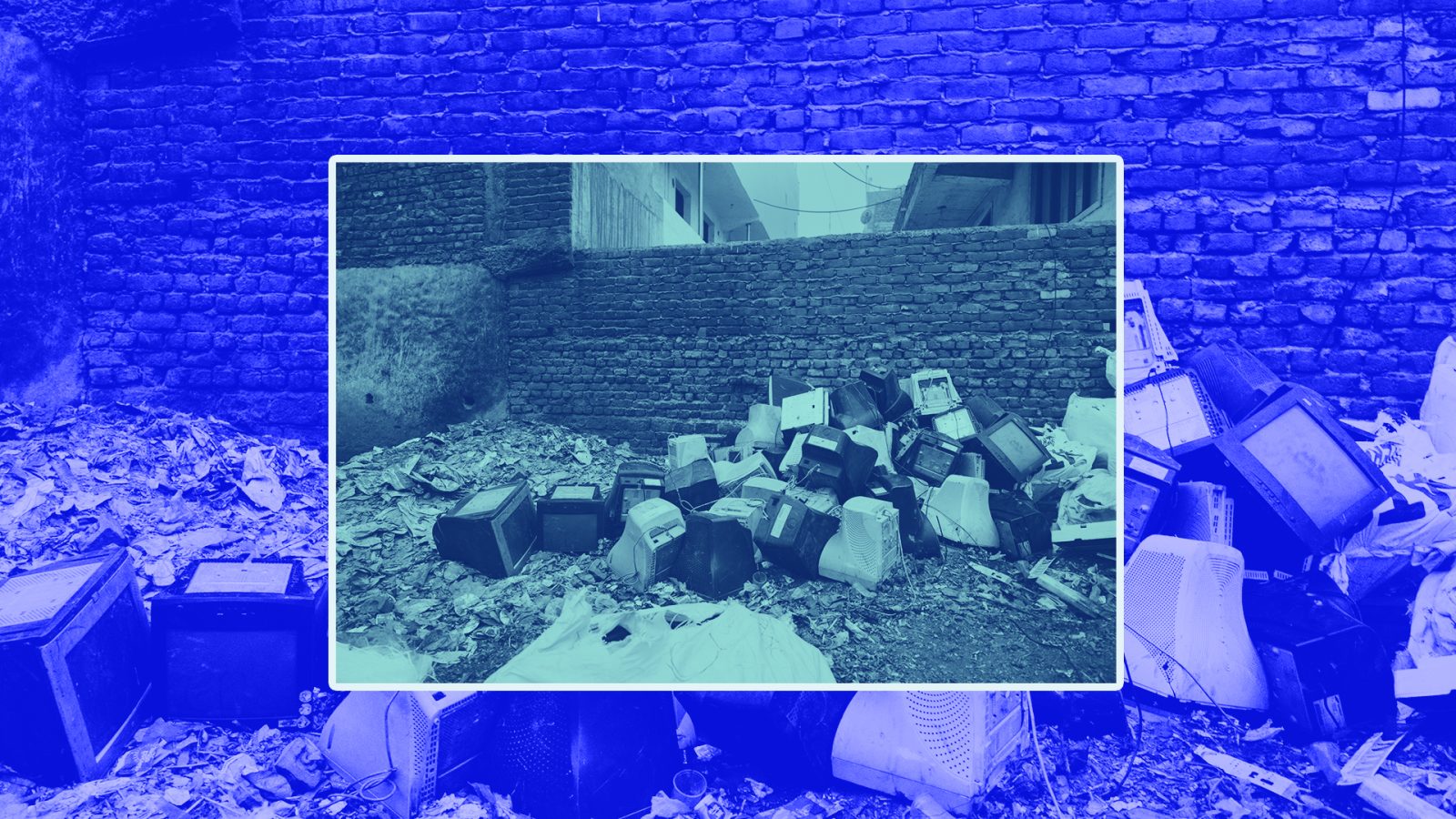
I’m sure my family in Mumbai is a lot like yours: three old smartphones sit unused in a hidden ziplock bag. My mom is scouring the study. “There was another flip phone, where did that go?” she says as she unearths two iPod Touches and, eventually, an outdated iPad. Soon, thanks to AI, there will be more waste we’re responsible for that will be invisible to the naked eye.
India is the third-largest e-waste generator globally, producing almost 2 million tons of e-waste in 2024 — a 73% increase over five years. While people like me are part of the problem, the major culprits are actually halfway across the world.
Almost 70% of the e-waste generated in India comes from abroad. The U.S. is the number one origin country for e-waste shipments going to developing countries, including India. Some of these enter the country legally, but others arrive as “used goods” or “donations” that turn out to be end-of-life. Europe and the U.S. produce two to three times more e-waste per capita than Asia and Africa. And this is in a world of dumped phones, TVs, and laptops.
Things are only going to get worse: The rapid adoption of AI could add between 1.2 million to 5 million metric tons of e-waste in total by 2030, according to a 2024 study published in Nature Computational Science. The high-performance hardware required for AI, such as GPUs and specialized servers, is advancing quickly. The rapid turnover for computing devices — about two to five years — leads to older parts becoming obsolete and being discarded quickly, too.
The Basel Convention, an international treaty that prohibits the illegal transfer of hazardous waste from developed to developing countries, has been in place since the 1990s but implementation is lacking. In 2018, when China’s National Sword policy banned the import of most foreign waste, the U.S. shifted these exports to other Asian and African nations. Most of these countries lack the public awareness and robust regulations to protect themselves from the ill effects on the environment, labor, and health.
In India, devices are far more likely to be repaired, resold, or rebuilt in the vast informal economy than dismantled by certified recyclers. These informal workers, like scrap dealers and small repair shops, prioritize quick value extraction, often using unsafe methods like open burning, acid baths, or manual dismantling.
Consumers here prefer to sell to informal buyers instead of authorized recyclers, to get more value for their items. The laws around this untraceable changing of hands got tighter in India in 2022, but only for businesses discarding electronics in bulk — not for the general public.
Already, nearly 80% of e-waste is buried in landfills globally, and it’s not being properly collected and recycled. Without any checks and balances, the burden on developing countries will grow heavier.