



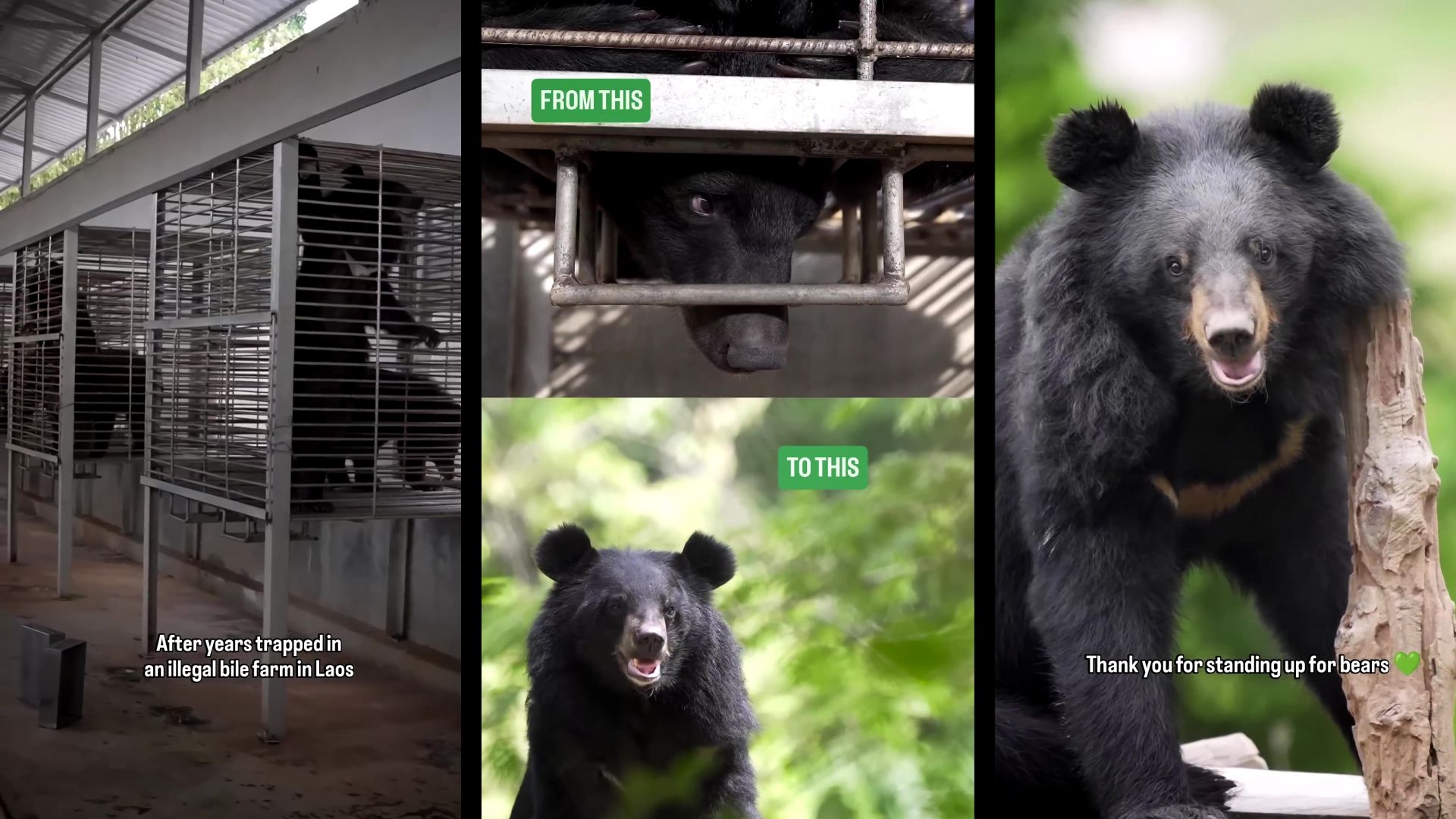
SINGAPORE: Twenty-seven moon bears rescued from an illegal bile farm in Laos are finally discovering what life outside a cage feels like, thanks to a rescue mission led by Singaporean conservationist Karthiriish Chandra.
The young bears, believed to be between one and three years old, took their first steps into a forested enclosure at the Luang Prabang Wildlife Sanctuary on July 2 after spending years confined in small metal cages.
The rescue was carried out by conservation charity Free the Bears together with the Laotian authorities. The bears were removed from the foreign-owned illegal bile farm in May.
One of the bears, Jing Lee, was named after a Laotian law enforcement officer whose support helped make the rescue possible, The Star reported (July 19).
Life outside a cage begins with simple discoveries for the bears
For most animals, walking on grass or climbing a tree is second nature. For these bears, every experience is new.
Mr Karthiriish said the bears had never stood on natural ground, climbed trees, swum in water or even chewed hard vegetables since they were taken from the wild as cubs.
The bears now spent their first days exploring their surroundings by sniffing the air, inspecting plants and looking curiously at their keepers. One quickly climbed a platform while the others cautiously explored the enclosure.
Their new habitat includes forested areas and pools where they can move about freely, something they had never experienced before.
Recovery for the bears will take years, not just weeks
Freedom is only the first step. The bears arrived weak after years of poor care and a limited diet of cornmeal. They are now receiving medical checks, proper nutrition and hydration to help reverse the effects of long-term neglect.
Mr Karthiriish explained that spending years in cramped cages caused their muscles to waste away, meaning they need time and careful rehabilitation to regain strength.
Despite one bear missing a paw because of an old snare injury, the rescued animals are generally in good health.
Only 10 bears have been moved into the forest enclosure because they showed no signs of aggression towards one another. The remaining 17 are staying in quarantine until additional enclosures are completed.
Mr Karthiriish said construction teams are working every day to expand the sanctuary as the bears continue growing and will eventually need larger spaces and smaller social groups.
Long-term care for bears needs continued support
The rescue may be over, but caring for the bears is a lifelong commitment.
More than US$200,000 (S$258,000) has been raised to transport the animals, begin building new forest enclosures and help provide the more than 1,000kg of food they consume each week.
According to Free the Bears, caring for a rescued bear throughout its lifetime, including veterinary treatment, nutritious food and enrichment activities, can cost more than US$150,000.
The charity has also rescued another adult moon bear, four moon bear cubs, and a sun bear cub in separate operations. Members of the public can also donate to Free the Bears or sponsor the rescued bears through the charity’s website.
Mr Karthiriish said the trauma suffered by the rescued bears means they can no longer survive in the wild on their own and will need sanctuary care for the rest of their lives.
Wildlife rescues rarely end when the cage door opens. The real work begins afterwards, with years of patient care, rehabilitation and public support giving these animals the chance to live the lives they were denied.
Karthiriish Chandra is Operations Manager at Free the Bears. His lifelong passion for animals began to take shape while growing up near the Singapore Zoo, where he made frequent visits before volunteering at the Night Safari at age 13. He later spent two years at the former Jurong Reptile Park and 14 years with Mandai Wildlife Group as an animal keeper and senior veterinary keeper, caring for animals ranging from elephants to kangaroos. He joined Free the Bears in late 2025 and has since helped lead major bear rescue operations in Laos, including the rescue of 27 moon bears from an illegal bile farm.
