



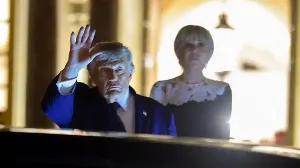
The US and Iran have signed a memorandum of understanding to end hostilities and reopen the Strait of Hormuz, signalling a shift towards peace.
In a significant diplomatic development, United States President Donald Trump and Iranian President Masoud Pezeshkian have signed a memorandum of understanding (MoU), committing both nations to end their armed conflict and restore vital maritime routes in the Persian Gulf. The agreement, reached at a dinner in Versailles, France, is expected to reshape relations in the Middle East.
Immediate Effects of the Agreement
The MoU, which is now in effect, involves several critical elements aimed at stabilising the region. According to an announcement from Pakistan’s Prime Minister Shehbaz Sharif, who served as a mediator, the agreement includes the immediate reopening of the Strait of Hormuz, a crucial waterway for global oil shipments. Alongside this, it entails the cessation of military operations in Lebanon, a longstanding area of conflict in the region.
In his statement, Shehbaz Sharif noted that the signing of the MoU reflects a commitment to achieving peace and a resolution to ongoing conflicts. “May this Memorandum of Understanding serve as an enduring foundation for greater understanding, mutual respect, and shared prosperity for the complete region,” he remarked.
Details of the Memorandum
The memorandum is detailed in 14 paragraphs, stipulating that Iran must not develop nuclear weapons and will enable a $300 billion fund for the nation’s reconstruction, with the United States not obligated to contribute financially. Importantly, the MoU also outlines a 60-day timeline within which both governments have agreed to negotiate a finalised deal, which may be extended with mutual consent.
Despite the optimism surrounding the agreement, President Trump has cautioned that the arrangement is not definitive and that the United States retains the right to resume military actions if Iran fails to comply with the terms. “If they don’t behave, we’ll go right back to dropping bombs right smack in the middle of their head, OK?” Trump stated, highlighting the fragility of the new accord.
Long-Term Implications
Iranian officials have indicated that the agreement will not revert the situation in the Strait of Hormuz to pre-war norms. The Iranian parliamentary speaker, Mohammad Bagher Ghalibaf, asserted that Iran has sovereign rights over the strait and will begin imposing fees for passage after the initial period of 60 days. The United States anticipates that Iran will assert its rights over this vital body of water, although Gulf states may not accept a toll system for maritime traffic.
As both nations work through the complex negotiations outlined in the MoU, the broader geopolitical implications remain uncertain. Tensions still persist, particularly regarding Israel’s ongoing military actions in Lebanon, which Iranian officials have warned could breach the agreement.
Future Formalities
In the coming days, a formal signing ceremony is scheduled to occur in Switzerland, providing a platform for official announcements regarding the accords reached. The developments raise questions about the future of US-Iran relations and the possibilities for enduring peace in the region.
This memorandum may represent a substantial turning point, as both nations seek to navigate the path towards stability and cooperation in a historically volatile region.