



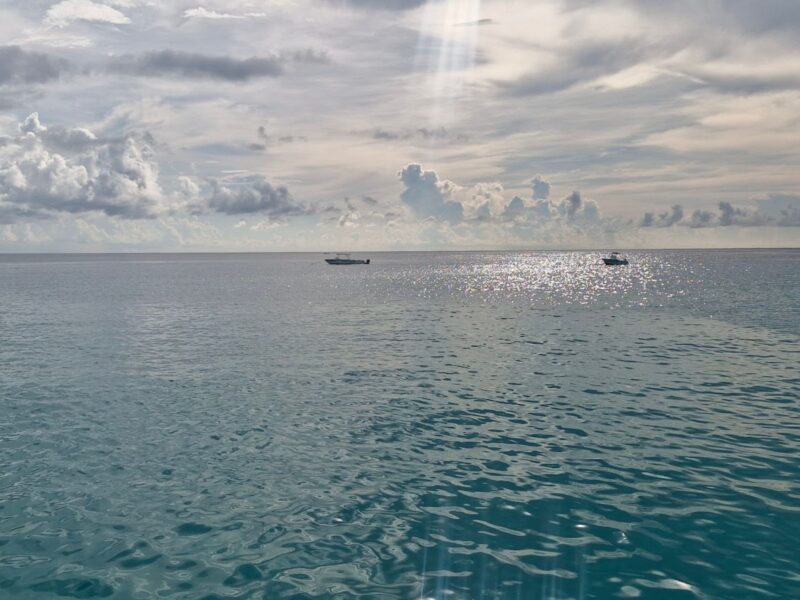
Fishing vessels in Barbados waters. Photo by Linton Arneaud, used with permission.
By Temeka Maxime, Simone Merchant, Dania Greaves, Martin Weekes, and Linton Arneaud
Caribbean fisheries are still recovering from the damage caused by Hurricane Beryl in 2024 and Hurricane Melissa in 2025 — yet, hurricanes are only one egg in the basket of uncertainty brought on by the climate crisis. Throughout the archipelago, vast sargassum mats stall boats, smother shorelines, and disrupt fishing activities, suggesting a tangible and inevitable impact upon various fisheries.
The region’s geography increases vulnerability to climate hazards and extreme events, the effects of which are mainly amplified by increasing global sea surface temperatures. This is the driving force that feeds tropical cyclones with exorbitant amounts of energy during development, resulting in the high level of destruction we have seen on many islands. When coupled with the influx of nutrients in the ocean from anthropogenic activity, it accelerates the growth and spread of sargassum mats.
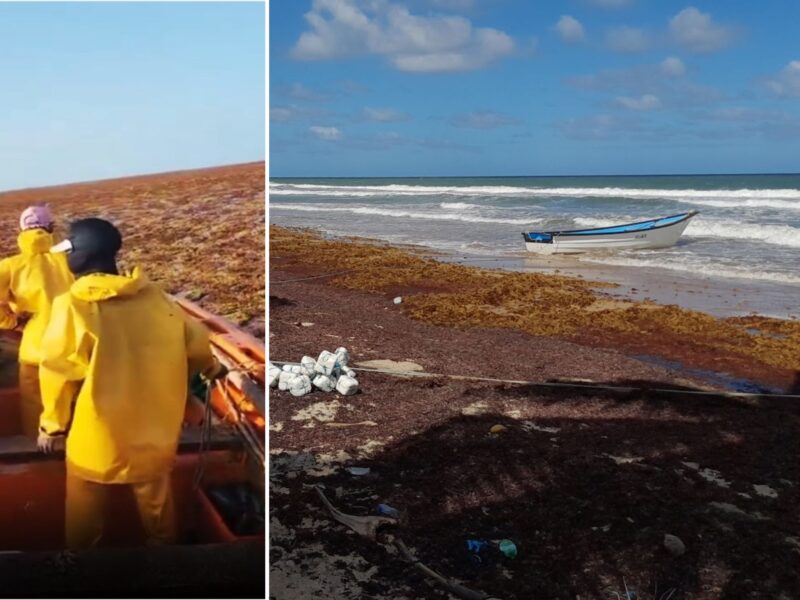
Thick sargassum mats offshore (east St. Lucia) and onshore (east Barbados). Photo on the left by Steve McLoughlin (2025), used with permission. Photo on the right by Linton Arneaud (2022), used with permission.
At minimum concentrations, sargassum is an essential food source, refuge, nursery habitat and natural fish aggregating device for numerous marine species, including juvenile dolphinfish (Coryphaena hippurus) and the eggs and larvae of four-winged flying fish — but the current surplus has had detrimental effects on the marine ecosystem, reducing light penetration and productivity in coral reefs and seagrass meadows. These habitats are essential for fish populations in the Caribbean to thrive; their degradation directly affects the fisheries industry.
For the fishers of Barbados, the golden tide of sargassum is both a curse and an opportunity. Along the coast, it is a foul-smelling nuisance; in harbours, it causes vessel entrapments that clog engine intakes and destroy propellers. Yet, further out at sea, these same mats become floating gold mines, where young dolphinfish are easily — and perhaps too frequently — harvested from the safety of the weed.
Additionally, reduced landings for some species and, conversely, increased landings of juvenile dolphinfish that aggregate around sargassum constitute a practice that threatens not only dolphinfish stock dynamics but also the economic sustainability of the many who rely on Barbados’ fishing sector, which ranges from commercial to subsistence fisheries and is accessible and income-generating to all.
Infrastructure and resilience
The passage of Hurricane Beryl significantly impacted Barbados’ coastal assets and infrastructure, particularly at the Bridgetown Fisheries Complex, where over 200 fishing vessels and the breakwater jetties were damaged, approximately 2,500 people directly affected, and 70 boats lost.
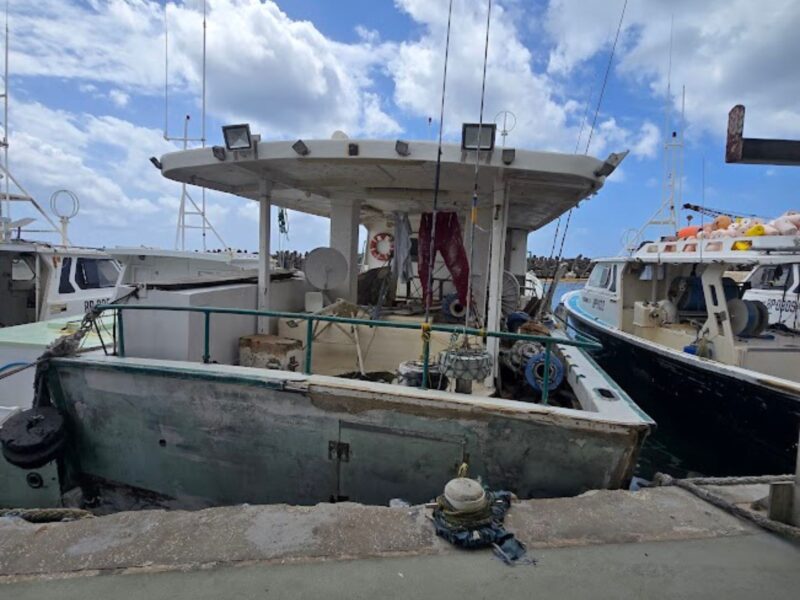
Out-of-commission longliner Ocean Princess III, a casualty of Hurricane Beryl’s surge and currently unable to fish, is awaiting the long-delayed arrival of essential parts to begin its repairs. Photo by Linton Arneaud (2026), used with permission.
To help alleviate some of the impacts of hurricanes, Barbados’ government put several measures in place to assist fisherfolk. The implementation of a Fisheries Recovery Plan provided business interruption benefits, helped repair and replace fishing vessels, rehabilitated marine-based parts of the Bridgetown Fisheries Complex and landing sites, and protected the coastline.
The World Bank Beryl Emergency Response and Recovery Project (BERRP), a USD 54 million initiative, provides direct financial aid to fisherfolk for boat repairs, and funds critical infrastructure upgrades at both Bridgetown Port and vulnerable coastal sites like Payne’s Bay. A standout feature of the six-year plan is the inclusion of a “climate resilient debt clause,” which allows the government to pause loan repayments during future disasters to focus on immediate relief.
In collaboration with the United Nations Development Programme (UNDP) and the government of Japan, which provided USD 2.93 million in funding, Barbados’ Ministry of Environment, Natural Beautification and Fisheries also implemented a one-year Coastal Fisheries Resilience project. A Fisheries Benevolent Fund was created with a USD 500,000 donation from the Latin American Development Bank, alongside a 30-year revolving fund that assists fisherfolk in purchasing new boats, repairing existing ones, and settling any outstanding debts.
Despite these efforts, the socioeconomic impacts of Hurricane Beryl persist. Coupled with additional climate stressors such as rising temperatures and sargassum influxes, and with the instability of their livelihoods, fisherfolk have fewer incentives to refrain from harvesting juvenile dolphinfish. The competition to locate, harvest, and sell as much dolphinfish as possible has become paramount.
The initiatives driving change
Last year, two critical Acts were passed in parliament: the Barbados Sustainable Fisheries Management and Development Act and the Seafood Markets and Businesses Act. Provisions in the legislation promote the purchase of fish and fish products exclusively from licensed vendors.
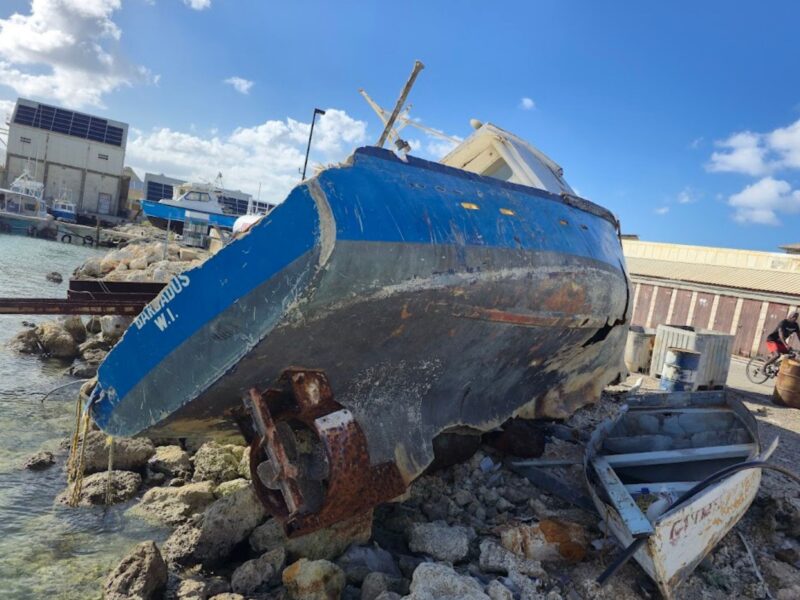
Wrecked fishing vessels at the Bridgetown Fisheries Complex, Barbados. Photo by Linton Arneaud (February 2026), used with permission.
The Act also highlights safety standards for handling post-harvest stocks, prohibits unsustainable fishing practices, protects marine mammals and coastal ecosystems through the designation of no-trawl zones in shallow coastal areas, and bans the harvesting or causing injury to marine mammals. These measures serve as a continued commitment to the vision outlined in the Barbados Fisheries Policy 2023–2033, which underpins the goal of “improved up-to-date knowledge of the fisheries resources in Barbados’s Exclusive Economic Zone” — integral to both the local and regional dolphinfish stocks.
There is a critical need to effectively manage stock and harvest levels, but this is currently undermined by weak regional data collection. In collaboration with The University of the West Indies Cave Hill Campus and the Barbados Fisheries Division, young Fishery Biology students at the Department of Biological and Chemical Sciences are assisting the Fisheries Division in collecting morphometric and meristic data under the “Dolphinfish Wild Stock Resilience Project.” The collaboration comes at a critical time to bridge the data gap for the management and conservation of marine ecosystems.
Insights, solutions, and recommendations
Preliminary data from six site visits, measuring over 300 fish across two major landing sites, suggest concerns regarding the increasing prevalence of smaller dolphinfish within the Barbados fishery. Based on collected weight and length data, approximately 46 percent of the catch fell below the five-pound juvenile benchmark. In Oistins, the fishing town on the island’s southern coast known for its famous Friday Night Fish Fry, most dolphinfish landed were undersized, despite only one site visit being conducted there.
Although the data do not establish climate change as a direct cause, they are consistent with broader concerns that changing ocean conditions and shifting fishing patterns may be increasing pressure on fisherfolk to maintain their livelihoods by catching smaller fish.

Male dolphinfish, locally called bull dolphins, being measured by university research students in an attempt to understand stock abundance and population dynamics. Photo by Temeka Maxime (2026), used with permission.
The implementation of pre- and post-disaster plans and an early warning and monitoring system for potentially intense hazards is essential to ensuring safety at sea under variable conditions. The Fisheries Division has publicised vessel relocation protocols and plans for disaster response, which were tested during one tabletop and two simulation exercises.
Incorporating fisheries insurance also improves resilience and recovery efforts for fisherfolk in the event of a disaster, allowing them to return to sea with minimal delays and reducing economic hardships, while still maintaining their income. A vessel insurance scheme is being developed in collaboration with the General Insurance Association of Barbados, especially as parametric insurance has already proved successful in countries such as St. Lucia and Grenada through the Caribbean Oceans and Aquaculture Sustainability Facility (COAST).

Dolphinfish being sold at the Bridgetown Fish Market, Barbados. Photo by Linton Arneaud (2024), used with permission.
Raising public awareness about the long-term consequences of harvesting juvenile dolphinfish will go a long way in educating people and fostering a sustainable fishery for future generations. This increased understanding is essential to ensuring responsible fishing practices and preserving dolphinfish populations over time. The Barbados Fisheries Mock Trial Simulation provides an excellent example of how public awareness can drive cultural change, bridging the gap between complex legal theory and real-world application, and ensuring that stakeholders truly understand the regulations protecting Barbados’ marine resources. By prioritising education over incarceration, it empowers the fishing community to become active partners in sustainable conservation rather than just subjects of enforcement.
The Barbados Dolphinfish Tagging Project is a vital research framework that bridges the gap between public participation and international science by integrating citizens into a global tagging network. By crowdsourcing data on life-history parameters such as migration patterns and growth rates, the project generates the localised evidence needed to transition from general estimates to precise, data-driven management policies tailored to Barbados’ territorial waters.
Although the risks of rising temperatures cannot be mitigated, ecological managers can become more adaptable to reduce the effects on both fisheries and livelihoods, and long-term sustainability goals can be achieved through improved legislation.

Sargassum lines a section of the Barbados coast. Photo by Linton Arneaud, used with permission.
Mechanised, large-scale sargassum influx removal offers a vital long-term management strategy; yet, its success hinges on strict alignment with existing regional mitigation frameworks projects. To safeguard biodiversity, fishery biologists must designate specific harvest zones based on evidence-led recommendations that prioritise critical habitats and species protection. Integrating climate-proof infrastructure at landing sites to protect the surrounding docks and boats during storms and other hazards can also reduce damage and high post-relief costs.