



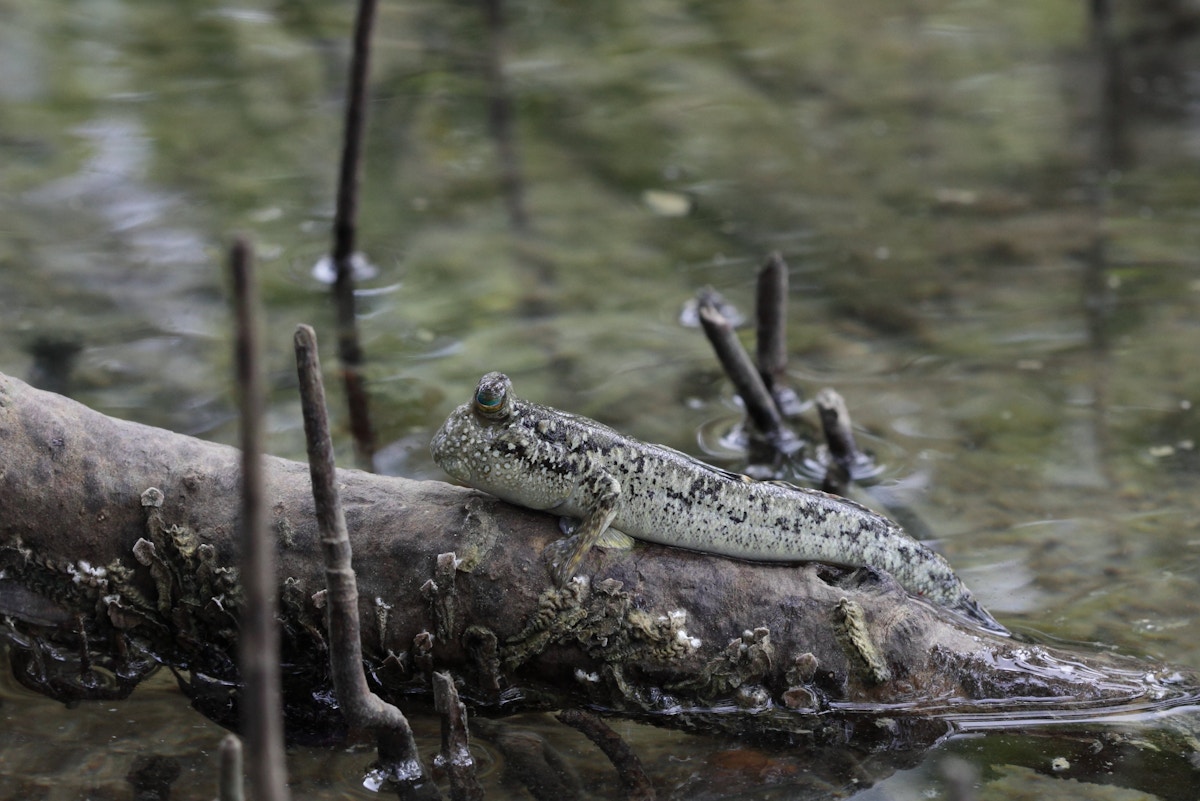
There’s been a renewed push in the Philippines to develop oil and gas deposits in the southern Liguasan Marsh, prompted by the energy crisis caused by the US-Israeli war on Iran, which has drawn criticism from environmental groups.
The 288,000-hectare (712,000-acre) Liguasan Marsh, the largest intact wetland in the Philippines and home to diverse fauna and flora, is considered by nonprofit conservation group BirdLife International an “important bird and biodiversity area” (IBA). A sizeable portion of Liguasan, on the southern island of Mindanao, has been declared a game refuge and bird sanctuary since 1941.
The marsh is home to the critically endangered Philippine crocodile and is the country’s last frontier for Tachybaptus ruficollis cotabato, a subspecies of the little grebe found only here, and the comb-crested jacana.
It also contains a significant volume of untapped oil and gas.
In the 1990s, a joint exploration by the state-owned Philippine National Oil Company (PNOC) and its Malaysian counterpart, Petronas, found that at least 202 million barrels of recoverable crude oil and 6 billion cubic feet of natural gas sit within Liguasan Marsh.
Exploration did not proceed further due to ongoing conflict between government forces and the Moro Islamic Liberation Front (MILF), a 40,000-strong armed group fighting for the right of self-determination in the southern Philippines.
“
Opening Liguasan Marsh to extraction risks turning it into a massive carbon bomb. Disturbing these carbon-rich soils can release enormous amounts of greenhouse gases, driving serious climate impacts that put all Filipinos at risk.
Jefferson Chua, campaigner, Greenpeace Philippines
A 2014 peace agreement led to the creation of the Bangsamoro Autonomous Region in Muslim Mindanao (BARMM), which includes the majority of the marsh. The formal establishment of the Bangsamoro region in 2019 also renewed talk of tapping the marshes’ resources.
“We are looking at the oil and gas deposits within Liguasan Marsh as a ‘game-changer’ for the Bangsamoro people,” Mohajirin Ali, director-general of the Bangsamoro Planning and Development Authority under BARMM, told Mongabay.
He was referring to the investments and allied industries that could be generated, jobs created, and proceeds earned by the BARMM government if exploration and development of the oil and gas deposits in the marsh start.
Although the peace agreement has largely held, plans to drill in the marsh remain stalled.
In 2021, the Bangsamoro Board of Investments registered the ESMaulana Global Ventures Company, Inc., a local group eyeing the exploration and development of oil and gas deposits in the Bangsamoro region. According to Ali, a Chinese company had expressed a similar interest, but backed out for reasons that, he said, “were not familiar” to him.
In 2022, the Department of Energy in Manila awarded a petroleum exploration contract to SK Liguasan Oil and Gas Corporation, a company based in Sultan Kudarat province, which also straddles the marsh but is not part of the Bangsamoro region.
Ali said SK Liguasan has not yet started exploration activities in the portion of Liguasan Marsh that falls within Bangsamoro region, adding that the company needs clearances from the BARMM regional government should its explorations encroach on Bangsamoro land.
A renewed push for investment
The government of BARMM has renewed the push to attract investors in its energy sector amid the global fuel crunch as a fallout of the Middle East war, which the United States and Israel started on Feb. 28. The retaliation by Iran has included the closure of the Strait of Hormuz, one of the world’s most critical maritime chokepoints, through which a fifth of the world’s oil and gas transit.
BARMM cabinet secretary and spokesperson Mohd Asnin Pendatun said oil and gas development in the Bangsamoro region offers a long-term solution to avoid future shocks from global energy crises.
The Philippines is a net energy importer, getting 98 per cent of its crude oil from the Middle East, according to the state-owned Philippine Information Agency.
The economic fallout of the conflict has strained many Filipino households as the price of basic goods jumped following hefty price adjustments by petroleum companies.
Before the war broke out, prices of diesel and gasoline were less than US$1 per litre (US$3.80 per gallon), but soared to highs of US$1.58/l (US$6/gal) for gasoline and US$2.50 /l (US$9.50/gal)for diesel last week. This week, there were slight reductions after US President Donald Trump declared a brief ceasefire for talks (which failed).
The renewed efforts to push exploration and the development of oil and gas reserves at Liguasan Marsh amid the energy crisis has drawn flak from environmental groups.
Wetlands International expressed “deep concern” over the push, describing Liguasan as one of the Philippines’ most important and biodiverse wetland systems.
“The Liguasan Marsh is not just a wetland — it is a lifeline for communities, wildlife, and our climate resilience,” Annadel Cabanban, country manager at Wetlands International Philippines, said in a statement. “We cannot afford to damage an ecosystem that safeguards us from floods, supports fisheries, and stores vast amounts of carbon. A truly secure energy future is one that strengthens, not sacrifices, the natural systems that protect Filipino lives.”
While Wetlands International acknowledged that addressing the energy emergency is vital, it’s also imperative to protect the marsh, and called on the government to invest in renewable energy instead of exploiting Liguasan’s oil and gas deposits.
Greenpeace also sounded the alarm, saying that exploiting Liguasan’s resources would only deepen the country’s dependence on fossil fuels and unleash greater ecological damage on already vulnerable communities.
“The administration needs to ensure the country’s resilience amid escalating climate impacts by keeping intact and restoring damaged ecosystems,” Greenpeace Philippines climate campaigner Jefferson Chua said in a statement. “Opening Liguasan Marsh to extraction risks turning it into a massive carbon bomb. Disturbing these carbon-rich soils can release enormous amounts of greenhouse gases, driving serious climate impacts that put all Filipinos at risk.”
After decades of conflict, the signing of the final peace deal between the Philippine government and the MILF brought calm to the marsh, but also put it in the crosshairs of oil and gas developers. Now, a new conflict in a distant land threatens to pull the trigger on exploitation.
This story was published with permission from Mongabay.com.