



SINGAPORE: As the Iran conflict squeezes global oil supply, Singapore faces rising economic pressure, while public unease toward US actions begins to surface. Singapore is doing a balancing act and doing it well.
Singapore has historically had strong trade and strategic ties with the United States. It is one of the US’s closest security partners in Asia, and the US–Singapore Free Trade Agreement in 2004 was the first US FTA in Asia.
Additionally, Singaporeans have generally held a positive view toward the US.
However, due to the war in the Middle East, which started on Feb 28 when the US and Israel began bombing Iran, this may be changing.
Middle East conflict
The war has all but closed the Strait of Hormuz, an important chokepoint on which a fifth of the world’s fuel supply transits, much of which was bound for Asia. The conflict, therefore, has an arguably harder effect on Asia than the rest of the world, with countries now faced with higher fuel prices and scrambling to ensure adequate supply for domestic use.
Singapore, even with its deep reserves, is no exception, as almost all of its fuel is imported. Prime Minister Lawrence Wong has warned Singaporeans to brace for “hard times ahead.”
Strained relations?
The war has already affected nations across the globe in such a short period of time, not just in terms of fuel and energy needs, but also in manufacturing, even of medical supplies. The United Nations Development Programme (UNDP) has said it has put 8.8 million individuals at risk of falling into poverty, with output losses of between US$97 billion (S$123 billion) to US$299 billion (S$380 billion).
On the other hand, it is also costing the United States no small degree of goodwill, even in Singapore.
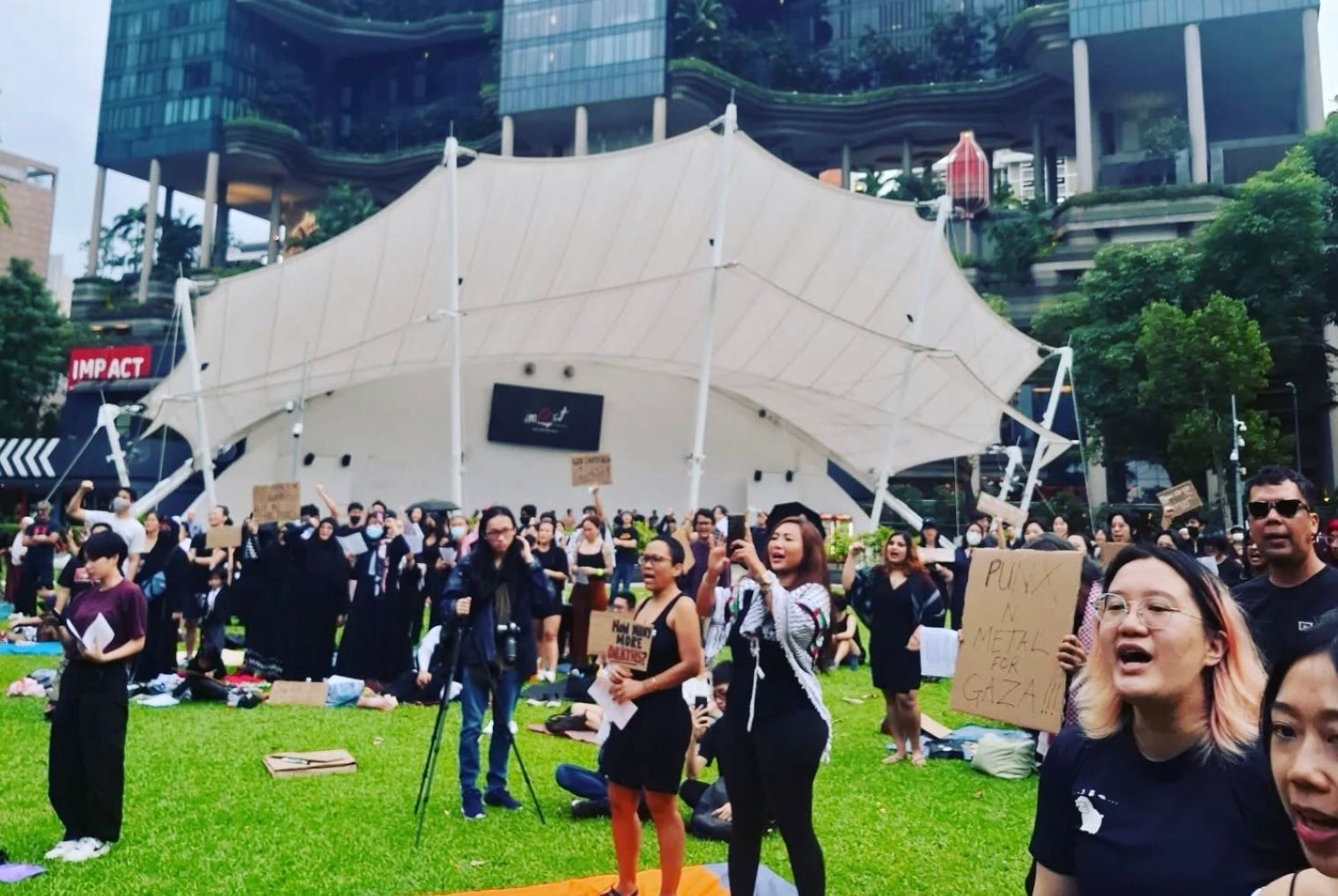
Last weekend, a demonstration was held in Hong Lim Park titled “Stop the U.S. War Machine.” Attended by around 300 participants, the fact that it was held at all in Singapore is noteworthy.
According to an Instagram post about the event, there were six speakers “who discussed the history of U.S. imperialism in Singapore and its impact on Singaporeans.”
Singapore Democratic Party (SDP) Paul Tambyah, who attended the event, said, “It was very encouraging to see so many young people out there speaking up against imperialism and colonialism. What was really interesting is that more than one person commented on how this was reminiscent of what happened way back in 1954, when the students wrote an editorial criticising US imperialism in Asia, and they were arrested for sedition, and defended by a young, idealistic lawyer, Mr Lee Kuan Yew. So in a way, these young people here are kind of heirs to the legacy of Mr Lee Kuan Yew in decolonisation and anti-imperialism.” For now, Singapore’s foreign policy remains firmly anchored in strategic neutrality and economic pragmatism. But as global tensions ripple through energy markets and public discourse alike, the long-term impact on perceptions—and policy—remains to be seen. /TISG
Read also: Singaporeans expect China’s influence in Asia to surpass the United States: IPS Survey