



Every ceasefire is haunted by the same question: will it live up to the promise of peace? The United States and Iran could apparently only focus on their disagreements during peace talks in Islamabad, with negotiations led by American Vice President JD Vance failing to result in a deal.
Experts speculated that Iran’s 10-point peace proposals and the American 15-point plan were too far apart to lead to consensus.
This is perhaps unsurprising. Between 1945 and 2009, a survey of peace treaties suggests that fewer than half of all countries that experienced armed conflict managed to avoid falling back into violence.
Dim prospects for Middle East peace
In the Middle East, in particular, the picture is even more sobering. The 1978 Camp David Accords gave us a lasting Egypt-Israel peace but Egyptian leader Anwar Sadat paid with his life and Egypt was cast out of the Arab League by its Arab neighbours.
The Oslo Accords of 1993, signed with such hope on the White House lawn, unravelled into the bloodshed of the Second Intifada. The Joint Comprehensive Plan of Action (JCPOA) nuclear deal of 2015 survived barely three years before the U.S. walked away under President Donald Trump.
The June 2025 ceasefire between Iran and Israel held for months, then shattered.
And now, once again, the world was asked asked to hope. On April 8, a two-week ceasefire was announced between the U.S. and Iran, brokered by Pakistan, after 40 days of U.S-Israeli strikes. The conflict has sent global oil markets into crisis due to the Strait of Hormuz closure, and left Lebanon under relentless Israeli bombardment.
Iran’s 10-point peace plan demanded the strait remain under its military co-ordination, full sanctions relief, compensation, American troop withdrawal and protection for its regional allies — terms the U.S. has called “maximalist.”
With no peace deal, the U.S. announced a naval blockade at the Strait of Hormuz, escalating tensions.

(AP Photo/Jacquelyn Martin)
What the war has cost
Peace research has consistently found that ceasefires without trust-building, third-party enforcement and comprehensive scope are the least likely to survive.
This U.S.-Iran ceasefire lacks all of these elements.
The numbers associated with the war are staggering. The Pentagon has spent roughly US$28 billion in 39 days, with the Trump administration now seeking between $80–100 billion more from Congress to continue.
More than 1,500 Iranians have been killed and 18,500 wounded. Thirteen American soldiers are dead and more than 300 are wounded.
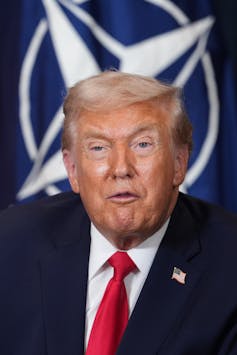
(AP Photo/Evan Vucci)
Crude oil prices have surged more than 55 per cent since the war began. Gas prices across the U.S. have jumped more than a dollar per gallon, and in fragile economies like Bangladesh, Sri Lanka and Nepal, the energy shock is threatening governments already on the edge.
To what benefit?
There’s been no regime change in Iran, no emancipation of the Iranian people from their oppressive rulers, no nuclear disarmament. Instead, the war has produced a cascade of intangible losses that may prove far more consequential.
The Abraham Accords between Israel and several Arab nations, once hailed as a diplomatic masterstroke, are under severe strain as Gulf states absorb Iranian missile strikes on American military bases they host and begin asking whether a U.S. military presence is protection or liability.
NATO relationships are in tatters.
No clear objectives
Israel, which clearly doesn’t want the ceasefire to extend to Lebanon, launched Operation Eternal Darkness with 100 airstrikes in 10 minutes against the Lebanese on the very day the ceasefire was announced.
The U.S. is struggling to define victory in a war it started without clear objectives.
Perhaps the most telling sign of how badly the war has gone for the U.S. is the revolt from within Trump’s MAGA camp. Tucker Carlson, once Trump’s most powerful media ally, delivered a 43-minute monologue calling the president’s war rhetoric “morally corrupt” and “evil.”
He labelled Trump’s Easter morning Truth Social post, which mocked Islam while threatening to wipe out Iranian civilization, “vile on every level.” Joe Rogan called the war “insane, based on what he ran on.” The architects of MAGA’s media empire are in open revolt, and Trump’s approval rating is now positive in just 17 of 50 states.
New world order?
As a peace scholar, this is one of the most disheartening moments I have ever witnessed. The very architecture of peace is being dismantled — not by accident, but by design.
The U.S. has eliminated its entire US$1.23 billion contribution to United Nations peacekeeping in its 2026 budget, slashed 85 per cent of its diplomatic and international affairs spending, shuttered USAid after 64 years and withdrawn from 66 international bodies since January 2025.
Read more:
Trump’s push to shut down USAID shows how international development is also about strategic interests
The UN has been forced to cut 25 per cent of its peacekeeping forces, meaning a lesser presence in places like Lebanon, Congo and South Sudan precisely when the world needs them most.
The war has also exposed an inversion of the global security order. When it came time to broker peace, no western U.S. ally stepped forward.
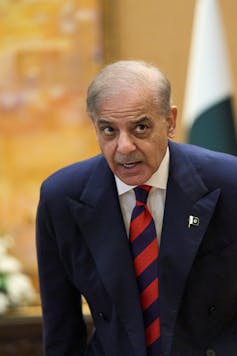
(AP Photo/Jacquelyn Martin)
Instead, Pakistan — a country embroiled in its own border tensions with India and Afghanistan — is lead mediator, alongside Turkey, Egypt and Saudi Arabia. China has helped from the sidelines.
This foursome of Muslim-majority nations are now positioning themselves as the primary diplomatic channel in a region where both Israel and Iran have become pariahs and American credibility as a security guarantor is in tatters.
For a country that built the post-1945 rules-based order, the U.S. now needs to be rescued from its own war by the very nations it once lectured on governance and peace.
Read more:
Venezuela attack, Greenland threats and Gaza assault mark the collapse of international legal order
Parallels to Athens
If the U.S. can wage an unauthorized war against Iran without clear objectives, if Russia can redraw borders in Ukraine by force and if Israel can operate without restraint or accountability across Lebanon, Gaza and beyond, then what signal is being sent to every government with a grievance that has a strong military?
How does collective humanity build mechanisms that can actually prevent wars, not just end them after the damage is done?
Read more:
Guns over people: Rising military spending is eroding quality of life around the world
Thucydides had a warning 2,400 years ago: military power and technological advancement do not guarantee safety or perpetual peace.
Athens, the world’s dominant power in the 5th century BCE, did not fall to a stronger enemy. It fell because it launched a war of choice it didn’t have to fight. The Sicilian Expedition drained the Athens treasury, fractured its alliances and exposed the arrogance of imperial overreach. The parallels are hard to ignore.
To fund a war of choice, the U.S. is spending billions to destroy while cutting pennies from the institutions aimed at healing. It’s yet another indication that the world is losing its way in an era of constant conflict.