



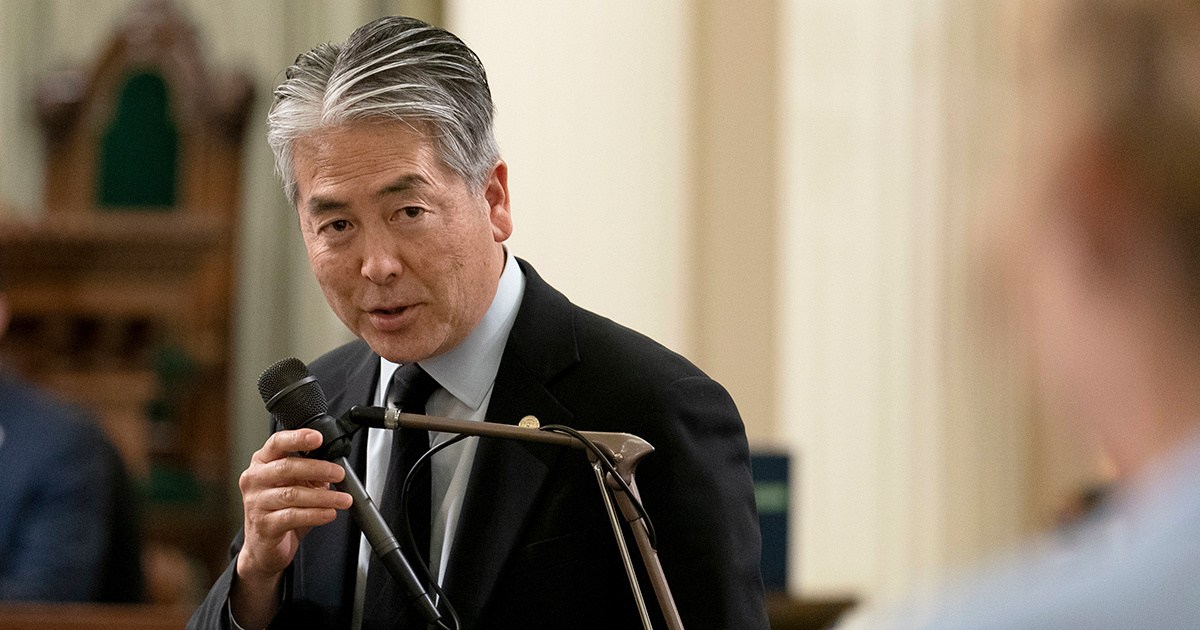
California lawmakers unanimously passed legislation last week to ensure that school administrators are informed about past accusations of misconduct against teachers as part of their hiring process.
The legislation follows a KQED-ProPublica investigation revealing how delays and inaction, combined with a lack of transparency, allowed educators to get new jobs after school districts reported them to the state teacher licensing agency for sexual harassment or other misconduct. Our reporting found that at least 14 educators were hired by new schools after their former employers determined they had sexually harassed students or committed other sexual misconduct.
The bill, authored by Democratic Assemblymember Al Muratsuchi, is an attempt to make sure that doesn’t happen again, adding teeth to background check mandates in place since 2025. Under that law, applicants for jobs at public schools are supposed to list every teaching position they have ever held. The requirement expanded to private school teaching applicants this year. Top school administrators are required to check with applicants’ previous employers to see if they had ever been reported to the state for credible or substantiated complaints of egregious misconduct.
But the existing law relies on schools and teachers to follow the mandates without clear penalties for those who fail to do so. Muratsuchi’s bill specifies that the state’s teacher licensing agency may discipline teachers and administrators; that can include issuing public reprimands, or suspending or revoking their credentials if they don’t comply.
“If there aren’t any penalties, there are no consequences,” Muratsuchi said in an interview with KQED and ProPublica after the legislation passed. “The bill makes sure that school districts prioritize this by putting in consequences for failing to do so.”
Gov. Gavin Newsom, a Democrat, has until Sept. 30 to sign or veto the legislation. A spokesperson for Newsom said the governor does not typically comment on bills awaiting his signature.
The measure is dramatically different from the bill Muratsuchi originally proposed in June, which would have gone further, creating a searchable database that would allow schools to see if applicants for public school teaching positions had been reported to the state after they were fired or had resigned over claims of misconduct. California is set to launch such a database by next summer for school support staff, such as bus drivers and janitors, with substantiated claims of egregious misconduct. But public school teachers are not included.
The Trump administration had singled out teachers unions as obstructions to legislative reforms to protect children when it announced a national crackdown this summer on how school districts handle accusations of sexual misconduct by teachers.
California’s powerful teachers unions, the California Federation of Teachers and California Teachers Association, had criticized Muratsuchi’s database proposal for public school educators, arguing it would violate teachers’ privacy and subject them to employment consequences if allegations are later determined to be unfounded.
The Commission on Teacher Credentialing, California’s educator licensing agency, also warned that complying with the proposed legislation to add teachers to the database would “require Commission staff to commit crimes” and expose the agency to liability because state law restricts what information it is allowed to share.
After the pushback, Muratsuchi amended the proposed bill and scrapped the database idea. The revamped legislation ultimately received support from the California Federation of Teachers.
School administrators, though, say the legislation does not address the burden on school districts to reach out to every previous employer for any reports they made to the state about a teacher applicant.
“Many of us in this state have been faced with budget cuts and reduced staffing. We need a better system,” said Chris Calabrese, superintendent of Benicia Unified, a 4,500-student district in the San Francisco Bay Area.
He said a database for employers to check whether a teacher had ever been reported would be a more efficient way to vet applicants, allowing schools easy access to critical information that would keep students safe.
Currently, a red flag shows up next to a teacher’s name in the state’s public database of credentialed educators if the licensing agency has ever disciplined the person. But the state disciplinary process typically takes one year, according to the agency, giving educators who have been reported a window to apply for new teaching jobs without any warning to potential employers.
In 2023, Benicia Unified reported former elementary teacher Matthew Shelton to the state after students accused him of touching them inappropriately. Shelton resigned and weeks later was hired as an assistant principal at a nearby middle school in West Contra Unified. A red flag did not appear next to his name until the following year, after his teaching license was suspended because he was charged with five felony counts of lewd acts on a Benicia student. The number of victims and charges has since grown, and Shelton, whose license has been revoked, is scheduled to go to trial in September.
Shelton, who has pleaded not guilty to all charges, did not respond to requests for comment, and his attorney declined to comment.
Calabrese, who started as superintendent last year, declined to comment on specific questions about Shelton.