



The twins are among the 3.9 million children and adolescents whom the United Nations Children’s Fund (UNICEF) estimates live in the Venezuelan areas affected by the recent earthquakes. Under the Convention on the Rights of the Child and Venezuela’s Organic Law for the Protection of Children and Adolescents (LOPNNA), they are all entitled to special protection.
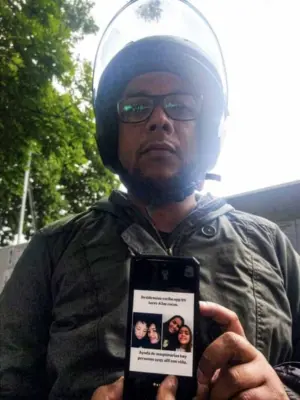
Portrait of Andrés García, cousin of the twins Aron and Aranza Mendoza Orias. Photo by Angelica Lugo, 2026. Used with permission.
The earthquakes severely damaged the La Guaira office of the Municipal Council for the Protection of Children and Adolescents (CMDNNA), the body responsible for safeguarding children’s rights. All five protection officers survived, though one was injured and others lost relatives or close friends.
Three days after the disaster, Venezuela’s National Council for the Rights of Children and Adolescents (IDENNA) issued emergency instructions for the entire child protection system. The following day, a temporary office opened in La Guaira, where four active protection officers resumed operations alongside other state agencies and international organizations.
However, a report by the non-governmental organizations (NGOs) Cecodap and REDHNNA found that while the child protection system maintained a basic response capacity, helping prevent a widespread protection crisis through July 2, it also exposed major weaknesses, including fragmented coordination between agencies and the lack of pre-established disaster response protocols.
“The emergency exposed significant gaps,” the report states. “The possible need to relax territorial jurisdiction, deploy protection officers from other municipalities, issue measures outside their normal authority, and rely on exceptional legal mechanisms suggests that the Child Protection System’s existing framework does not provide clear or rapid responses for large-scale disasters.”
At Caracas’ Miguel Pérez Carreño Hospital, staff improvised a method born of necessity: they photographed rescued children and, if they could speak, asked for basic information — their names, their parents’ names, and where they had been found. They then wrote those details on the children’s arms with permanent marker, unsure what other records might survive the chaos.
At the time, there was no clearly understood protocol to follow. When asked how they knew what to do, one hospital worker said they relied mostly on common sense. The only firm instruction they received was not to release any child unless the person claiming them could prove, with documents, that they were a relative.
On June 27, three days after the earthquakes, IDENNA announced the activation of a nationwide emergency child protection protocol. One of its key measures established “universal and concurrent jurisdiction,” prohibiting public and private health facilities from delaying or denying medical care to children because they lacked identification documents or were unaccompanied by a legal guardian.
To help reunite families and reduce misinformation on social media, IDENNA also ordered that every child’s identifying and medical information be sent to its central office within 12 hours, creating a unified database for locating missing children and reconnecting them with their families.