



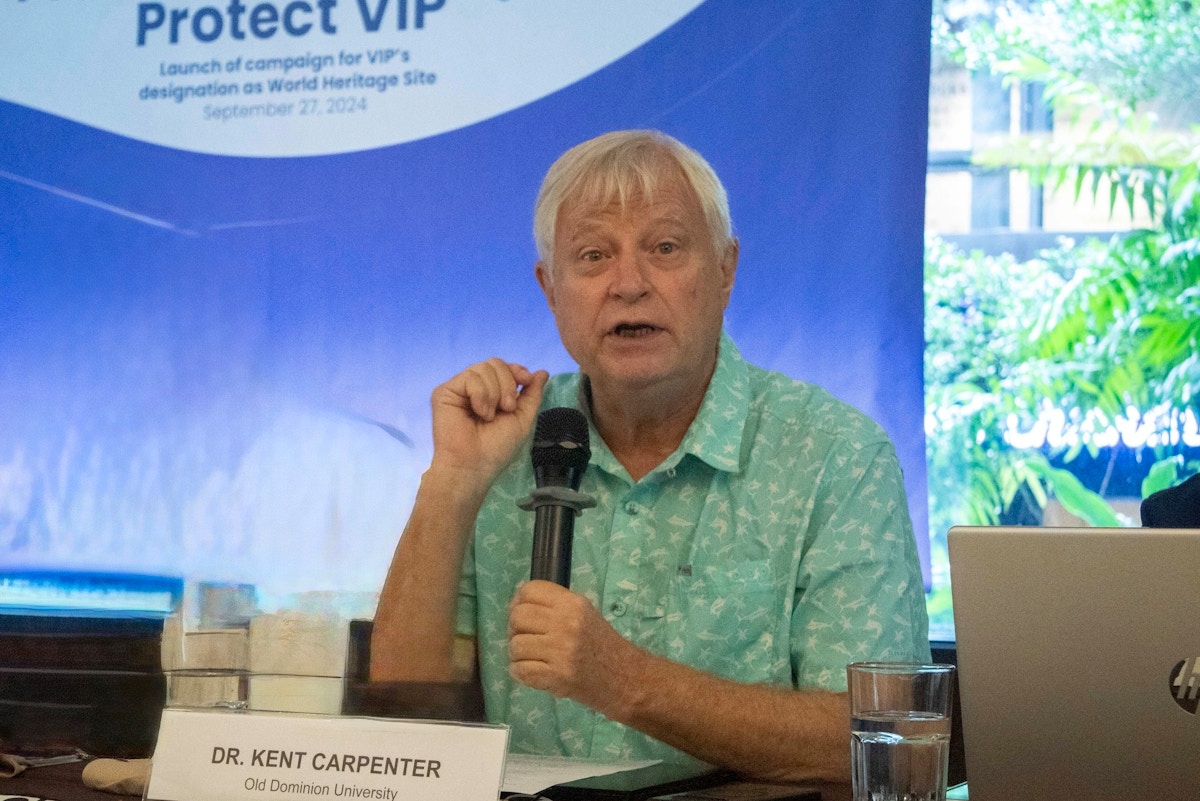
The 73‑year‑old biologist was known for a landmark 2005 study on the Verde Island Passage (VIP), a strait within the Coral Triangle, which identified it as the “centre of the centre” of marine shore fish biodiversity and the richest area of ocean life on Earth.
According to the regional Philippine National Police, three unidentified men entered Carpenter’s residence on Sunday night. One of them allegedly shot him in the head, killing him, while his 34‑year‑old companion was injured but survived the attack. A special task force was created on Wednesday to investigate the fatal shooting.
The study authored by Carpenter has been a “critical resource in the marine corridor’s protection over the years,” according to a statement released by the Protect VIP Movement, a coalition that seeks to protect the green corridor.
“Dr Kent Carpenter dedicated his life to revealing the extraordinary richness of the Verde Island Passage to the world. His work reminded us that the Philippines carries a global responsibility to protect this irreplaceable marine treasure,” said Gerry Arances of research institution Center for Energy, Ecology, and Development (CEED) and co-convenor of Protect VIP.
He also stood with the Protect VIP campaign as one of its fellow advocates, said Arances.
In 2024, he lent his voice and expertise to the collective call to secure stronger and lasting protection of the passage, including its recognition as a national marine protected area and an important natural heritage, Arances added.
The Philippines operates six gas plants in the country, primarily clustered in Batangas near the passage.
The construction boom of massive new LNG terminals financed by the country’s largest utility companies in the area has caused fish catch to dwindle and the deterioration of corals in the biodiversity-rich site, according to locals.
At the time of his death, Carpenter was also a research associate for Siliman University in Dumaguete City, an American institution well-known for marine conservation academic programmes in the Philippines. He contributed to a publication on the fish fauna of Tubbataha released in June.
Having dedicated much of his life to the Philippines since the 1970s, Carpenter was a “steadfast ally of Filipino coastal communities, researchers, and conservationists who have worked tirelessly to protect one of the planet’s most biodiverse marine ecosystems,” said Arances.
“We grieve with the loved ones of Dr. Carpenter and the whole marine conservation community in the face of this terrible loss,” he added.
“We also urge authorities to ensure justice and conduct a thorough investigation into this crime. At the same time, we stand anew in solidarity with the call for the protection of environmental defenders who dedicate their lives to science, conservation, and the protection of our common home and of vulnerable communities.”