



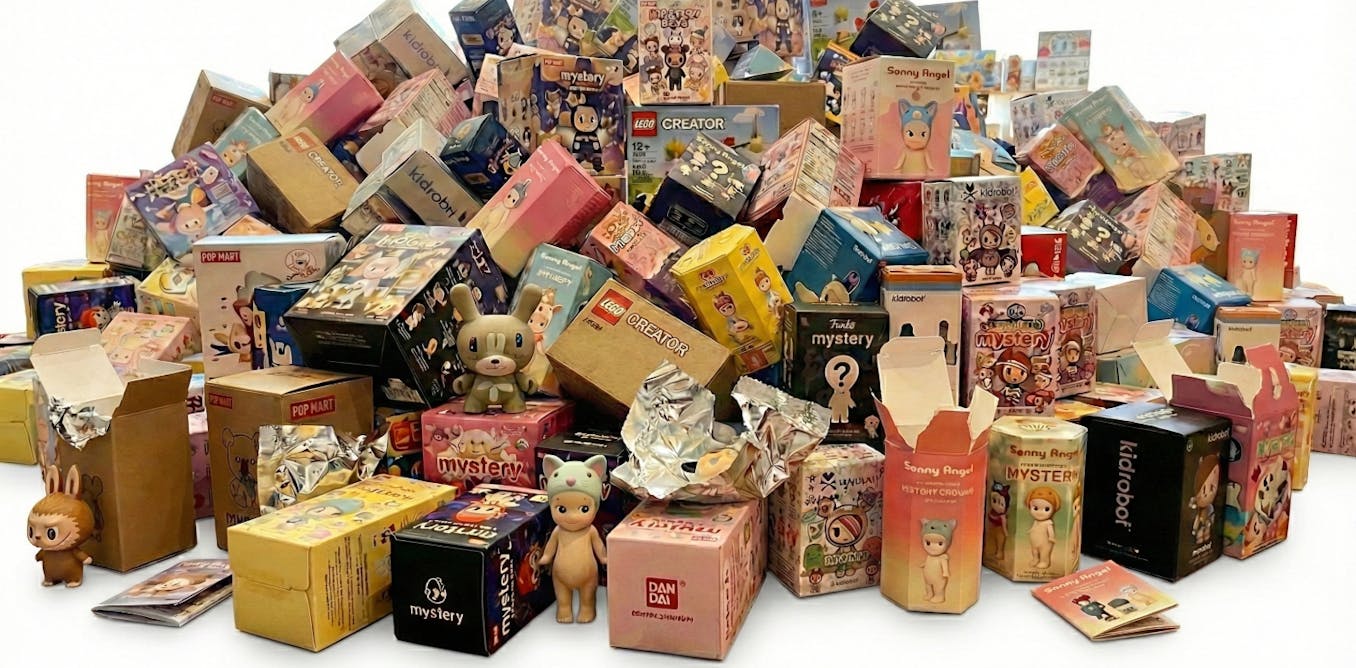
Labubus, “dumpling squishies” and Lego minifigures are examples of small collectable toys sold in “blind boxes”.
Blind boxes are essentially mystery boxes. When you purchase a blind box, you don’t know which specific version of the collectable is inside until you open it. You might purchase a blind box that has a really rare, special figure inside it. Or you might end up with a common one you already have five of.
It’s a game of chance.
The phenomenon is not new. I remember standing in the supermarket checkout line as a kid and asking my mum to buy me a Kinder Surprise, eager to eat some chocolate and see what toy I got inside. Pokemon cards work in a similar way. You pay for a sealed pack and only find out which cards you got (and how rare they are) after you open it. Or, for another classic example, think of a lucky dip.
If you are a parent of kids who love blind boxes, you might be worried about how the game of luck echoes gambling. So are blind boxes gambling? And how can parents best approach them with their children?
Read more:
Gambling for children? Why Australia should consider regulating blind box toys like Labubu
Is it gambling?
Blind boxes aren’t gambling under most legal definitions.
According to Australian law, an activity generally needs three key elements to be classified as gambling:
-
a prize of money (or something of value) is on offer or can be won
-
a person needs to play (or stake) money or something valuable to participate
-
the outcome involves chance, even if influenced by skill.
Blind boxes don’t meet this definition. While you pay money, and the outcome is uncertain, there’s no opportunity to “lose” money. You always receive a product, even if its value varies.
But this doesn’t mean blind boxes don’t share similarities with gambling – especially the way gambling acts on the brain. So you still might want to be careful with how children engage with them.
The dopamine effect of gambling
Blind boxes tap into the same neurological pathways that make gambling so compelling, and dopamine plays a central role.
Dopamine is a neurotransmitter – a chemical messenger that facilitates communication between the brain and the central nervous system. It sends messages between different parts of your nervous system, helping your body and brain coordinate everything from your movement to your mood.
Dopamine is most known for its role in short-term pleasure, and the boost we get from things such as eating tasty foods, scrolling social media or winning a prize. Chasing this boost means dopamine can amplify both harmful and helpful behaviour.
And it’s not just activated when we experience pleasure. It also plays a role in anticipation and the pursuit of pleasure.
The brain finds it “exciting” to wait in suspense and have a reward revealed, as opposed to the certainty of knowing exactly what is going to be purchased.
Uncertain rewards are especially powerful, which is why “blind” rewards feel so compelling.
This is the same mechanism we see at play in gambling, particularly with poker machines. Dopamine creates excitement, anticipation and reward in our brains – not just when we win, but also when we “almost win” (which is when we lose, but feel like it was a close thing).
This is a key factor that adds to the addictive nature of pokies.
What can parents do?
The goal isn’t to scare kids (or parents), but to help them make healthy, informed choices.
This might mean deciding on a simple rule together. For example, parents might encourage children to use a set portion of their pocket money. When limits are agreed in advance, you’re not “being mean” in the moment, you’re just following the plan you made together.
You might also want to encourage your child to wait until they get home to open their blind box. This avoids a situation of temptation, where they open it as soon as they have bought it, and feel tempted to go back in the store and buy another if it isn’t what they were hoping for.
Disappointment is part of the learning, too.
When they don’t get the “rare” one, it can be tempting to soften the frustration by buying “just one more”. Instead, naming the feeling (“It’s so annoying when you were really hoping for that one”) and sitting with it together helps kids practise tolerating disappointment without immediately chasing the next thing.
Finally, it’s worth watching for when blind boxes shift from an occasional treat to a constant preoccupation or need.
Signs might include your child talking about them all the time, secretly buying them online, or becoming unusually distressed when you say no. That’s a cue to press pause, and redirect some of that energy toward other interests or “healthy dopamine” activities, like creative projects, sports, time with friends or collecting in ways where the outcome is more predictable, such as saving up for a specific figure instead of relying on chance.