



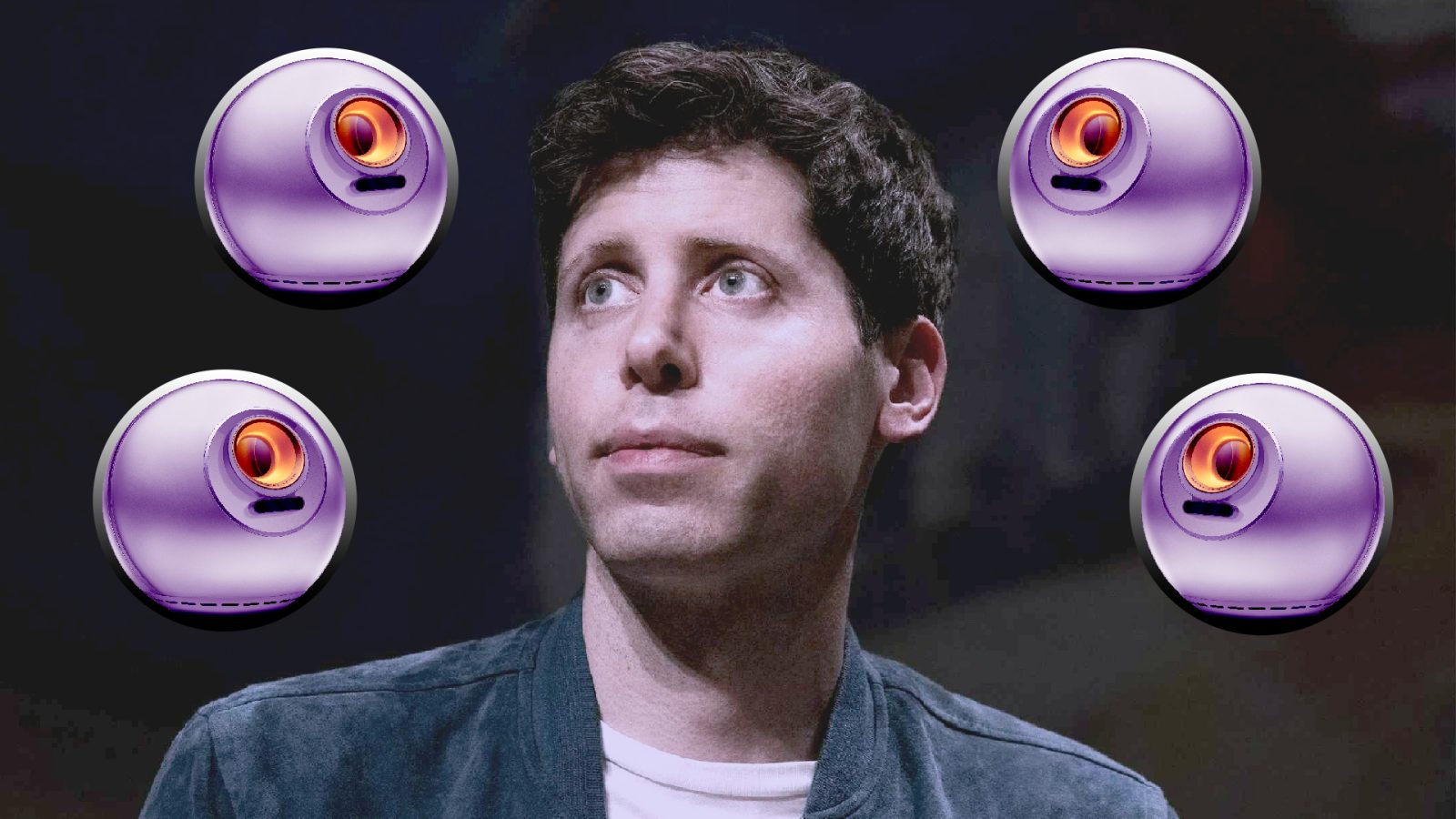
A Sam Altman-backed technology that many governments rejected is finding traction in the American corporate world.
On April 17, World, a project designed to distinguish humans from bots using biometrics, announced strategic partnerships with Tinder, Zoom, and Docusign. The three companies will use World’s digital identification to verify users, aiming to reduce deepfakes, scams, and other fraudulent activity.
The World project was launched by Tools for Humanity, a startup co-founded by Altman. The company scans people’s irises and assigns them a “proof of humanity.”
In 2023, World installed several Orbs — physical, spherical biometric imaging devices that scan a person’s iris — in various cities across the globe. They asked people to scan their irises and create an ID, at times offering a sign-up bonus of $50 in cryptocurrency to encourage registrations. The cash-for-data plan, however, did not go down too well.
In the last three years, several governments in Asia and Africa have halted World’s operations due to concerns about the collection of biometric information from their citizens and the violation of privacy laws. Parts of Europe have banned it outright and called for the deletion of logged data. In Latin America, sign-ups are on pause, with several probes underway.
Surveillance whistleblower Edward Snowden has criticized World — which was called Worldcoin until October 2024 — for “cataloguing eyeballs.”
The company, which claims to have verified more than 18 million people across 160 countries, continues to expand worldwide. It’s been currying favor by releasing studies about support from citizens in Portugal, Spain, and South Korea. On April 16, it published a blueprint for how companies can grow their revenue with its digital ID. Meanwhile, the global backlash has persisted.
In April 2025, the company had set up with 7,000 orbs across six cities in the U.S. Many of these continue to operate as legal safeguards about biometric data collection, and cryptocurrencies are less strict and uniform across American states than in the European Union.
Here is a timeline of World’s troubles around the globe:
October 2021: Co-founders Alex Blania and Sam Altman announce Worldcoin, conceived as a digital identity system linked to a cryptocurrency-based financial network. They reveal a new device called the Orb, which can scan the irises of around 700 new people per week. It says it plans to produce more than 50,000 devices per year.
April 2022: An MIT Technology Review investigation reveals World’s unethical practices when onboarding test users across Africa and Asia, including deceptive marketing practices. The investigation also says that World was gathering personal data beyond iris scans, including heartbeat, breathing, and other vital signs, and doing so without obtaining meaningful informed consent.
July 2023: Tools for Humanity launches World ID, with plans to install iris-scanning orbs in more than 35 cities across 20 countries. The company offers to pay around $50 in crypto to those willing to scan their irises. Queues line up at the Orbs in Nairobi, Bengaluru, and Hong Kong, among other places, as people look to earn an easy $50. In Uganda, runners earn commission depending on how many people they can convince to sign up.
August 2023: Kenya pauses biometric verification, questioning the “authenticity and legality” of the process. It sets up a 15-person team to investigate the matter.
December 2023: Reports suggest World halted sign-ups in India around four months earlier. Brazil and France disappear from the official list of countries where Orb verification is available.
March 2024: Spanish regulators halt World’s operations following complaints of minors’ data being collected. Adult users say they are unable to withdraw consent for sharing personal information.
Spain’s Data Protection Authority orders the company to stop collecting and processing locals’ data for up to three months.
Portugal bans data collection, citing similar issues.
April 2024: Argentina’s Buenos Aires province accuses World of using “abusive clauses” in its contracts. Argentines still keep handing over their data in exchange for crypto rewards.
May 2024: Hong Kong’s data watchdog conducts 10 covert visits at six premises linked to World, and orders the company to cease operations on account of “unnecessary and excessive” data collection.
June 2024: The company decides to hold off on relaunching operations in Spain beyond the stipulated three months until the laws and regulations become clear.
Kenya drops its yearlong government probe over privacy concerns, paving the way for Orbs to come back.
December 2024: Germany asks World to delete some data that doesn’t align with the European Union’s General Data Protection Regulation.
January 2025: Regulators in Brazil ban Altman’s firm after discovering it was paying citizens for iris scans. The financial incentives breach the country’s data law, which mandates that consent for biometric data collection be free, informed, and unequivocal.
March 2025: Brazil reaffirms the ban on World, exposing the company to a daily fine of 50,000 reais ($8,800) if it resumes data collection.
May 2025: The Indonesian government temporarily suspends data collection for World ID, and starts probing two local entities over licenses and unlawful operations.
October 2025: The Philippines’ National Privacy Commission orders Tools For Humanity to immediately halt operations over issues of consent and exploitation of vulnerable populations.
November 2025: Thai authorities shut down World’s biometric data collection, and call for deletion of data.
April 2026: Worldcoin announces partnerships with Tinder, Zoom, and Docusign.