



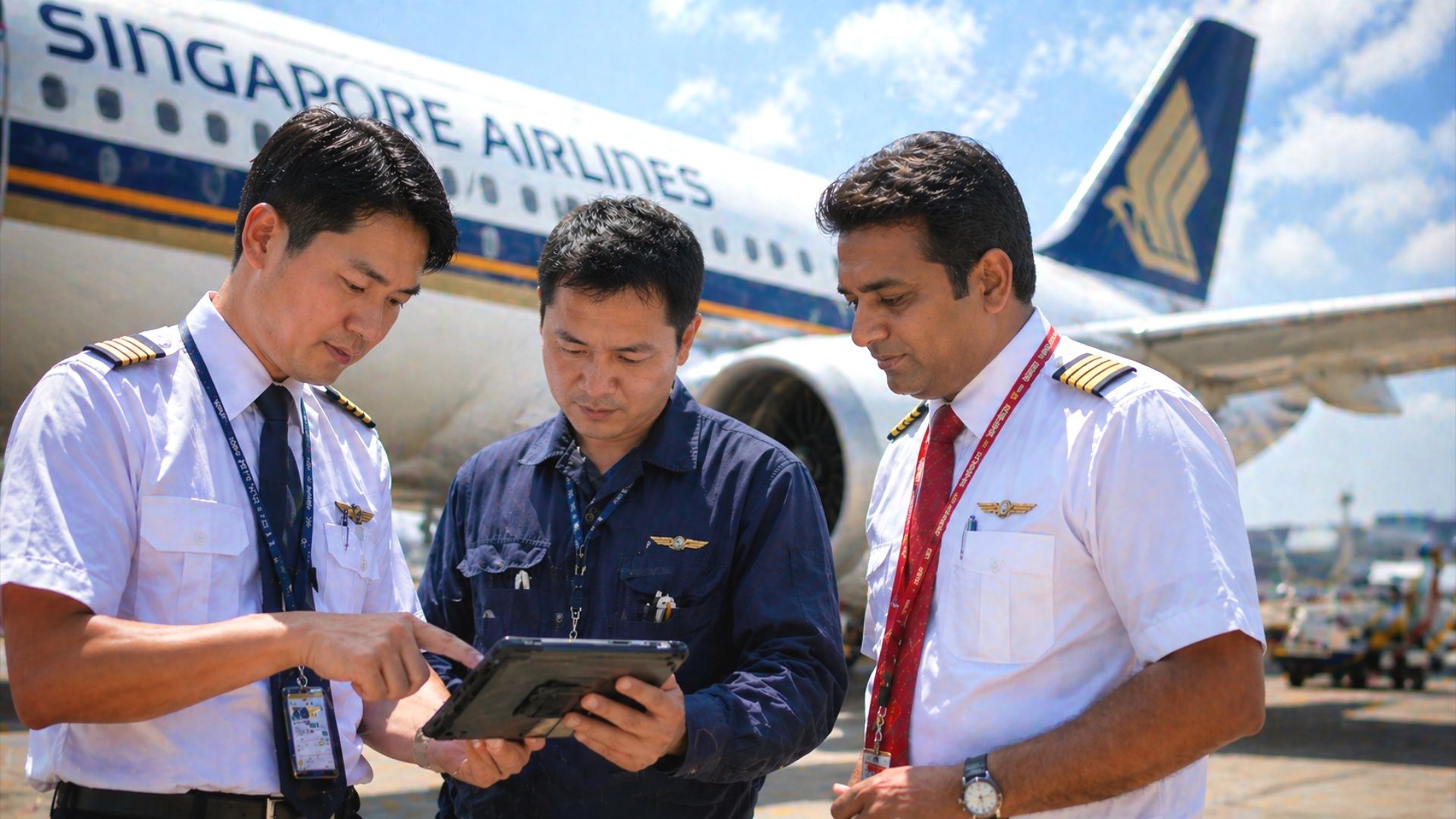
SINGAPORE/INDIA: Singapore Airlines (SIA) has stepped in more directly at Air India, placing its staff in key operational roles as the Indian carrier struggles with losses and safety concerns. The move shifts Singapore Airlines from a strategic partner to a more hands-on operator at a time when Air India’s recovery is proving harder than expected.
Executives from Singapore Airlines have taken up roles across flight operations, engineering, and maintenance in recent months. The airline is known for strict standards in these areas, and the change suggests a push to stabilise Air India’s core operations, Business Today cites a Bloomberg report (April 23, 2026).
SIA steps in on operations as Tata Group shifts focus
Ownership dynamics appear to be shaping this arrangement. Tata Group, which holds a 74.9% stake in Air India, is focusing on commercial strategy, human resources, finance, and IT. Operational matters are now leaning more on Singapore Airlines, its minority partner.
This division of labour reflects where the problems lie. Air India has faced mounting operational issues, including reports of aircraft flying without proper certification and compliance lapses flagged by European regulators. A recent crash has also triggered tighter scrutiny and service cutbacks.
Singapore Airlines said it has been working closely with Tata Sons on Air India’s transformation since becoming a key shareholder. The latest shift signals that advisory support alone is no longer enough.
Air India’s turning point after mounting setbacks
The deeper involvement follows a series of setbacks that have complicated Air India’s revival. What began as an ambitious turnaround after Tata reacquired the airline in 2021 is now proving more expensive and complex than expected.
The situation appears serious enough to prompt top-level discussions. SIA Chief Executive Officer Goh Choon Phong and Tata Group Chairman Natarajan Chandrasekaran met in Mumbai to review funding plans and begin the search for a new chief executive, after Campbell Wilson’s resignation.
Fixing an airline is more than just branding or routes
For Singapore-based observers, this is more than a corporate reshuffle. It shows how deeply Singapore Airlines is willing to commit to a partner when performance slips. The airline has built its reputation on operational discipline, and its direct involvement signals both risk and opportunity.
If the turnaround works, it strengthens SIA’s influence in one of the fastest-growing aviation markets. If it falters, the reputational stakes rise.
The bigger picture is that fixing an airline goes beyond branding or routes, as it comes down to daily execution, such as maintenance checks, crew readiness, and safety discipline. That is where Singapore Airlines now finds itself, on the ground, doing the work.
Airlines’ splitting of strategic and operational roles
Air India’s recovery will depend on steady operational fixes rather than quick wins. The current approach of splitting strategic and operational roles can work if both sides stay aligned and consistent.
From a distance, the lesson is that when problems run deep, oversight isn’t enough. Someone has to step in and take control of the basics. That is what Singapore Airlines is now doing on the ground at Air India.